
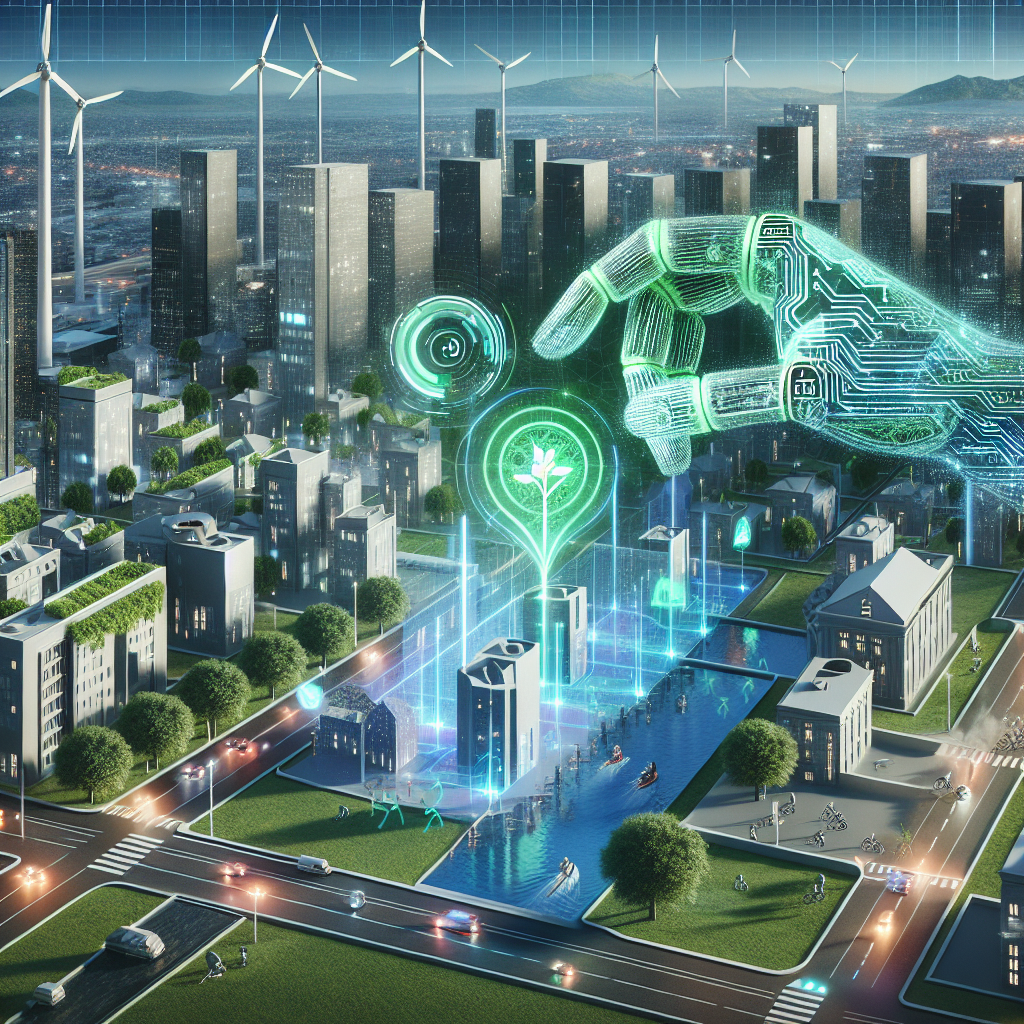
In recent years, artificial intelligence (AI) has emerged as a powerful tool for sustainable urban planning and development. With the rise of smart cities and the increasing need for efficient and sustainable infrastructure, AI technologies are being used to address a wide range of urban challenges, from transportation and energy management to waste reduction and environmental protection. In this article, we will explore the advancements in AI for sustainable urban planning and development, and how these technologies are shaping the future of our cities.
Advancements in AI for Sustainable Urban Planning and Development
1. Smart Transportation Systems: One of the key areas where AI is making a significant impact is in transportation planning. AI algorithms can analyze vast amounts of data from sensors, cameras, and other sources to optimize traffic flow, reduce congestion, and improve public transportation systems. For example, AI-powered traffic management systems can adjust traffic signals in real-time based on current traffic conditions, leading to smoother traffic flow and reduced emissions.
2. Energy Management: AI is also being used to optimize energy consumption in cities, leading to cost savings and reduced carbon emissions. Smart grids powered by AI algorithms can balance supply and demand, predict energy consumption patterns, and integrate renewable energy sources more efficiently. AI can also help identify energy inefficiencies in buildings and recommend solutions to reduce energy waste.
3. Waste Management: AI technologies are being used to improve waste management in cities by optimizing collection routes, sorting recyclables, and identifying ways to reduce waste generation. For example, AI-powered waste sorting robots can separate different types of materials more accurately and quickly than humans, leading to higher recycling rates and reduced landfill waste.
4. Urban Design: AI is also being used to inform urban design decisions, such as where to place new parks, bike lanes, and green spaces. By analyzing data on population density, land use, and environmental factors, AI algorithms can help urban planners create more sustainable and livable cities. AI can also simulate the impact of different urban design scenarios on factors like air quality, noise levels, and pedestrian safety, allowing planners to make more informed decisions.
5. Disaster Resilience: AI technologies are helping cities become more resilient to natural disasters and other emergencies. AI-powered predictive models can forecast extreme weather events, earthquakes, and other hazards, allowing cities to prepare and respond more effectively. AI can also analyze data from sensors and social media to monitor for signs of emergencies in real-time and coordinate response efforts.
6. Community Engagement: AI is also being used to engage citizens in the urban planning process and gather feedback on proposed projects. Virtual reality simulations powered by AI can allow residents to experience and provide input on future developments, helping to ensure that projects meet the needs and preferences of the community. AI chatbots can also provide information and gather feedback from residents, making the planning process more transparent and inclusive.
FAQs
Q: How is AI different from traditional urban planning methods?
A: Traditional urban planning methods rely on manual data collection, analysis, and decision-making, which can be time-consuming and prone to human error. AI technologies, on the other hand, can process vast amounts of data quickly and accurately, leading to more informed and efficient planning decisions. AI can also analyze complex relationships and patterns in data that may be difficult for humans to discern, leading to more innovative and effective solutions.
Q: Can AI replace human urban planners?
A: While AI technologies can enhance the capabilities of urban planners and streamline certain aspects of the planning process, they are not intended to replace human planners. Human judgment, creativity, and ethical considerations are still essential in urban planning, and AI technologies are meant to support and augment these qualities, rather than replace them.
Q: What are the potential challenges of using AI in urban planning?
A: One potential challenge of using AI in urban planning is the risk of algorithmic bias, where AI systems may inadvertently perpetuate existing social inequalities or make decisions that are not in the best interests of all residents. It is important for planners to be aware of these risks and take steps to mitigate them, such as using diverse and representative data sets and involving community members in the planning process.
Q: How can cities ensure the ethical use of AI in urban planning?
A: Cities can ensure the ethical use of AI in urban planning by establishing clear guidelines and standards for the collection, analysis, and use of data. They can also promote transparency and accountability in AI systems by making their algorithms and decision-making processes open to public scrutiny. Additionally, cities can involve residents in the development and implementation of AI technologies to ensure that they reflect the values and priorities of the community.
In conclusion, AI technologies are revolutionizing sustainable urban planning and development by enabling cities to optimize resources, reduce environmental impact, and improve quality of life for residents. As AI continues to advance, it is crucial for planners, policymakers, and residents to work together to harness the full potential of these technologies in creating more sustainable and resilient cities. By embracing AI as a tool for innovation and collaboration, we can build a brighter future for urban environments around the world.