
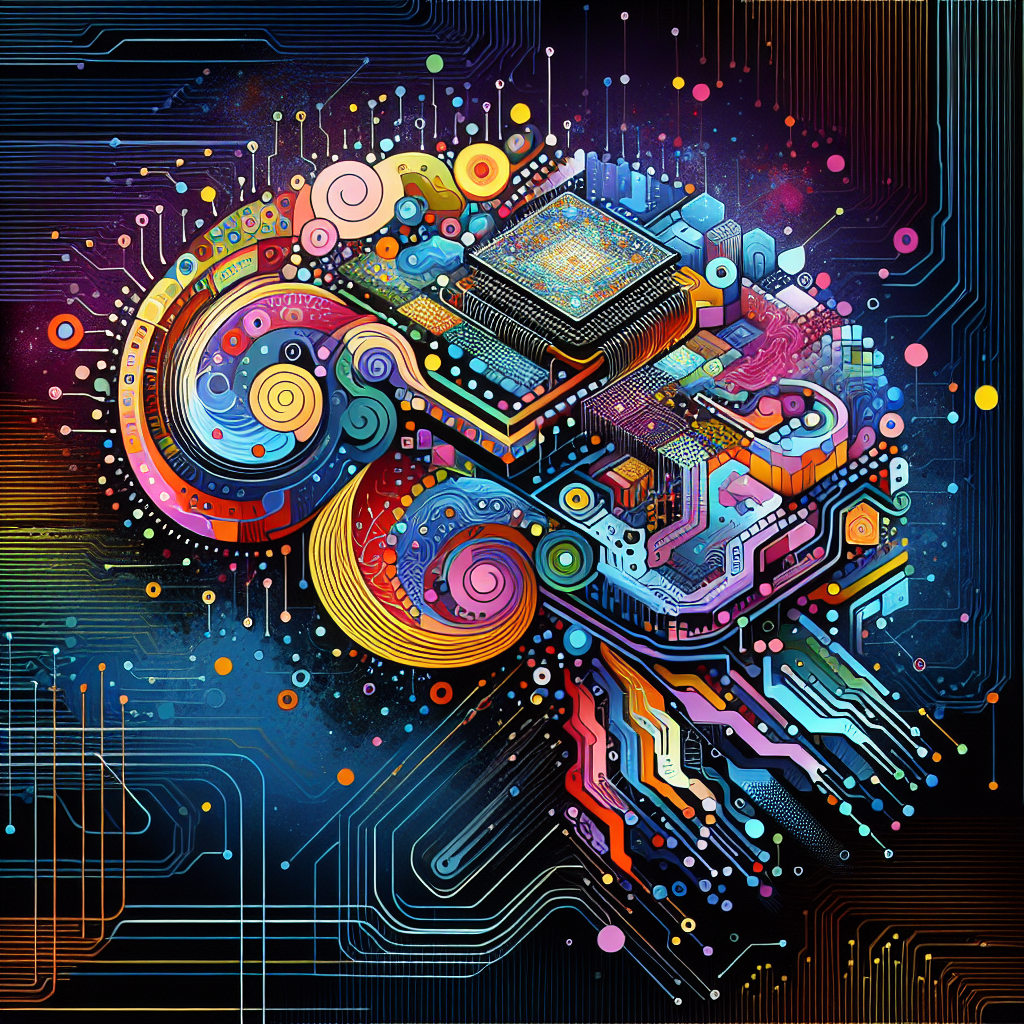
Artificial intelligence (AI) has been making significant strides in the art world, with its ability to create stunning and innovative pieces of art. One of the areas where AI is making a big impact is in abstract art, which is a form of art that does not attempt to represent an accurate depiction of reality but instead uses shapes, colors, forms, and gestural marks to achieve its effect. In this article, we will explore how AI is being used to create non-representational forms of art and the implications this has for the art world.
AI and Abstract Art
AI has the ability to create abstract art that is truly unique and innovative. By using algorithms and machine learning techniques, AI can generate new forms, colors, and compositions that challenge traditional notions of art. One of the key advantages of using AI in abstract art is its ability to generate a large number of variations quickly and efficiently, allowing artists to explore a wide range of possibilities and push the boundaries of creativity.
One of the most well-known examples of AI-generated abstract art is the work of the artist Mario Klingemann. Klingemann uses a combination of machine learning algorithms and neural networks to create stunning abstract artworks that are both visually striking and conceptually intriguing. His works often blur the lines between human and machine creativity, challenging viewers to reconsider their preconceived notions of art and technology.
Another artist who has been pushing the boundaries of abstract art with AI is Refik Anadol. Anadol uses AI algorithms to create immersive installations that explore the relationship between humans and machines. His works often incorporate elements of data visualization and digital art, creating a visual language that is both abstract and deeply meaningful.
The use of AI in abstract art has also raised questions about the nature of creativity and authorship in art. Some critics argue that AI-generated art lacks the emotional depth and intentionality of human-created art, while others see AI as a tool that can enhance human creativity and push the boundaries of artistic expression. Ultimately, the use of AI in abstract art raises important questions about the role of technology in the creative process and the future of art in the digital age.
Implications for the Art World
The use of AI in abstract art has the potential to revolutionize the art world in a number of ways. One of the key advantages of AI is its ability to generate new forms and ideas that may not be possible through traditional artistic methods. This opens up new possibilities for artists to explore and experiment with new forms of expression, pushing the boundaries of what is considered art.
AI also has the potential to democratize the art world by making art more accessible and inclusive. By using AI algorithms to create art, artists can reach a wider audience and engage with new communities of art lovers. This has the potential to break down traditional barriers in the art world and create a more diverse and inclusive artistic landscape.
Furthermore, AI-generated art has the potential to challenge traditional notions of authorship and originality in art. As AI becomes more sophisticated and capable of creating truly unique and innovative artworks, questions arise about who should be credited as the artist and how to define the boundaries of artistic ownership. These questions raise important ethical and legal issues that the art world will need to grapple with in the coming years.
Overall, the use of AI in abstract art has the potential to transform the art world in profound ways, opening up new possibilities for artistic expression and challenging traditional notions of creativity and authorship. As AI continues to advance, it will be interesting to see how artists and art institutions adapt to these changes and embrace the potential of AI as a tool for artistic innovation.
FAQs
Q: Is AI-generated art really art?
A: This is a complex question that depends on how one defines art. Some argue that art is fundamentally a human expression of creativity and emotion, and therefore AI-generated art lacks the depth and intentionality of human-created art. Others see AI as a tool that can enhance human creativity and push the boundaries of artistic expression. Ultimately, whether AI-generated art is considered art is a subjective judgment that varies from person to person.
Q: Can AI really be creative?
A: AI can certainly generate new forms and ideas that may not be possible through traditional artistic methods. Whether this constitutes true creativity is a matter of debate. Some argue that AI lacks the emotional depth and intentionality of human creativity, while others see AI as a tool that can enhance human creativity and push the boundaries of artistic expression. Ultimately, the question of whether AI can be creative is a complex one that depends on how one defines creativity.
Q: How does AI create abstract art?
A: AI creates abstract art using algorithms and machine learning techniques. By analyzing patterns and data, AI can generate new forms, colors, and compositions that challenge traditional notions of art. Artists can input parameters and constraints into the AI algorithms to guide the creation of the artwork, allowing them to explore a wide range of possibilities and push the boundaries of creativity.
Q: What are the implications of AI-generated art for the art world?
A: The use of AI in art has the potential to revolutionize the art world in a number of ways. AI can democratize the art world by making art more accessible and inclusive, challenge traditional notions of authorship and originality in art, and push the boundaries of artistic expression. As AI continues to advance, it will be interesting to see how artists and art institutions adapt to these changes and embrace the potential of AI as a tool for artistic innovation.