
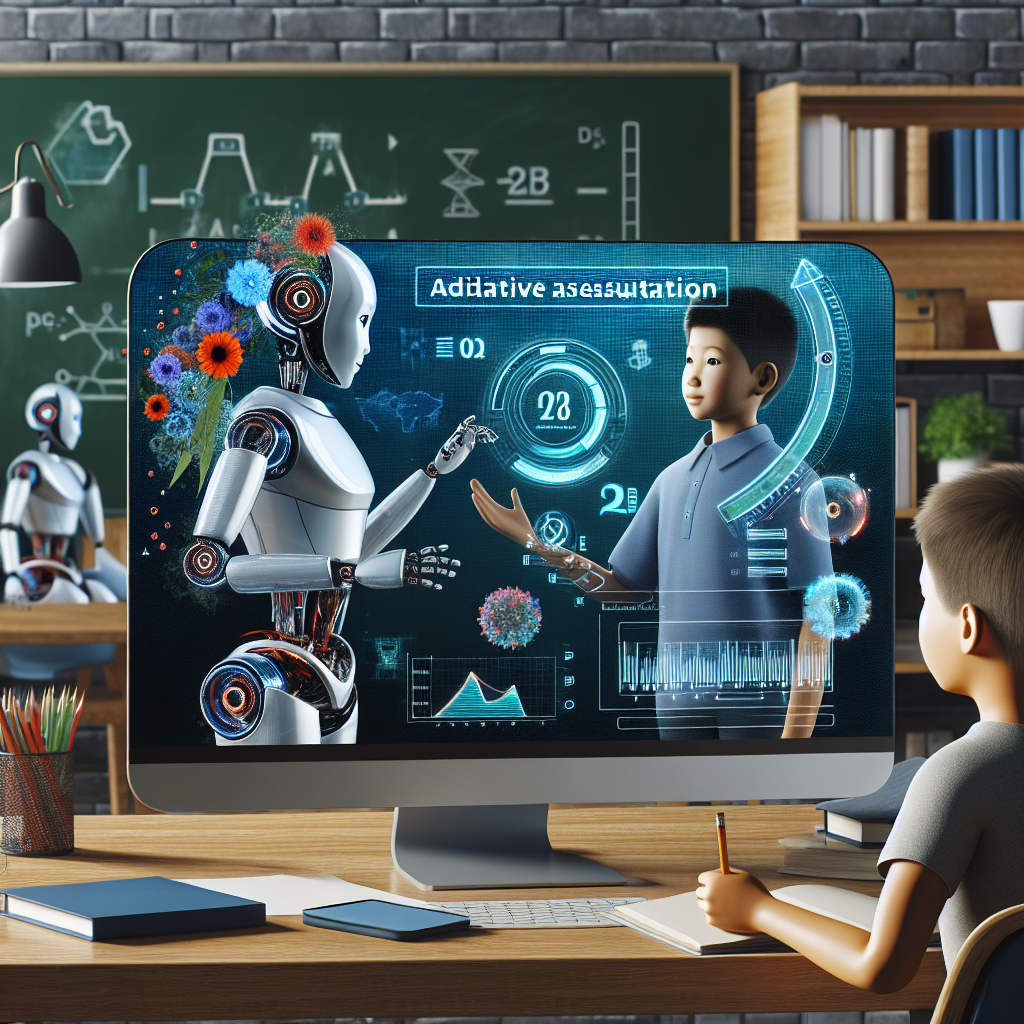
Artificial Intelligence (AI) and adaptive assessments are revolutionizing the way we evaluate individuals in various fields, including education, recruitment, and training. This new approach to evaluation is changing the game by providing a more personalized and accurate assessment of an individual’s skills, knowledge, and abilities. In this article, we will explore the concept of AI and adaptive assessments, how they work, their benefits, and the potential challenges they may face. We will also address some frequently asked questions about this emerging technology.
What are AI and Adaptive Assessments?
AI refers to the ability of machines to perform tasks that typically require human intelligence, such as learning, reasoning, problem-solving, and decision-making. Adaptive assessments, on the other hand, are assessments that adjust the difficulty of questions based on the respondent’s performance. By combining AI and adaptive assessments, we can create a more efficient and accurate evaluation process that can adapt to the individual’s abilities and provide personalized feedback.
How do AI and Adaptive Assessments work?
AI and adaptive assessments work by using algorithms to analyze the responses of individuals to questions and determine their level of knowledge, skills, and abilities. The algorithms then adjust the difficulty of subsequent questions based on the individual’s performance, ensuring that the assessment is challenging yet fair. This adaptive approach allows for a more accurate evaluation of an individual’s capabilities and provides valuable insights into their strengths and weaknesses.
What are the benefits of AI and Adaptive Assessments?
There are several benefits to using AI and adaptive assessments for evaluation purposes. Some of the key advantages include:
1. Personalized assessment: AI and adaptive assessments can tailor the evaluation process to the individual, providing a more accurate and insightful assessment of their abilities.
2. Efficiency: By using algorithms to analyze responses and adjust question difficulty, AI and adaptive assessments can save time and resources by eliminating unnecessary questions and focusing on areas where the individual needs improvement.
3. Accuracy: AI and adaptive assessments can provide a more accurate evaluation of an individual’s skills and abilities by adjusting question difficulty based on their performance.
4. Immediate feedback: AI and adaptive assessments can provide immediate feedback to the individual, allowing them to see their strengths and weaknesses and take action to improve their skills.
5. Cost-effective: AI and adaptive assessments can be more cost-effective than traditional evaluation methods, as they can be administered online and do not require human proctoring.
What are the potential challenges of AI and Adaptive Assessments?
While AI and adaptive assessments offer many benefits, there are also some potential challenges that need to be considered. Some of the key challenges include:
1. Bias: AI algorithms can be biased if they are trained on data that is not representative of the population being assessed. This can lead to unfair evaluations and discrimination against certain groups.
2. Privacy concerns: AI and adaptive assessments may raise privacy concerns, as they involve collecting and analyzing personal data. It is important to ensure that individuals’ privacy rights are protected when using these technologies.
3. Reliability: AI algorithms may not always provide accurate assessments, as they rely on data and assumptions that may not be perfect. It is important to validate the accuracy and reliability of AI and adaptive assessments before using them for high-stakes evaluations.
4. Accessibility: AI and adaptive assessments may not be accessible to all individuals, particularly those with disabilities or limited access to technology. It is important to ensure that these assessments are inclusive and accommodate the needs of all individuals.
FAQs about AI and Adaptive Assessments:
Q: How are AI and adaptive assessments different from traditional assessments?
A: AI and adaptive assessments use algorithms to analyze responses and adjust question difficulty based on the individual’s performance, providing a more personalized and accurate evaluation. Traditional assessments have a fixed set of questions and do not adapt to the individual’s abilities.
Q: Can AI and adaptive assessments be used for high-stakes evaluations, such as college admissions or job interviews?
A: AI and adaptive assessments can be used for high-stakes evaluations, but it is important to validate their accuracy and reliability before using them for such purposes. It is also important to address potential bias and privacy concerns when using these technologies for high-stakes evaluations.
Q: How can I prepare for an AI and adaptive assessment?
A: To prepare for an AI and adaptive assessment, it is important to review the material that will be covered in the assessment and practice answering questions in a timed setting. It is also helpful to familiarize yourself with the format of the assessment and any specific instructions provided.
Q: Are AI and adaptive assessments effective in evaluating soft skills, such as communication and teamwork?
A: AI and adaptive assessments can be effective in evaluating soft skills by using scenario-based questions and analyzing the individual’s responses. It is important to design assessments that are valid and reliable for evaluating soft skills and to ensure that they are inclusive and unbiased.
In conclusion, AI and adaptive assessments offer a new approach to evaluation that is more personalized, efficient, and accurate. By using algorithms to analyze responses and adjust question difficulty based on performance, AI and adaptive assessments can provide valuable insights into an individual’s skills and abilities. While there are challenges to consider, such as bias and privacy concerns, the benefits of using AI and adaptive assessments outweigh the potential risks. As this technology continues to evolve, it will be important to address these challenges and ensure that AI and adaptive assessments are used responsibly and ethically.