
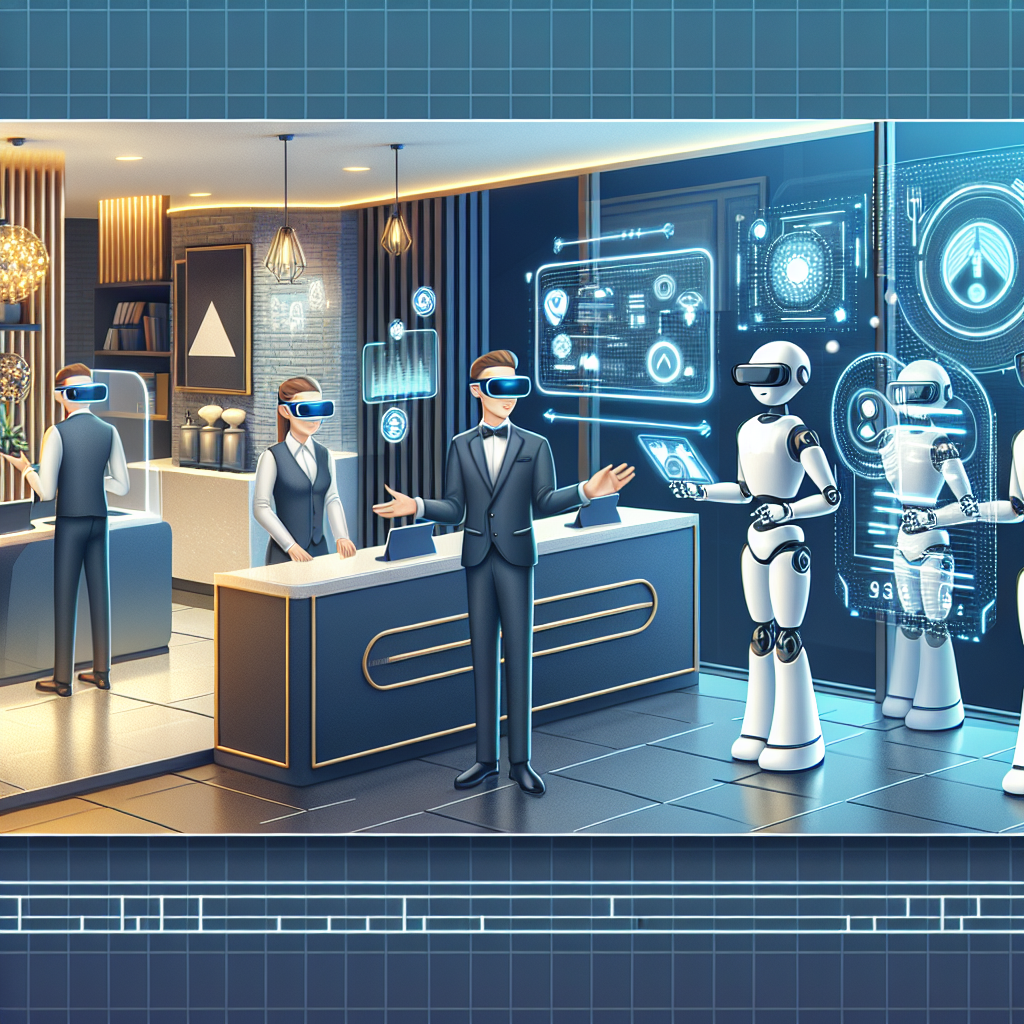
The hospitality industry is constantly evolving to meet the needs and expectations of today’s tech-savvy customers. With the rise of artificial intelligence (AI) and augmented reality (AR), hotels and restaurants are finding new ways to enhance the guest experience and streamline operations. In this article, we will explore how AI and AR are revolutionizing the hospitality industry and the potential benefits they bring.
AI in the Hospitality Industry
Artificial intelligence is a powerful tool that can be used to improve customer service, increase operational efficiency, and personalize the guest experience. In the hospitality industry, AI is being used in a variety of ways to enhance the overall guest experience. One of the most common applications of AI in the hospitality industry is chatbots. Chatbots are virtual assistants that can answer guest inquiries, make reservations, and provide personalized recommendations. By using AI-powered chatbots, hotels and restaurants can provide 24/7 customer service and improve guest satisfaction.
Another way AI is being used in the hospitality industry is through predictive analytics. By analyzing data from past guest interactions, hotels and restaurants can predict future trends and tailor their offerings to meet the needs of their customers. For example, AI can be used to predict which guests are more likely to book a room or make a reservation, allowing hotels and restaurants to target their marketing efforts more effectively.
AI is also being used to enhance hotel operations. For example, AI-powered systems can optimize room pricing based on demand, automate check-in and check-out processes, and streamline housekeeping and maintenance tasks. By using AI to automate routine tasks, hotels can free up staff to focus on providing a more personalized and memorable guest experience.
Augmented Reality in the Hospitality Industry
Augmented reality is another technology that is revolutionizing the hospitality industry. Augmented reality uses computer-generated images to overlay virtual information onto the real world, creating an immersive and interactive experience for guests. In the hospitality industry, augmented reality is being used in a variety of ways to enhance the guest experience.
One of the most common applications of augmented reality in the hospitality industry is virtual tours. Hotels and restaurants can use augmented reality to create virtual tours of their facilities, allowing guests to explore rooms, amenities, and dining options before making a reservation. By providing guests with a virtual tour, hotels and restaurants can increase bookings and improve guest satisfaction.
Augmented reality is also being used to enhance dining experiences. For example, restaurants can use augmented reality menus to provide guests with interactive images and videos of their dishes, allowing guests to see how their food is prepared and presented. By using augmented reality menus, restaurants can create a more engaging and memorable dining experience for their guests.
Another way augmented reality is being used in the hospitality industry is through virtual concierge services. Hotels can use augmented reality to provide guests with interactive maps, recommendations for local attractions, and personalized suggestions based on their preferences. By using augmented reality to enhance concierge services, hotels can improve guest satisfaction and loyalty.
FAQs
Q: How can AI improve customer service in the hospitality industry?
A: AI-powered chatbots can provide 24/7 customer service, answer guest inquiries, make reservations, and provide personalized recommendations, improving guest satisfaction.
Q: How can AI optimize hotel operations?
A: AI-powered systems can optimize room pricing, automate check-in and check-out processes, and streamline housekeeping and maintenance tasks, freeing up staff to focus on providing a more personalized guest experience.
Q: How can augmented reality enhance the guest experience in the hospitality industry?
A: Augmented reality can be used to create virtual tours of hotel facilities, enhance dining experiences with interactive menus, and provide virtual concierge services, improving guest engagement and satisfaction.
In conclusion, AI and augmented reality are revolutionizing the hospitality industry by enhancing the guest experience, improving operational efficiency, and personalizing services. By leveraging these technologies, hotels and restaurants can stay ahead of the competition and provide a more memorable and enjoyable experience for their guests.