
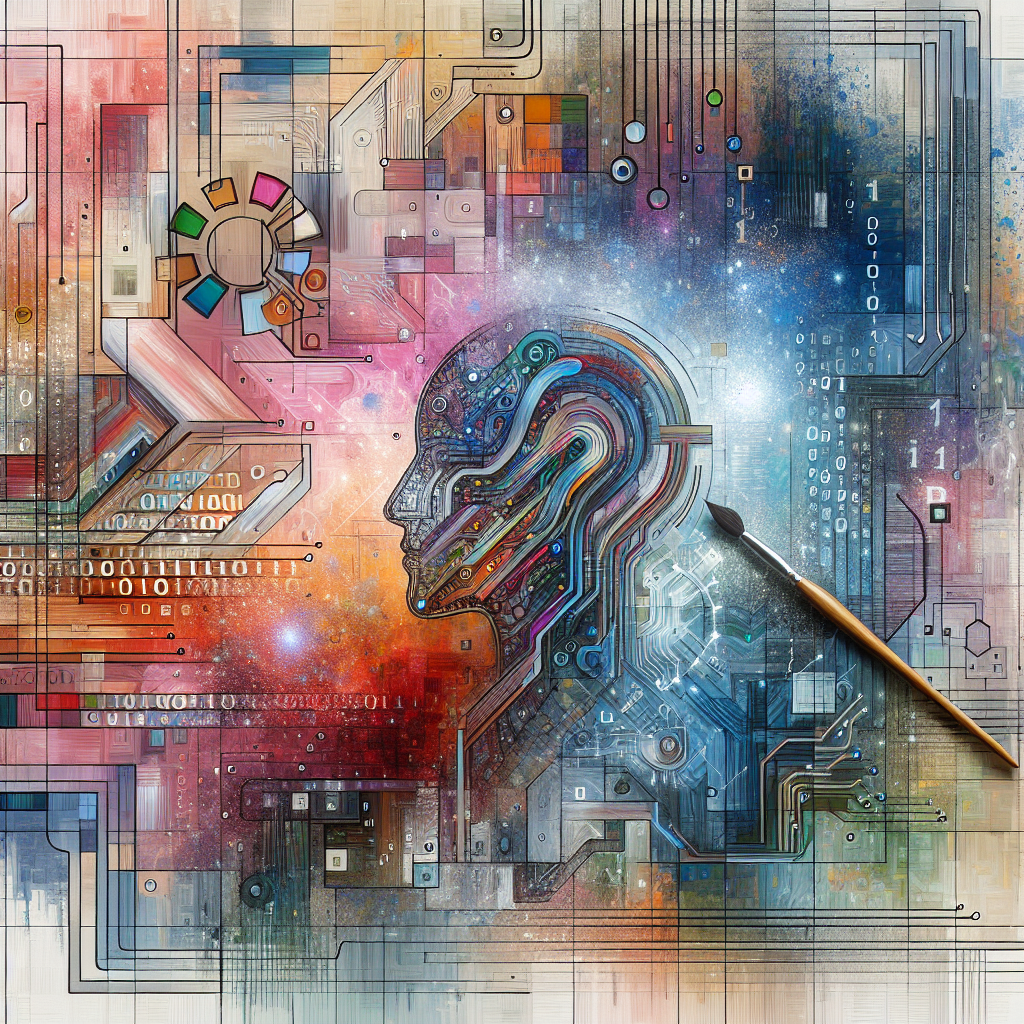
Artificial Intelligence (AI) and creative coding are two rapidly evolving fields that are revolutionizing the way we create and interact with art. Generative art, a form of art that is created using autonomous systems such as algorithms or AI, is becoming increasingly popular as artists explore the possibilities of using technology to create unique and innovative artworks.
Creative coding, on the other hand, involves using programming and coding to create art, music, and other forms of creative expression. By combining AI and creative coding, artists and programmers are able to push the boundaries of traditional art forms and create new and exciting works of art.
One of the key benefits of using AI in generative art is the ability to create artworks that are constantly evolving and changing. By using algorithms that are able to learn and adapt over time, artists can create artworks that are never the same twice. This allows for a level of creativity and innovation that is difficult to achieve using traditional art techniques.
Another benefit of using AI in generative art is the ability to explore new and unique artistic styles. By using algorithms that are able to analyze and interpret data in new ways, artists can create artworks that push the boundaries of traditional art forms and create new and exciting styles of art.
In addition to creating new and innovative artworks, AI and creative coding can also be used to explore new ways of interacting with art. By using algorithms that are able to interpret and respond to human input, artists can create artworks that are interactive and engaging, allowing viewers to become active participants in the artistic process.
Overall, the combination of AI and creative coding is opening up new possibilities for artists and programmers to explore the intersection of technology and art. As these fields continue to evolve, we can expect to see even more exciting and innovative artworks created using AI and creative coding.
FAQs:
1. What is generative art?
Generative art is a form of art that is created using autonomous systems such as algorithms or AI. These systems are able to generate artworks that are constantly evolving and changing, creating unique and innovative artworks.
2. How is AI used in generative art?
AI is used in generative art to create artworks that are able to learn and adapt over time. By using algorithms that are able to analyze and interpret data in new ways, artists can create artworks that push the boundaries of traditional art forms and create new and exciting styles of art.
3. What is creative coding?
Creative coding involves using programming and coding to create art, music, and other forms of creative expression. By combining coding with artistic techniques, artists and programmers are able to create new and innovative artworks.
4. How can AI and creative coding be combined?
AI and creative coding can be combined by using algorithms that are able to interpret and respond to human input, creating interactive and engaging artworks. By using AI to analyze data in new ways, artists can create artworks that are constantly evolving and changing.
5. What are some examples of generative art created using AI?
Some examples of generative art created using AI include artworks that use algorithms to create ever-changing patterns and designs, as well as artworks that use AI to interpret and respond to human input, creating interactive and engaging artworks.
In conclusion, AI and creative coding are opening up new possibilities for artists and programmers to explore the intersection of technology and art. By combining these two fields, artists are able to create new and innovative artworks that push the boundaries of traditional art forms and create new and exciting styles of art. As these fields continue to evolve, we can expect to see even more exciting and innovative artworks created using AI and creative coding.