
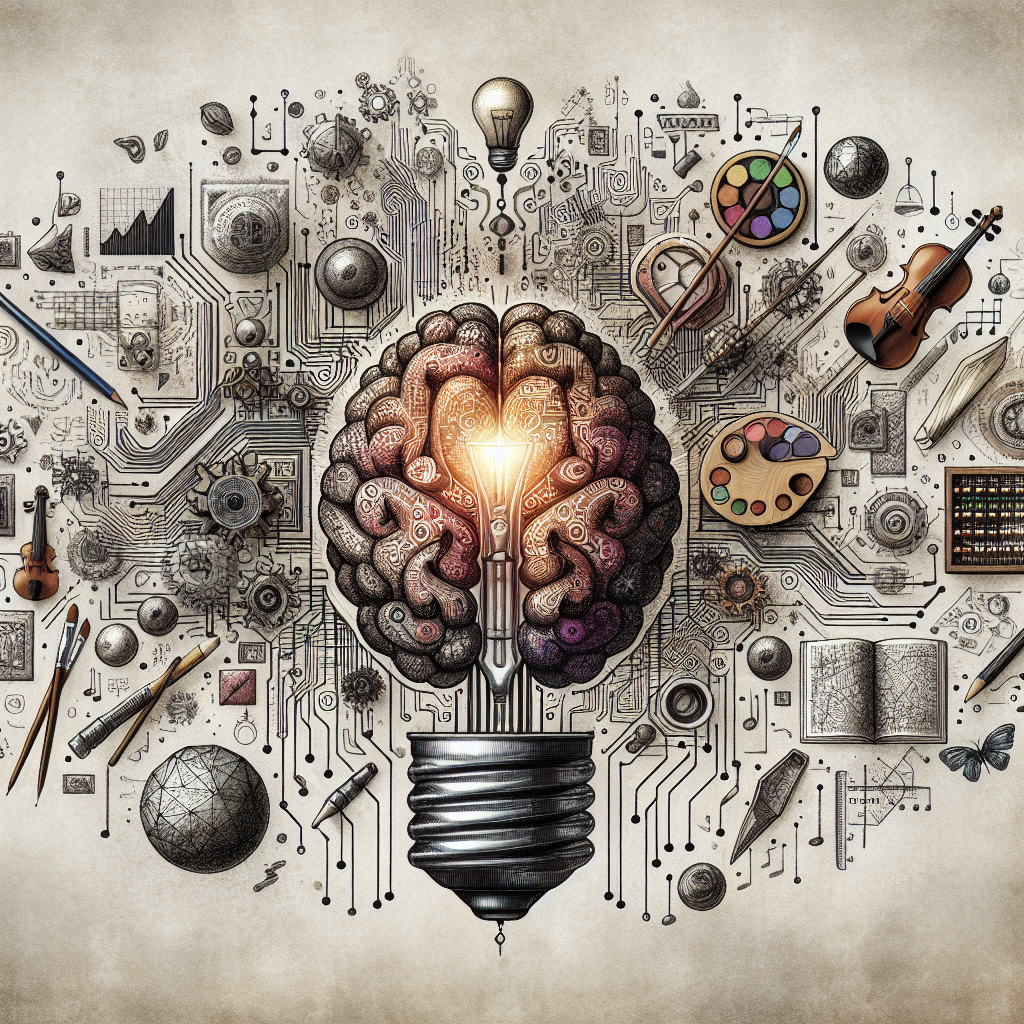
Artificial Intelligence (AI) has revolutionized the way we approach creativity and innovation in various industries. From healthcare to marketing, AI has proven to be a powerful tool in redefining traditional practices and pushing the boundaries of what is possible. In this article, we will explore how AI is driving creative innovation and transforming the way we think about problem-solving.
One of the key ways in which AI is redefining traditional practices is through its ability to analyze massive amounts of data quickly and efficiently. This has opened up new possibilities for creative professionals who are looking to gain insights and inspiration from data-driven sources. For example, in the field of marketing, AI can analyze consumer behavior patterns and preferences to help businesses tailor their messaging and products to better meet the needs of their target audience. This not only saves time and resources, but also allows companies to stay ahead of the competition by delivering more personalized and relevant content.
AI is also changing the way we approach problem-solving by offering new perspectives and solutions to complex challenges. By using algorithms and machine learning, AI can identify patterns and trends that human analysts may overlook, leading to more innovative and effective solutions. In the healthcare industry, for instance, AI is being used to analyze medical images and predict the likelihood of certain diseases, allowing doctors to make more accurate diagnoses and provide better treatment options for their patients.
Another way in which AI is reshaping creative innovation is through the use of generative algorithms, which can create new and original content based on existing data. This has led to the development of AI-generated art, music, and even literature that push the boundaries of what is considered possible in creative fields. By combining human creativity with AI’s computational power, artists and designers are able to explore new ideas and concepts that may have been impossible to achieve on their own.
Despite the many benefits of AI in creative innovation, there are also concerns about its potential impact on jobs and the workforce. As AI becomes more advanced and capable of performing tasks that were once done by humans, there is a fear that it may lead to job displacement and a decrease in creativity and innovation. However, many experts argue that AI will actually create new opportunities for workers to focus on more strategic and creative tasks, while leaving the mundane and repetitive tasks to machines.
Overall, AI is redefining traditional practices and pushing the boundaries of creative innovation in ways that were once thought impossible. By harnessing the power of data analysis, machine learning, and generative algorithms, creative professionals are able to explore new ideas and solutions that were previously out of reach. As AI continues to evolve and improve, we can expect to see even more groundbreaking innovations that will shape the future of creativity and innovation in the years to come.
FAQs:
Q: Can AI truly be creative?
A: While AI is not capable of true creativity in the sense that humans are, it can generate new and original content based on existing data and algorithms. This can lead to innovative solutions and ideas that may not have been possible without AI’s computational power.
Q: Will AI replace creative professionals?
A: While AI may automate some tasks that were once done by humans, it is unlikely to replace creative professionals completely. Instead, AI can augment their skills and capabilities, allowing them to focus on more strategic and creative tasks.
Q: How can businesses leverage AI for creative innovation?
A: Businesses can leverage AI for creative innovation by using it to analyze data, generate new ideas and solutions, and personalize their products and services to better meet the needs of their customers. By incorporating AI into their creative processes, businesses can stay ahead of the competition and drive innovation in their industries.