
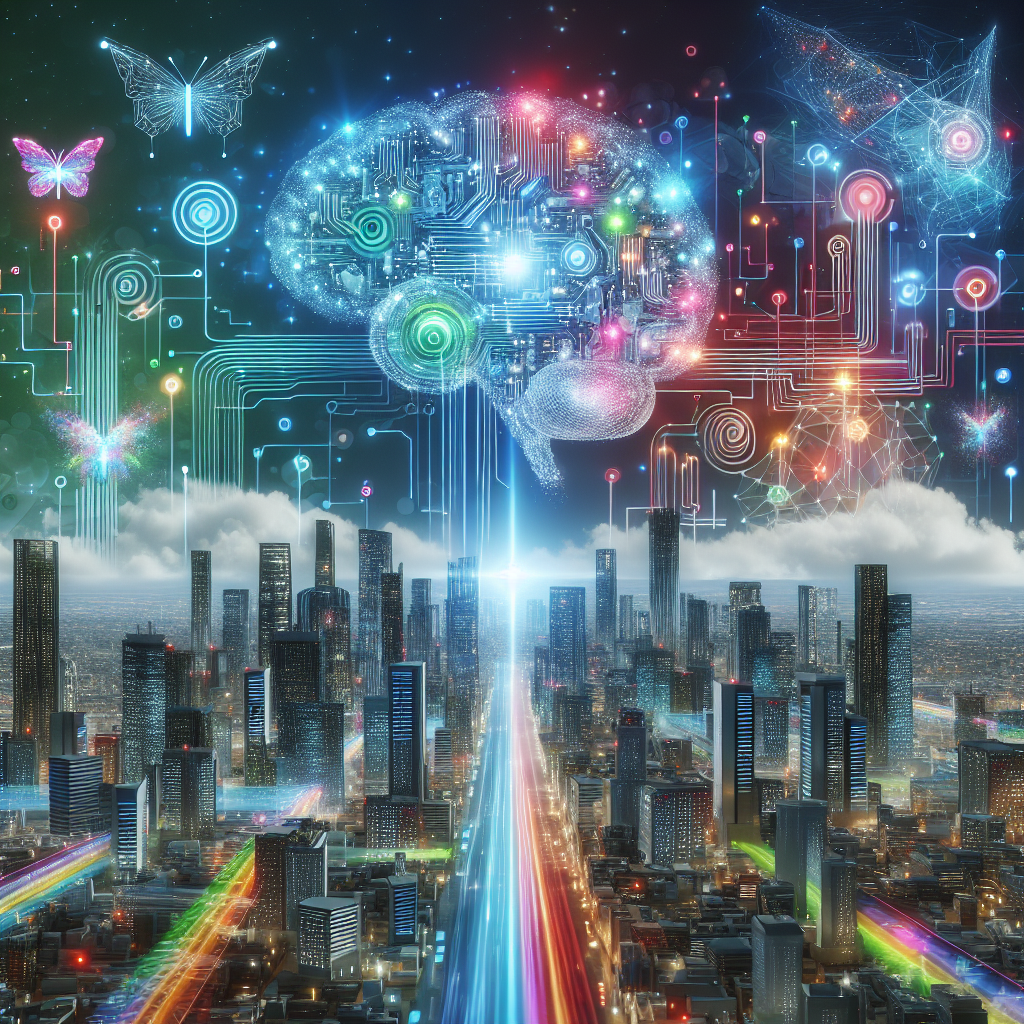
AI and Creativity: A Dynamic Duo in the Digital Age
Artificial Intelligence (AI) has become an integral part of our daily lives, from the personalized recommendations we receive on streaming platforms to the virtual assistants that help us navigate our devices. But AI is not just limited to making our lives more convenient – it is also playing a significant role in fostering creativity in various fields such as art, music, and design.
The marriage of AI and creativity has led to the emergence of new possibilities and opportunities for artists, designers, and creators to push the boundaries of their craft. By harnessing the power of AI, creators are able to explore new techniques, experiment with different styles, and generate innovative ideas that may not have been possible otherwise.
One of the key ways in which AI is facilitating creativity is through the use of generative algorithms. These algorithms are designed to mimic the creative process of humans by generating new content based on a set of rules or parameters. For example, AI-powered tools like DeepDream and StyleGAN are capable of creating unique and original pieces of art by analyzing existing images and patterns.
In the music industry, AI is revolutionizing the way music is composed and produced. AI algorithms can analyze vast amounts of data to identify patterns and trends in music, helping musicians and producers to create new and innovative sounds. AI-powered tools like Amper Music and AIVA are capable of composing original music tracks that can rival those created by human musicians.
In the field of design, AI is being used to streamline the creative process and enhance the efficiency of designers. AI-powered tools like Adobe Sensei and Canva’s Design AI are capable of generating design suggestions, automating repetitive tasks, and assisting designers in creating visually stunning graphics and layouts.
Moreover, AI is also being used to enhance the user experience in various digital platforms. AI algorithms can analyze user behavior and preferences to deliver personalized recommendations and content that cater to the individual needs and interests of users. This level of personalization not only enhances the user experience but also fosters creativity by exposing users to new ideas and perspectives.
Despite the numerous benefits of AI in fostering creativity, there are also concerns about the impact of AI on human creativity. Some critics argue that relying too heavily on AI may stifle human creativity by limiting the scope of originality and innovation. However, proponents of AI argue that AI can enhance human creativity by providing new tools and resources that can inspire and empower artists, designers, and creators to explore new possibilities.
In conclusion, AI and creativity are indeed a dynamic duo in the digital age, opening up new avenues for innovation and expression in various fields. By harnessing the power of AI, creators are able to push the boundaries of their craft and explore new possibilities that were previously unimaginable. As AI continues to evolve and advance, we can expect to see even more exciting collaborations between AI and creativity that will shape the future of art, music, design, and beyond.
FAQs:
Q: Can AI truly be creative?
A: While AI is not capable of experiencing emotions or consciousness like humans, it can be programmed to mimic the creative process by generating new content based on a set of rules or parameters. AI algorithms can analyze vast amounts of data to identify patterns and trends, leading to the creation of unique and original pieces of art, music, and design.
Q: Will AI replace human creativity?
A: While AI has the potential to augment and enhance human creativity, it is unlikely to completely replace it. Human creativity is rooted in emotions, intuition, and personal experiences that AI cannot replicate. AI can provide new tools and resources to inspire and empower artists, designers, and creators, but ultimately, human creativity remains irreplaceable.
Q: How can AI benefit creativity?
A: AI can benefit creativity in various ways, such as by providing new tools and resources for artists, designers, and creators to explore new techniques, experiment with different styles, and generate innovative ideas. AI can also enhance the efficiency of the creative process by automating repetitive tasks and providing personalized recommendations that cater to individual needs and interests.
Q: What are some examples of AI-powered creative tools?
A: Some examples of AI-powered creative tools include DeepDream and StyleGAN for generating art, Amper Music and AIVA for composing music, Adobe Sensei and Canva’s Design AI for assisting designers in creating graphics and layouts, and various personalized recommendation systems in digital platforms that cater to individual user preferences.