
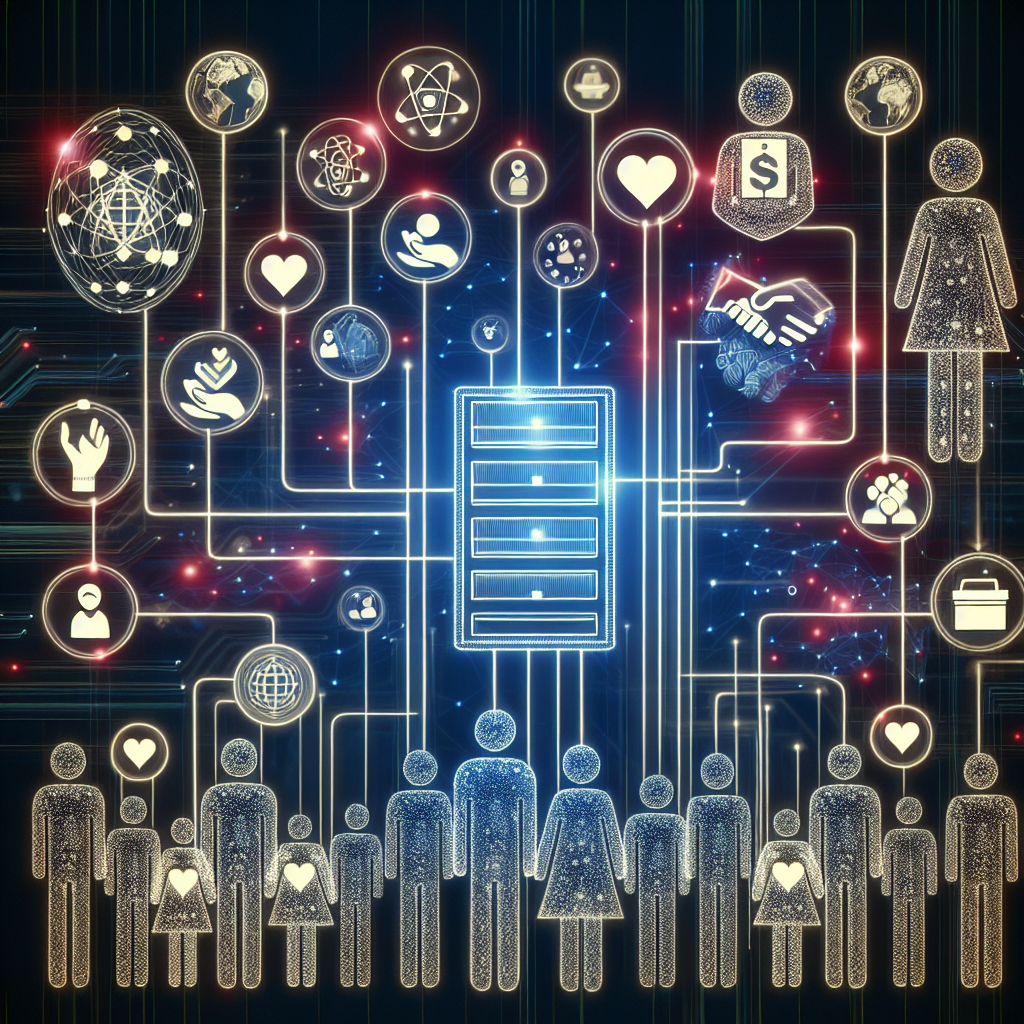
Artificial Intelligence (AI) has revolutionized the way organizations approach donor segmentation and personalization in philanthropic campaigns. By leveraging AI technology, nonprofits can now gain deeper insights into their donors’ behaviors, preferences, and motivations, allowing them to tailor their fundraising efforts more effectively. This level of personalization not only improves donor engagement and satisfaction but also increases the likelihood of securing donations.
Donor segmentation is the process of categorizing donors based on various factors such as demographics, giving history, and communication preferences. Traditionally, nonprofits have relied on manual segmentation methods that are time-consuming and often yield limited results. With AI, organizations can now analyze large volumes of data in real-time to identify patterns and trends that would be difficult to discern with human analysis alone.
One of the key benefits of AI in donor segmentation is the ability to create more targeted and personalized campaigns. By understanding donors’ interests and motivations, nonprofits can tailor their messages and appeals to resonate with each individual donor. This level of customization not only increases the likelihood of receiving donations but also helps build stronger relationships with donors over time.
AI technology also enables organizations to predict donor behavior and preferences more accurately. By analyzing historical data and identifying patterns, nonprofits can anticipate which donors are more likely to give, how much they are likely to donate, and when they are most likely to donate. This predictive analytics allows organizations to optimize their fundraising strategies and allocate resources more effectively.
In addition to improving donor segmentation and personalization, AI can also help nonprofits streamline their fundraising efforts. By automating repetitive tasks such as data entry, donor communication, and reporting, organizations can save time and resources that can be reallocated to more strategic initiatives. This increased efficiency not only benefits the organization but also enhances the donor experience by providing timely and relevant communications.
Furthermore, AI can help nonprofits identify new potential donors and expand their donor base. By analyzing external data sources such as social media, web browsing behavior, and other online activities, organizations can identify individuals who may have an affinity for their cause but have not yet been engaged. This proactive approach to donor acquisition can help organizations reach new audiences and grow their fundraising efforts.
Despite the many benefits of AI in donor segmentation, there are also some challenges and considerations that organizations need to be aware of. For example, privacy concerns and data security are important considerations when using AI technology to analyze donor data. Nonprofits must ensure that they are in compliance with relevant data protection regulations and that donor information is handled responsibly and ethically.
Additionally, organizations should be mindful of the potential for bias in AI algorithms. If not properly trained and monitored, AI systems can inadvertently perpetuate existing biases and inequalities in donor segmentation. Nonprofits must actively address these issues by regularly auditing their AI systems and ensuring that they are inclusive and fair in their approach to donor segmentation.
Overall, AI has the potential to revolutionize donor segmentation and personalization in philanthropic campaigns. By leveraging AI technology, nonprofits can gain deeper insights into their donors’ behaviors and preferences, create more targeted and personalized campaigns, predict donor behavior more accurately, streamline their fundraising efforts, and identify new potential donors. While there are challenges and considerations to be mindful of, the benefits of AI in donor segmentation far outweigh the potential risks.
FAQs:
Q: How can AI help nonprofits with donor segmentation?
A: AI can help nonprofits analyze large volumes of data to identify patterns and trends that would be difficult to discern with human analysis alone. This allows organizations to create more targeted and personalized campaigns, predict donor behavior more accurately, and streamline their fundraising efforts.
Q: What are some benefits of using AI in donor segmentation?
A: Some benefits of using AI in donor segmentation include improved donor engagement and satisfaction, increased likelihood of securing donations, optimized fundraising strategies, and expanded donor base.
Q: Are there any challenges to using AI in donor segmentation?
A: Some challenges to using AI in donor segmentation include privacy concerns, data security considerations, and the potential for bias in AI algorithms. Nonprofits must be mindful of these issues and actively address them to ensure ethical and responsible use of AI technology.
Q: How can nonprofits ensure that their AI systems are inclusive and fair in donor segmentation?
A: Nonprofits can ensure that their AI systems are inclusive and fair by regularly auditing their systems, monitoring for bias, and training their algorithms on diverse and representative data. By taking proactive steps to address bias and inequality, organizations can ensure that their AI systems are ethical and responsible in donor segmentation.