
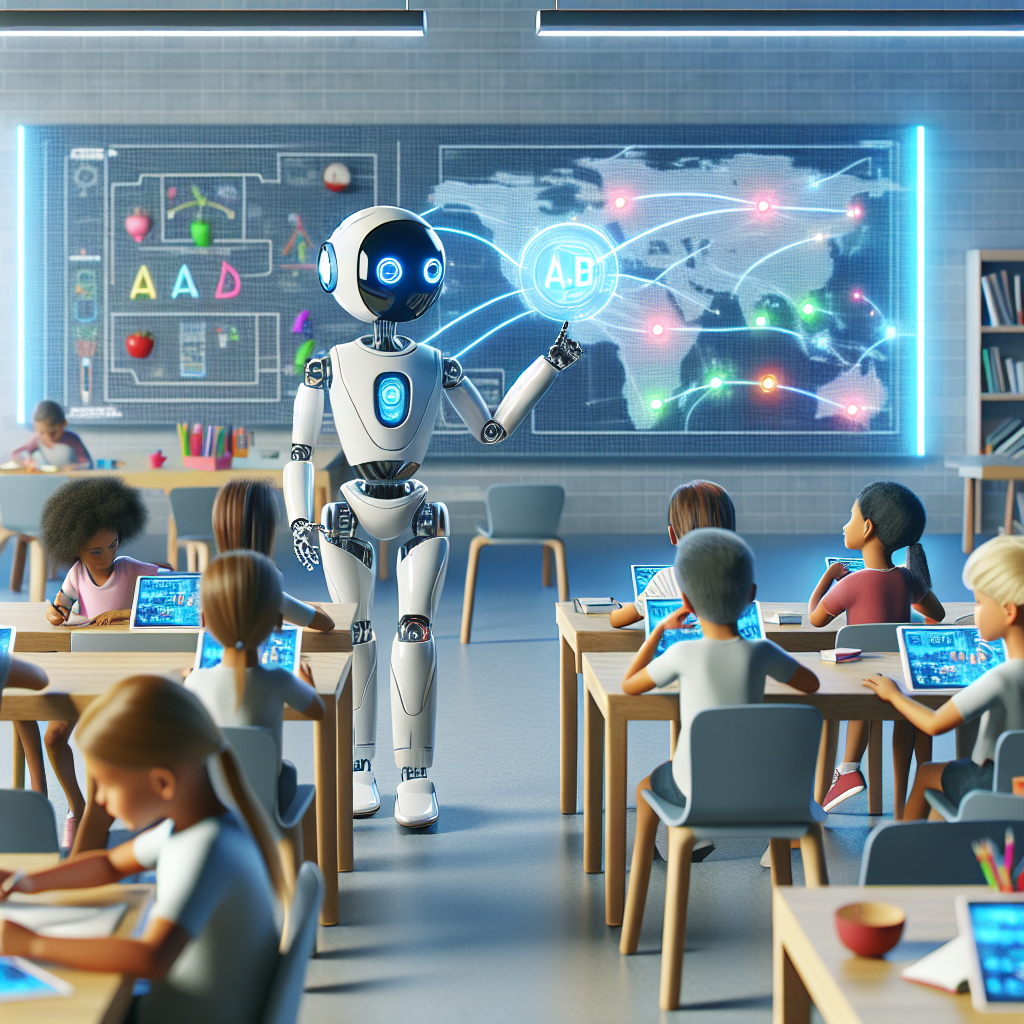
Artificial Intelligence (AI) has been making significant strides in the field of education, particularly in the realm of experiential learning. Experiential learning is a hands-on, immersive approach to education that allows students to learn by doing rather than simply listening to lectures or reading textbooks. By combining AI technology with experiential learning methods, educators are able to create more engaging and personalized learning experiences for students.
One of the key benefits of using AI in experiential learning is its ability to provide personalized feedback and support to students. AI algorithms can analyze student performance data in real-time and provide targeted feedback to help students improve their understanding of the material. This personalized feedback can help students to identify their strengths and weaknesses, allowing them to focus on areas where they need the most help.
Another advantage of using AI in experiential learning is its ability to create immersive learning environments. Virtual reality (VR) and augmented reality (AR) technologies can be used to create realistic simulations that allow students to practice real-world skills in a safe and controlled environment. For example, medical students can use VR simulations to practice performing surgeries, while engineering students can use AR simulations to design and test prototypes.
AI can also be used to create adaptive learning experiences that adjust to the needs of individual students. By analyzing data on student performance and learning preferences, AI algorithms can tailor the content and pacing of lessons to match each student’s unique learning style. This can help to ensure that all students are able to learn at their own pace and in a way that works best for them.
One of the challenges of using AI in experiential learning is ensuring that the technology is used ethically and responsibly. Educators must ensure that AI algorithms are transparent and free from bias, and that student data is protected and used only for educational purposes. Additionally, educators must be mindful of the potential impact of AI on student motivation and engagement, as excessive reliance on technology can sometimes detract from the human connection between students and teachers.
Despite these challenges, the potential benefits of using AI in experiential learning are vast. By leveraging AI technology to create immersive, personalized learning experiences, educators can help students to develop critical thinking skills, problem-solving abilities, and real-world competencies that will prepare them for success in the 21st century workforce.
FAQs:
Q: How can AI be used to enhance experiential learning in education?
A: AI can be used to provide personalized feedback and support to students, create immersive learning environments using VR and AR technologies, and tailor lessons to match each student’s unique learning style.
Q: What are some examples of AI applications in experiential learning?
A: Examples include using AI algorithms to analyze student performance data, creating VR simulations for medical and engineering students, and using adaptive learning technologies to personalize lessons for individual students.
Q: What are some challenges of using AI in experiential learning?
A: Challenges include ensuring ethical and responsible use of AI technology, protecting student data, and maintaining student motivation and engagement in the learning process.
Q: How can educators ensure that AI is used ethically in experiential learning?
A: Educators can ensure ethical use of AI by ensuring transparency and bias-free algorithms, protecting student data, and using technology only for educational purposes.
Q: What are the potential benefits of using AI in experiential learning?
A: Potential benefits include developing critical thinking and problem-solving skills, preparing students for real-world challenges, and creating personalized learning experiences for students.