
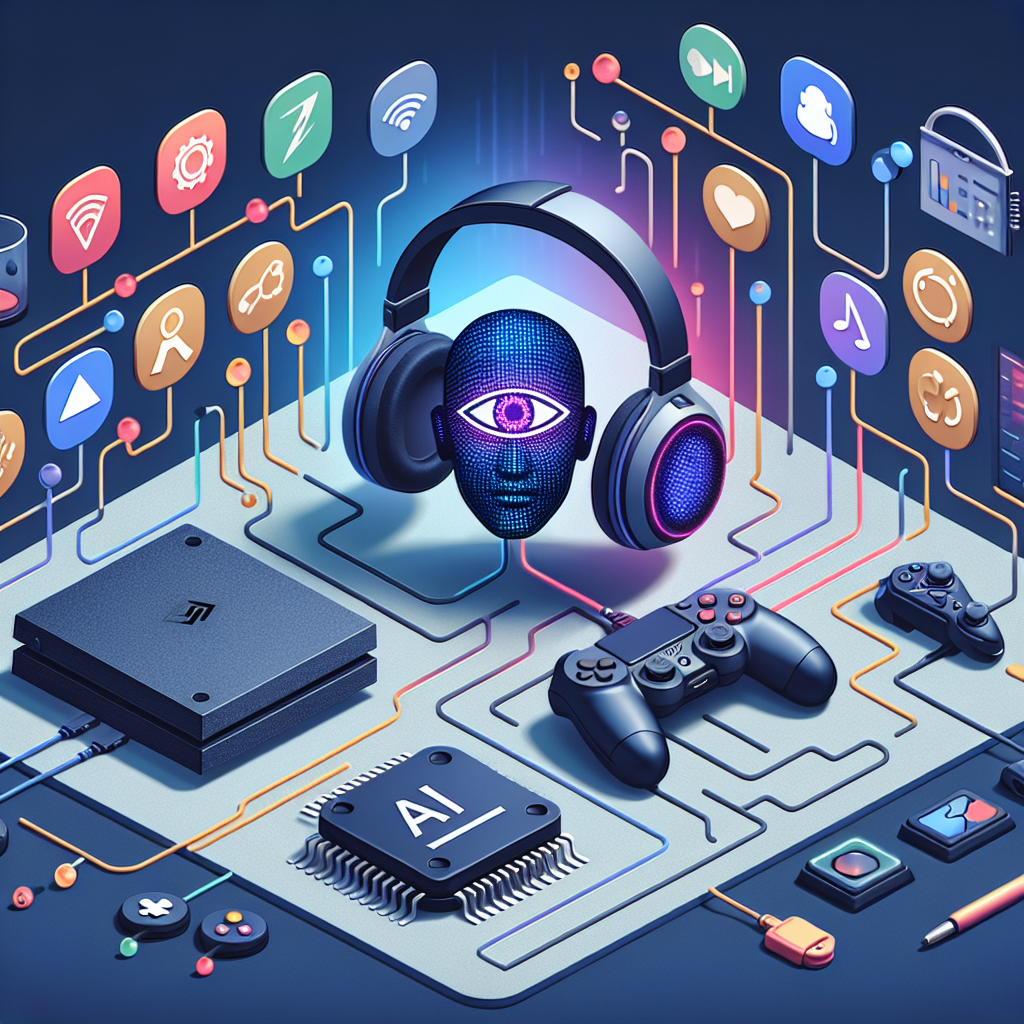
Artificial Intelligence (AI) has been making significant strides in the realm of game accessibility features, revolutionizing the gaming experience for individuals with disabilities. By implementing AI technologies, game developers are able to create more inclusive and accommodating environments for players of all abilities, allowing everyone to enjoy the thrill of gaming.
One of the most notable advancements in game accessibility features is the integration of AI-powered tools for in-game assistance. These tools can assist players in overcoming various challenges, such as providing audio cues for visually impaired players or adjusting difficulty levels based on the player’s skill level. By leveraging AI capabilities, developers can customize the gaming experience to meet the specific needs of each player, making games more accessible and enjoyable for everyone.
AI technologies also play a crucial role in enhancing the communication and interaction capabilities of games. For example, AI-powered speech recognition software can enable players with speech impairments to communicate with other players in multiplayer games, fostering a more inclusive gaming community. Additionally, AI algorithms can be used to generate subtitles and captions for players with hearing impairments, ensuring that all players can fully engage with the game’s narrative and dialogue.
Furthermore, AI-driven features can also help streamline gameplay mechanics and make games more intuitive for players with physical disabilities. For instance, AI-powered adaptive controllers can automatically adjust control schemes based on the player’s input preferences, allowing individuals with limited mobility to navigate the game more easily. By leveraging AI technologies, game developers can create more accessible and user-friendly interfaces that cater to the diverse needs of players with disabilities.
In addition to enhancing game accessibility features, AI technologies also have the potential to revolutionize the way games are developed and tested. AI-powered tools can automate various aspects of game development, such as playtesting and bug fixing, reducing the time and resources required to create accessible games. This not only benefits players with disabilities but also enables developers to deliver high-quality gaming experiences to a broader audience.
Despite the numerous benefits of AI-powered game accessibility features, there are still challenges to overcome in implementing these technologies effectively. One of the main hurdles is ensuring that AI algorithms are trained on diverse datasets that accurately represent the needs and preferences of players with disabilities. Developers must also consider the ethical implications of using AI technologies in games, such as ensuring that player data is handled securely and respecting the privacy rights of individuals.
To address these challenges, game developers can collaborate with advocacy groups and organizations that specialize in accessibility to gather feedback and insights from players with disabilities. By involving individuals with diverse needs in the design and development process, developers can create more inclusive and accommodating games that cater to a wider audience.
In conclusion, AI technologies have the potential to revolutionize game accessibility features and make gaming more inclusive for individuals with disabilities. By leveraging AI-powered tools, developers can create more accessible and user-friendly games that cater to the diverse needs of players of all abilities. As the gaming industry continues to embrace AI technologies, we can expect to see more innovative and inclusive games that empower players to enjoy the thrill of gaming regardless of their physical or cognitive abilities.
FAQs:
Q: How can AI technologies improve game accessibility for players with disabilities?
A: AI technologies can enhance game accessibility by providing in-game assistance, improving communication and interaction capabilities, and streamlining gameplay mechanics for players with disabilities.
Q: What are some examples of AI-powered game accessibility features?
A: Examples of AI-powered game accessibility features include adaptive controllers, speech recognition software, and automated playtesting tools that cater to the diverse needs of players with disabilities.
Q: What challenges do game developers face in implementing AI technologies for game accessibility?
A: Game developers must ensure that AI algorithms are trained on diverse datasets and consider the ethical implications of using AI technologies in games to create inclusive and accommodating gaming experiences for players with disabilities.