
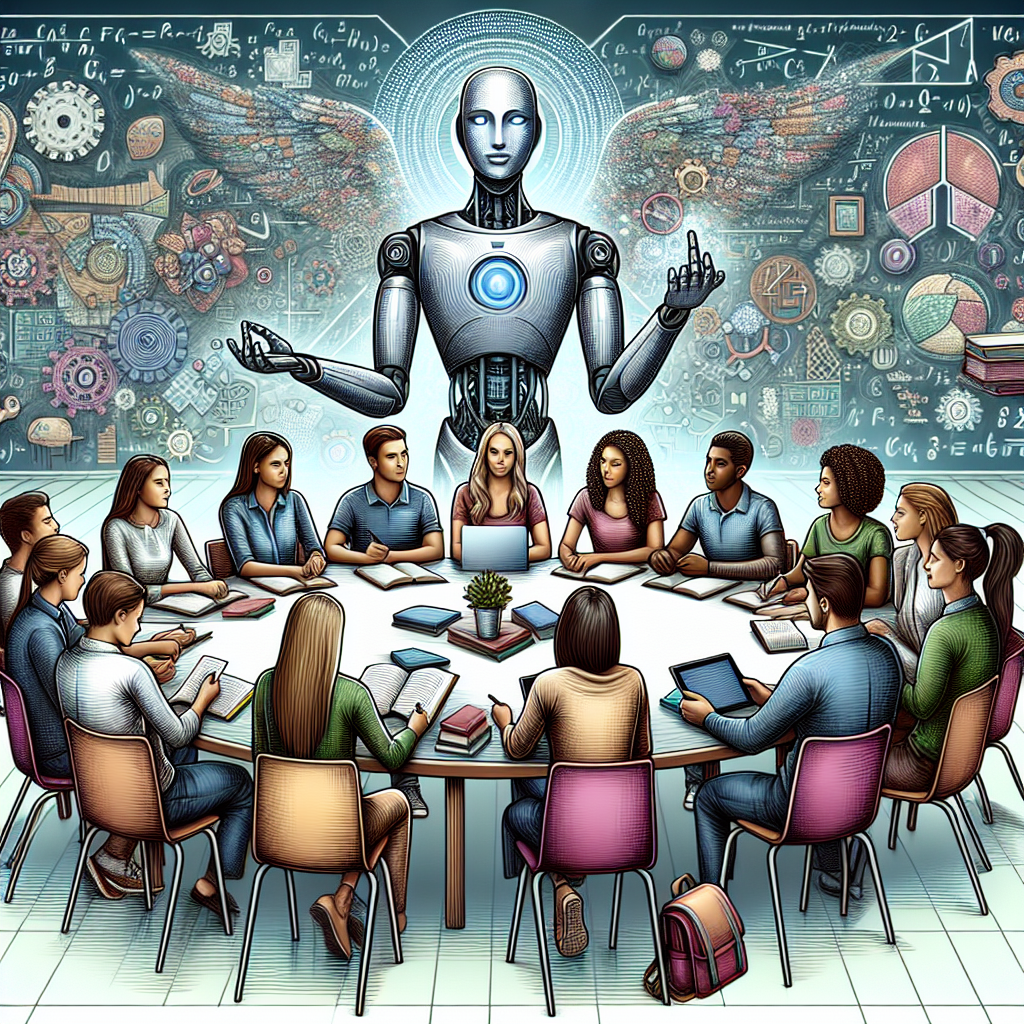
Artificial Intelligence (AI) is rapidly transforming the education sector, making learning more personalized, interactive, and engaging for students. One of the key ways AI is impacting education is through peer collaboration, where students work together to solve problems, share knowledge, and learn from each other with the help of AI tools and platforms. In this article, we will explore the role of AI in peer collaboration in education, its benefits, challenges, and the future implications of this innovative approach.
AI-powered peer collaboration in education involves using intelligent algorithms and tools to facilitate communication, collaboration, and knowledge sharing among students. These tools can analyze students’ learning styles, preferences, and performance data to create personalized learning experiences and connect them with peers who have complementary skills and knowledge. AI can also track students’ progress, provide real-time feedback, and suggest resources to help them work together more effectively.
One of the key benefits of AI-powered peer collaboration in education is that it promotes active learning, critical thinking, and problem-solving skills among students. By working with their peers on collaborative projects, students can develop communication skills, teamwork abilities, and a deeper understanding of the subject matter. AI tools can also help students overcome language barriers, cultural differences, and other obstacles that may hinder effective collaboration in a diverse learning environment.
Furthermore, AI-powered peer collaboration can enhance students’ engagement and motivation by making learning more interactive, social, and fun. Students can use AI tools to create multimedia presentations, interactive simulations, and virtual reality experiences that allow them to explore complex concepts, experiment with different ideas, and receive instant feedback from their peers. This hands-on, experiential learning approach can boost students’ confidence, creativity, and curiosity, leading to better academic performance and higher retention rates.
AI-powered peer collaboration in education also promotes inclusivity and equity by providing all students, regardless of their background or abilities, with equal opportunities to participate, contribute, and succeed. AI tools can support students with special needs, learning disabilities, or language barriers by adapting the learning materials, communication channels, and collaboration activities to meet their individual needs and preferences. This personalized, differentiated approach can ensure that every student has a voice, a role, and a sense of belonging in the learning community.
Despite its numerous benefits, AI-powered peer collaboration in education also presents some challenges and concerns that educators, policymakers, and stakeholders need to address. One of the main challenges is the potential for AI bias, discrimination, and privacy violations in peer collaboration platforms. AI algorithms may unintentionally perpetuate stereotypes, prejudices, and inequalities by making biased recommendations, assumptions, or decisions based on students’ demographic data, past behaviors, or social interactions. To prevent AI bias and ensure fairness in peer collaboration, educators should regularly review, evaluate, and improve the AI tools they use, and provide training, support, and guidance to students on how to use AI ethically and responsibly.
Another challenge of AI-powered peer collaboration in education is the lack of human oversight, intervention, and support in the learning process. While AI tools can automate routine tasks, analyze vast amounts of data, and provide instant feedback to students, they cannot replace the human touch, empathy, and expertise that teachers, mentors, and peers bring to the educational experience. Educators should strike a balance between using AI technology to enhance, not replace, human interaction in peer collaboration, and empower students to take ownership of their learning, ask questions, seek help, and provide feedback to their peers.
In the future, AI-powered peer collaboration in education is likely to become more ubiquitous, intelligent, and adaptive, as technology advances, data grows, and demands change in the digital age. AI tools may use natural language processing, sentiment analysis, and emotion recognition to understand students’ thoughts, feelings, and intentions in peer collaboration, and provide personalized recommendations, interventions, and support based on their emotional intelligence, social skills, and cognitive abilities. AI may also integrate with virtual reality, augmented reality, and mixed reality technologies to create immersive, interactive learning environments that simulate real-world scenarios, foster social interactions, and enhance peer collaboration in a digital, global context.
To prepare for the future of AI-powered peer collaboration in education, educators, policymakers, and stakeholders should invest in training, resources, and infrastructure to support students, teachers, and schools in adopting, adapting, and innovating with AI tools and platforms. They should also promote diversity, inclusion, and equity in peer collaboration by ensuring that AI algorithms are transparent, accountable, and fair in their decision-making processes, and that all students have equal access, opportunities, and rights to participate, contribute, and succeed in the digital learning ecosystem.
In conclusion, AI-powered peer collaboration in education is a transformative, disruptive, and empowering approach that leverages the collective intelligence, creativity, and diversity of students to solve complex problems, share valuable knowledge, and learn collaboratively in a digital, connected world. By harnessing the power of AI technology, educators can create more engaging, interactive, and inclusive learning experiences that inspire students to think critically, communicate effectively, and collaborate productively with their peers, both online and offline. As AI continues to evolve and expand in education, the possibilities for peer collaboration are endless, and the impact on students, teachers, and society at large is profound and promising.
FAQs:
Q: How can AI tools enhance peer collaboration in education?
A: AI tools can analyze students’ learning styles, preferences, and performance data to create personalized learning experiences and connect them with peers who have complementary skills and knowledge. AI can also track students’ progress, provide real-time feedback, and suggest resources to help them work together more effectively.
Q: What are the benefits of AI-powered peer collaboration in education?
A: AI-powered peer collaboration promotes active learning, critical thinking, and problem-solving skills among students. It enhances students’ engagement and motivation, fosters inclusivity and equity, and provides all students with equal opportunities to participate, contribute, and succeed.
Q: What are the challenges of AI-powered peer collaboration in education?
A: The challenges include AI bias, discrimination, and privacy violations in peer collaboration platforms, as well as the lack of human oversight, intervention, and support in the learning process. Educators should address these challenges by ensuring fairness, transparency, and accountability in AI algorithms, and by striking a balance between AI technology and human interaction in peer collaboration.
Q: What is the future of AI-powered peer collaboration in education?
A: In the future, AI-powered peer collaboration is likely to become more ubiquitous, intelligent, and adaptive, as technology advances, data grows, and demands change in the digital age. AI may use natural language processing, sentiment analysis, and emotion recognition to understand students’ thoughts, feelings, and intentions in peer collaboration, and provide personalized recommendations, interventions, and support based on their emotional intelligence, social skills, and cognitive abilities.
Q: How can educators prepare for the future of AI-powered peer collaboration in education?
A: Educators, policymakers, and stakeholders should invest in training, resources, and infrastructure to support students, teachers, and schools in adopting, adapting, and innovating with AI tools and platforms. They should also promote diversity, inclusion, and equity in peer collaboration by ensuring that AI algorithms are transparent, accountable, and fair in their decision-making processes, and that all students have equal access, opportunities, and rights to participate, contribute, and succeed in the digital learning ecosystem.