
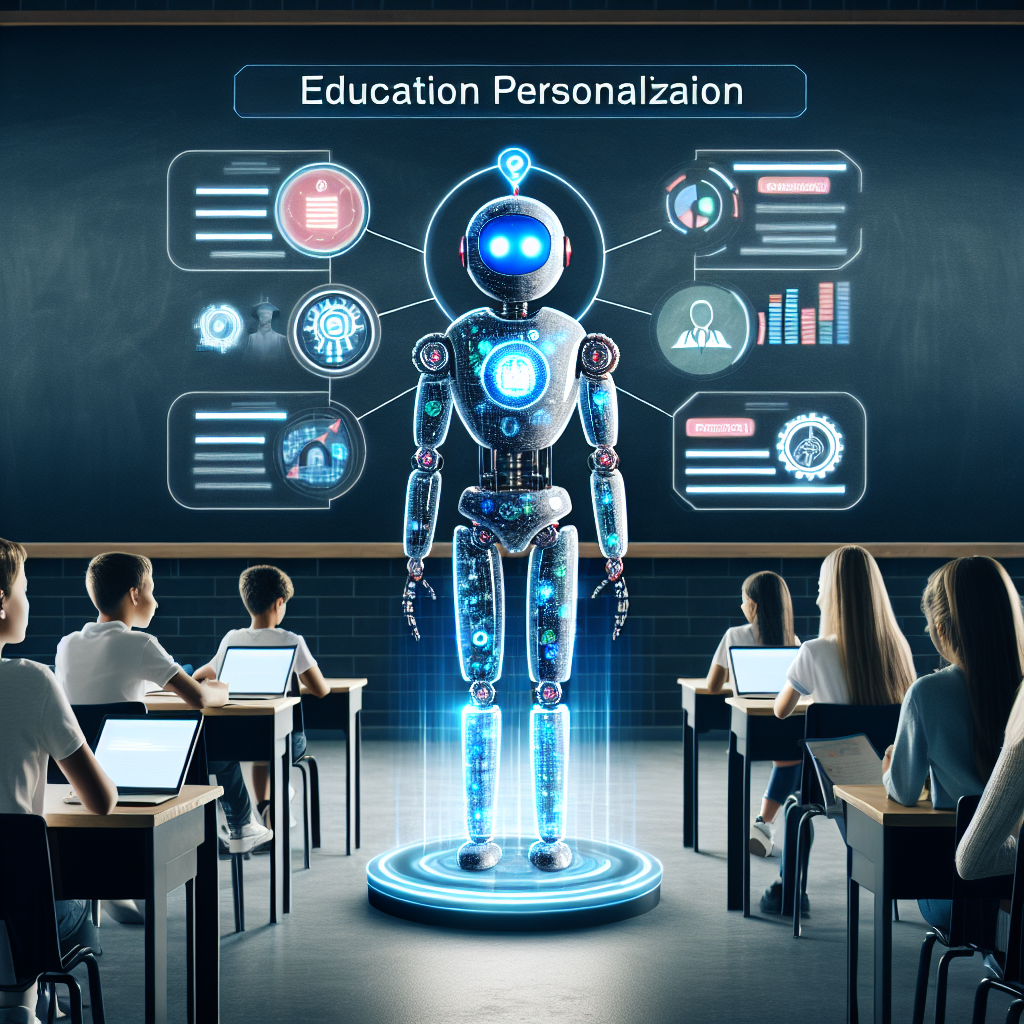
In recent years, the use of artificial intelligence (AI) in education has gained momentum, with personalized feedback being a key component of this trend. AI technology has the potential to revolutionize the way students receive feedback on their work, allowing for more individualized and targeted guidance. This article will explore the benefits of AI-powered personalized feedback in education, as well as some of the challenges and concerns associated with its implementation.
Personalized feedback refers to feedback that is tailored to the specific needs and abilities of each student. Traditional forms of feedback, such as written comments from teachers or grades on assignments, are often limited in their ability to provide meaningful guidance to students. AI technology, on the other hand, has the capability to analyze a vast amount of data and provide feedback that is customized to each student’s learning style, strengths, and weaknesses.
One of the key benefits of AI-powered personalized feedback is its ability to provide immediate and ongoing support to students. With traditional forms of feedback, students may have to wait days or even weeks to receive feedback on their work. This can be frustrating for students, as they may have moved on to new topics by the time they receive feedback on their previous assignments. AI technology can provide instant feedback to students, allowing them to quickly identify and correct any mistakes or misconceptions.
Another benefit of AI-powered personalized feedback is its ability to provide targeted guidance to students. AI algorithms can analyze a student’s work and provide feedback that is specific to their individual needs. For example, if a student is struggling with a particular concept, the AI system can provide additional resources or practice exercises to help them improve their understanding. This personalized approach to feedback can help students make faster progress and achieve better results in their studies.
AI-powered personalized feedback can also help teachers save time and resources. With traditional forms of feedback, teachers may spend hours grading assignments and providing written comments to each student. AI technology can automate much of this process, allowing teachers to focus on other aspects of their work, such as lesson planning and student support. This can help teachers be more efficient and effective in their roles, ultimately benefiting both students and educators.
Despite the many benefits of AI-powered personalized feedback in education, there are also some challenges and concerns associated with its implementation. One of the main concerns is the potential for bias in AI algorithms. AI systems are only as good as the data they are trained on, and if this data is biased or incomplete, the feedback provided by the AI system may also be biased. This could lead to unfair outcomes for students, particularly those from marginalized or underrepresented groups.
Another challenge is the potential for AI technology to replace human teachers. While AI-powered personalized feedback can be a valuable tool for educators, it should not be seen as a substitute for human teachers. Teachers play a crucial role in providing emotional support, motivation, and guidance to students, and AI technology should be used to complement rather than replace this important aspect of education.
In conclusion, AI-powered personalized feedback has the potential to transform the way students receive feedback in education. By providing immediate, targeted, and individualized guidance to students, AI technology can help students make faster progress and achieve better results in their studies. However, there are also challenges and concerns associated with the implementation of AI in education, including the potential for bias in AI algorithms and the risk of replacing human teachers. It is important for educators and policymakers to carefully consider these issues and work towards developing ethical and effective ways to use AI technology in education.
FAQs:
Q: How does AI technology provide personalized feedback to students?
A: AI technology uses algorithms to analyze a student’s work and provide feedback that is tailored to their individual needs. This can include identifying areas of strength and weakness, providing additional resources or practice exercises, and offering instant feedback on assignments.
Q: What are some of the benefits of AI-powered personalized feedback in education?
A: Some of the benefits of AI-powered personalized feedback include immediate and ongoing support for students, targeted guidance to help students improve their understanding, and time-saving for teachers by automating the feedback process.
Q: What are some of the challenges associated with AI-powered personalized feedback in education?
A: Some of the challenges associated with AI-powered personalized feedback include the potential for bias in AI algorithms, the risk of replacing human teachers, and the need to carefully consider ethical considerations in the use of AI technology in education.