
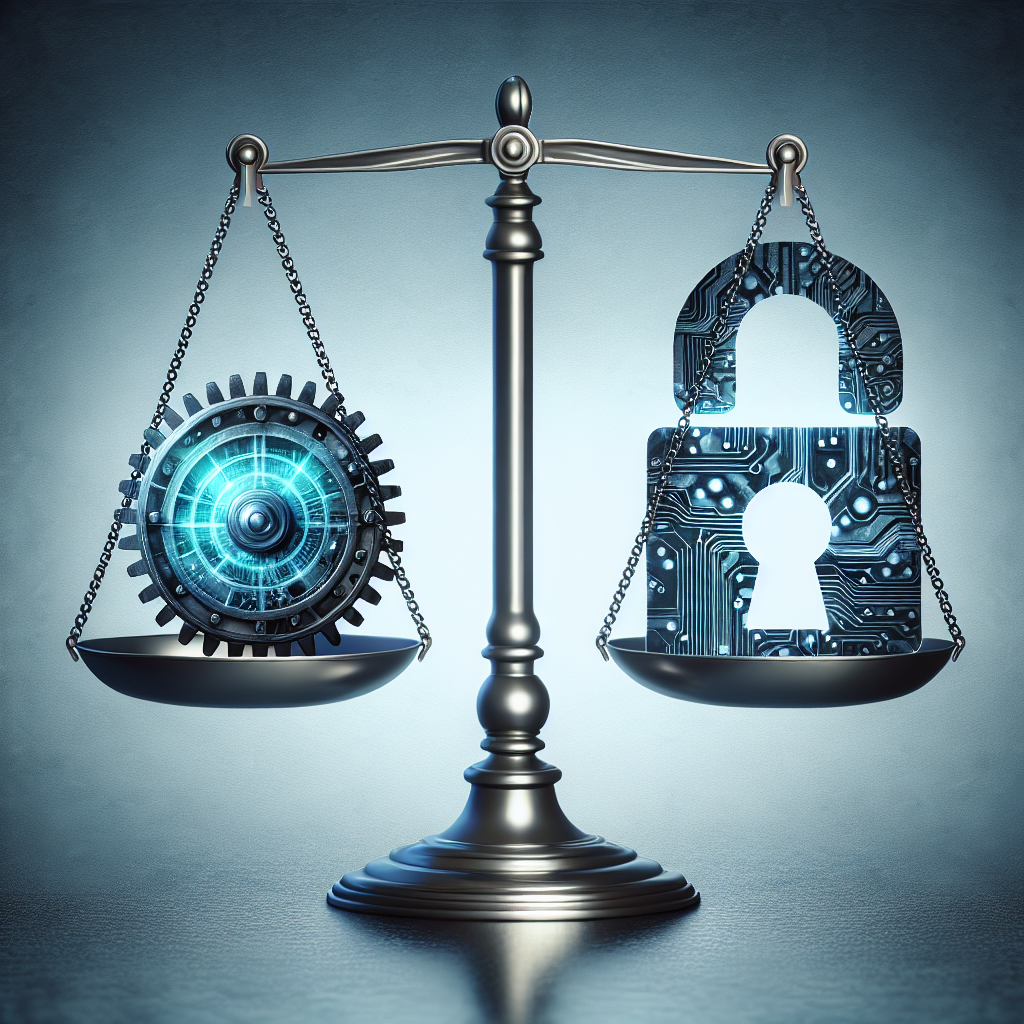
In recent years, the use of artificial intelligence (AI) in education has been on the rise, with schools and universities increasingly turning to AI-driven tools to enhance teaching and learning experiences. From personalized learning platforms to automated grading systems, AI has the potential to revolutionize education in countless ways. However, as with any technology, there are concerns about the potential risks to student data privacy.
Balancing innovation and security is a key challenge for educators, policymakers, and technology providers as they navigate the complex landscape of AI in education. On one hand, AI has the potential to greatly improve the quality of education by providing personalized learning experiences and real-time feedback to students. On the other hand, the collection and analysis of vast amounts of student data raise serious privacy concerns.
One of the main concerns surrounding AI in education is the collection and use of sensitive student data. With AI-driven tools collecting data on students’ learning habits, preferences, and performance, there is a risk that this information could be misused or compromised. For example, student data could be used to create profiles that could be sold to third parties or used for targeted advertising. In addition, there is the risk of data breaches that could expose students’ personal information to malicious actors.
To address these concerns, educators and policymakers must prioritize student data privacy when implementing AI in education. This includes establishing clear guidelines for the collection, storage, and use of student data, as well as ensuring that data is protected from unauthorized access. Additionally, schools and universities must educate students and parents about their data privacy rights and how their information is being used.
One way to balance innovation and security is through the use of encryption and other security measures to protect student data. By encrypting data at rest and in transit, schools can ensure that sensitive information is secure and only accessible to authorized users. Additionally, schools can implement data anonymization techniques to protect student privacy while still allowing for the analysis of aggregate data to improve educational outcomes.
Another approach to safeguarding student data privacy is to implement strict access controls and data governance policies. By limiting access to student data to only those who need it for educational purposes, schools can minimize the risk of unauthorized access or misuse. Schools should also regularly audit their data systems to ensure compliance with data privacy regulations and best practices.
In addition to technical safeguards, schools can also empower students and parents to take control of their own data privacy. By providing transparency about the types of data being collected and how it is being used, schools can build trust with students and parents. Schools should also provide mechanisms for students and parents to access, update, and delete their data as needed.
Ultimately, the key to balancing innovation and security in AI-driven education is to approach the use of technology with a critical eye towards data privacy. By implementing robust security measures, educating stakeholders about data privacy rights, and empowering students and parents to control their own data, schools can harness the power of AI while protecting student privacy.
FAQs:
Q: What types of student data are typically collected by AI-driven education tools?
A: AI-driven education tools may collect a wide range of student data, including but not limited to learning habits, preferences, performance, attendance, and demographic information.
Q: How can schools protect student data privacy when using AI in education?
A: Schools can protect student data privacy by implementing encryption, access controls, data governance policies, and transparency measures. Additionally, schools should educate students and parents about their data privacy rights.
Q: What are the risks of not prioritizing student data privacy in AI-driven education?
A: The risks of not prioritizing student data privacy in AI-driven education include unauthorized access to sensitive information, data breaches, misuse of student data, and loss of trust from students and parents.
Q: How can students and parents take control of their own data privacy in AI-driven education?
A: Students and parents can take control of their own data privacy by educating themselves about data privacy rights, asking questions about how their data is being used, and requesting access to, update, and delete their data as needed.