
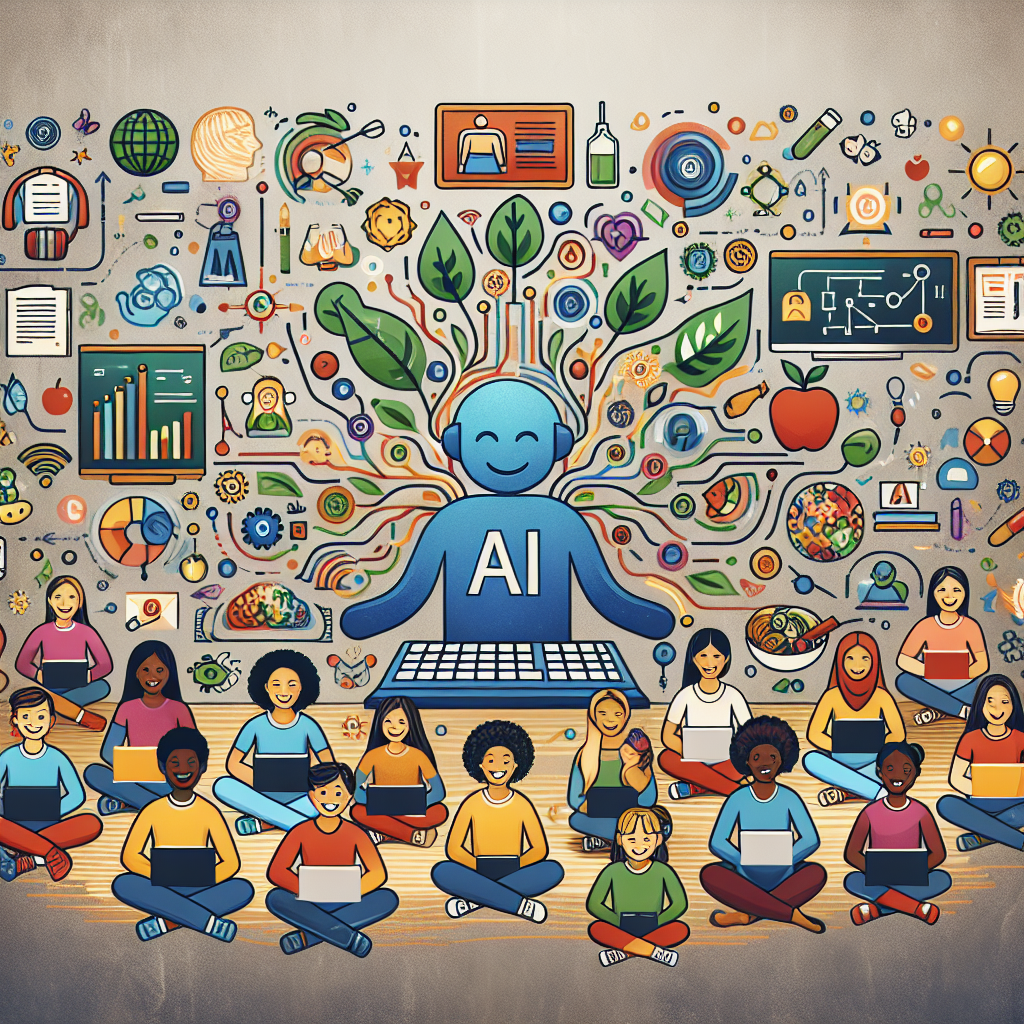
In recent years, there has been a growing emphasis on student wellbeing in education. Schools and universities are increasingly recognizing the importance of not only academic achievement, but also the overall health and happiness of their students. One emerging technology that has the potential to revolutionize the way we approach student wellbeing is artificial intelligence (AI). By leveraging AI, educators can take a more holistic approach to education, addressing not only academic needs, but also social, emotional, and mental health needs.
AI can play a key role in promoting student wellbeing in a number of ways. One of the most promising applications of AI in education is in personalized learning. AI algorithms can analyze vast amounts of data on individual students’ learning styles, preferences, and strengths and weaknesses to create personalized learning plans tailored to each student’s needs. This can help students learn more effectively and efficiently, reducing stress and frustration in the learning process.
AI can also be used to monitor and assess students’ mental health and wellbeing. By analyzing data on students’ behavior, interactions, and performance, AI algorithms can identify signs of stress, anxiety, or other mental health issues and alert educators or counselors to intervene. This early detection can help prevent more serious mental health problems from developing and ensure that students receive the support they need.
Another way AI can support student wellbeing is through the use of chatbots and virtual assistants. These AI-powered tools can provide students with immediate access to information, resources, and support, helping them navigate challenges and build resilience. Chatbots can also offer a non-judgmental space for students to express their feelings and concerns, providing a valuable outlet for emotional support.
AI can also be used to enhance social and emotional learning (SEL) in schools. By analyzing data on students’ social interactions, emotions, and communication patterns, AI algorithms can help educators identify areas where students may need additional support in developing social and emotional skills. AI-powered tools can also provide students with opportunities to practice and strengthen their SEL skills through interactive games, simulations, and exercises.
In addition to supporting individual students, AI can also help educators and administrators take a more holistic approach to promoting student wellbeing at the institutional level. By analyzing data on factors such as school climate, student engagement, and teacher-student relationships, AI algorithms can help identify areas where improvements can be made to create a more supportive and inclusive learning environment.
Despite the potential benefits of AI in promoting student wellbeing, there are also concerns and challenges that need to be addressed. One of the main concerns is the potential for AI to perpetuate biases and inequalities in education. AI algorithms are only as good as the data they are trained on, and if this data is biased or incomplete, the algorithms themselves can produce biased outcomes. Educators and developers must be vigilant in ensuring that AI systems are fair and equitable for all students.
Another challenge is the potential for AI to dehumanize education and replace human interactions with machines. While AI can provide valuable support and assistance, it is important to remember that human relationships and connections are essential for student wellbeing. AI should be used as a tool to enhance, rather than replace, the role of educators, counselors, and other support staff in promoting student wellbeing.
In order to maximize the benefits of AI in promoting student wellbeing, it is important for educators and policymakers to take a holistic approach to its implementation. This includes considering the ethical implications of AI, ensuring that students’ privacy and data security are protected, and providing training and support for educators in using AI effectively.
Overall, AI has the potential to revolutionize the way we approach student wellbeing in education. By leveraging AI technologies in a thoughtful and ethical manner, educators can create a more supportive, inclusive, and personalized learning environment that promotes the health and happiness of all students.
FAQs:
Q: How can AI help promote student wellbeing in education?
A: AI can help promote student wellbeing in education by providing personalized learning plans, monitoring and assessing students’ mental health, offering immediate access to information and support through chatbots and virtual assistants, enhancing social and emotional learning, and supporting educators in creating a more supportive and inclusive learning environment.
Q: What are some of the concerns and challenges of using AI in education?
A: Some of the concerns and challenges of using AI in education include the potential for bias and inequalities, the risk of dehumanizing education, and the need for ethical considerations around data privacy and security. It is important for educators and developers to address these challenges in order to maximize the benefits of AI in promoting student wellbeing.
Q: How can educators ensure that AI is used in a fair and equitable manner?
A: Educators can ensure that AI is used in a fair and equitable manner by carefully considering the data that AI algorithms are trained on, being aware of the potential biases in the data, and taking steps to mitigate these biases. Educators should also provide training and support for using AI effectively and ethically in the classroom.
Q: How can AI enhance social and emotional learning in schools?
A: AI can enhance social and emotional learning in schools by analyzing data on students’ social interactions, emotions, and communication patterns to identify areas where students may need additional support in developing social and emotional skills. AI-powered tools can also provide students with opportunities to practice and strengthen their SEL skills through interactive games, simulations, and exercises.