
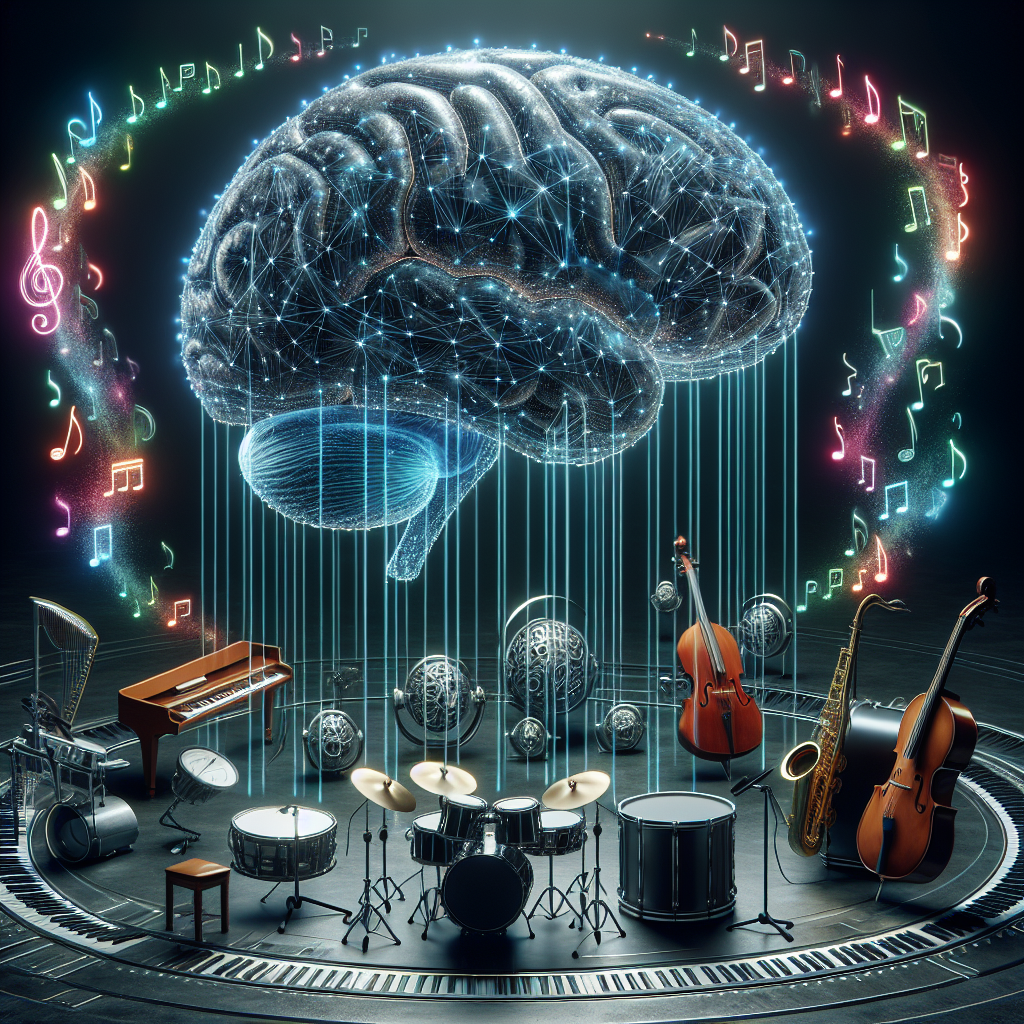
The Evolution of Music Genre Classification with AI
Music has always been a powerful form of expression and communication. It has the ability to evoke emotions, create a sense of nostalgia, and bring people together. With the rise of technology, particularly artificial intelligence (AI), the way we consume and categorize music has undergone a significant transformation. AI has played a crucial role in the evolution of music genre classification, making it easier for music lovers to discover new artists and genres that resonate with their tastes.
In the past, music genre classification was largely done manually by music critics, radio DJs, and music enthusiasts. However, the process was subjective and often led to inconsistencies in categorizing songs. With the advent of AI, music genre classification has become more accurate and efficient. AI algorithms can analyze music tracks based on various features such as tempo, beat, instrumentation, and lyrics, to accurately classify them into specific genres.
One of the key advantages of using AI for music genre classification is its ability to process large amounts of data quickly and accurately. AI algorithms can analyze millions of songs within seconds, making it easier for music streaming platforms to recommend personalized playlists to their users. This has revolutionized the way we discover new music, as AI can now predict the genres that we are likely to enjoy based on our listening habits.
Another benefit of using AI for music genre classification is its ability to identify emerging genres and trends in the music industry. AI algorithms can analyze patterns in music data to predict which genres are likely to become popular in the future. This has enabled record labels and artists to stay ahead of the curve and capitalize on emerging trends before they become mainstream.
Furthermore, AI has made it easier for music producers and artists to create music that appeals to a wider audience. By analyzing the characteristics of popular songs in different genres, AI algorithms can provide recommendations on how to improve a song’s composition and production to make it more commercially successful. This has democratized the music industry, making it easier for aspiring artists to break into the industry and reach a larger audience.
Despite the numerous benefits of using AI for music genre classification, there are also some challenges and limitations to consider. AI algorithms are only as good as the data they are trained on, which means that biases in the training data can lead to inaccurate genre classifications. For example, if a dataset is predominantly made up of songs from a specific genre, the AI algorithm may struggle to accurately classify songs from other genres.
Another challenge is the subjective nature of music genre classification. While AI algorithms can analyze objective features of music tracks, such as tempo and instrumentation, they may struggle to capture the emotional and cultural aspects that define a genre. For example, a song may have all the characteristics of a specific genre, but still be classified differently due to its unique sound or style.
Despite these challenges, AI has the potential to revolutionize the way we consume and categorize music. As AI technology continues to advance, we can expect even more accurate and personalized music recommendations, as well as a greater diversity of music genres to explore. The future of music genre classification is exciting, as AI continues to push the boundaries of what is possible in music discovery and appreciation.
FAQs:
Q: How does AI classify music genres?
A: AI algorithms classify music genres by analyzing various features of music tracks, such as tempo, beat, instrumentation, and lyrics. These features are used to create a mathematical representation of each song, which is then compared to a database of known genres to determine the most likely genre classification.
Q: Can AI accurately predict emerging music genres?
A: AI algorithms can analyze patterns in music data to predict which genres are likely to become popular in the future. While AI can provide insights into emerging trends, predicting the success of a new genre is still a subjective and complex process that involves various factors beyond just the music itself.
Q: How does AI help music producers and artists?
A: AI can provide recommendations on how to improve a song’s composition and production to make it more commercially successful. By analyzing the characteristics of popular songs in different genres, AI algorithms can help music producers and artists create music that appeals to a wider audience.
Q: Are there any limitations to using AI for music genre classification?
A: Yes, there are limitations to using AI for music genre classification, such as biases in the training data, the subjective nature of genre classification, and the inability to capture the emotional and cultural aspects of music genres. Despite these challenges, AI has the potential to revolutionize the way we consume and categorize music.