
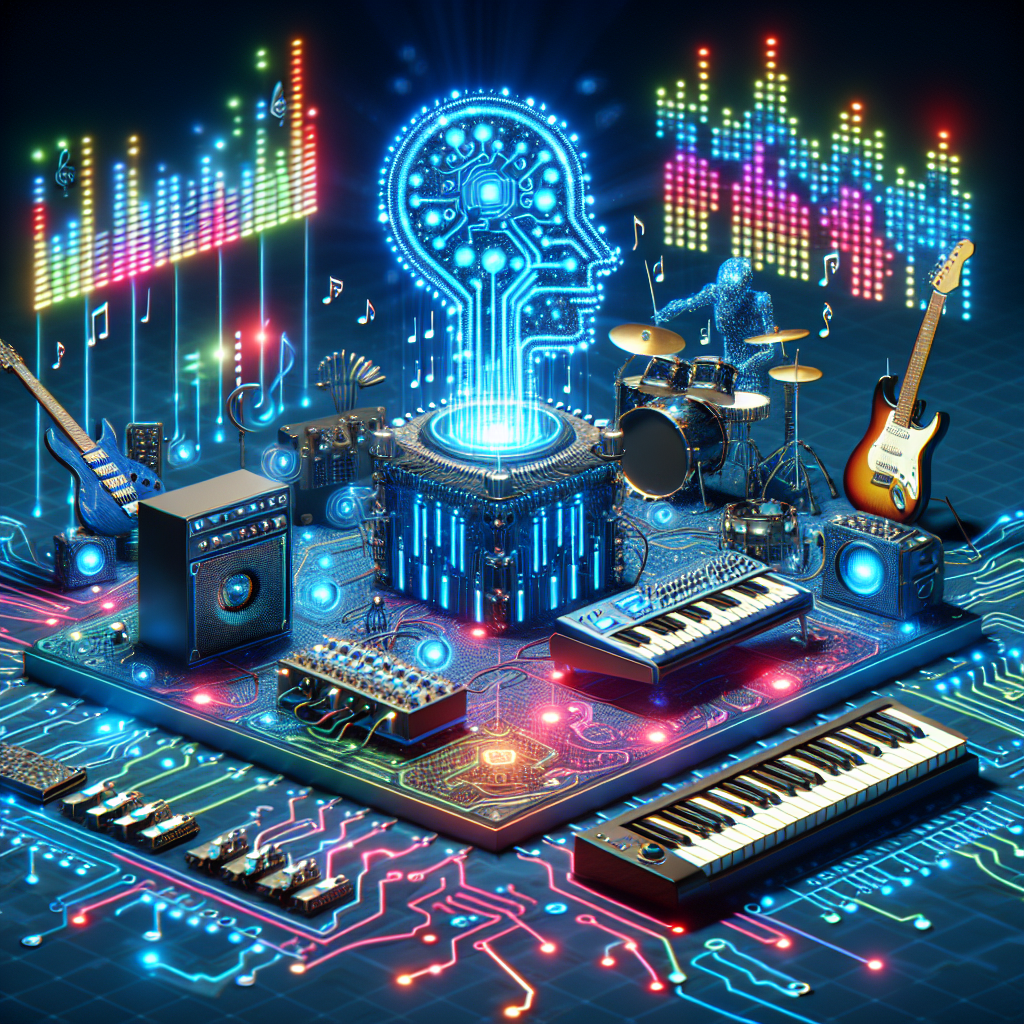
Artificial Intelligence (AI) has been making waves in various industries, and the music production sector is no exception. With the advancement of technology, AI has been utilized to explore new music production techniques, revolutionizing the way music is created, produced, and consumed.
One of the key areas where AI has been making a significant impact is in generating music. AI can analyze vast amounts of music data, identify patterns, and create new compositions based on these patterns. This has opened up possibilities for musicians and producers to experiment with new sounds and styles that they may not have thought of before.
AI-powered music generation tools, such as Magenta by Google and AIVA, have been developed to assist musicians in composing music. These tools use machine learning algorithms to analyze music data and generate new compositions based on the input provided by the user. This has enabled musicians to quickly create new music ideas, experiment with different arrangements, and explore new genres and styles.
Another area where AI has been instrumental in music production is in sound design and synthesis. AI algorithms can analyze audio samples and create new sounds that can be used in music production. This has enabled producers to create unique and innovative sounds that were previously difficult to achieve using traditional methods.
AI has also been used in mixing and mastering music. AI-powered tools can analyze audio tracks, identify areas that need improvement, and apply the necessary adjustments to achieve a professional sound. This has enabled musicians to produce high-quality music without the need for expensive studio equipment or a team of engineers.
Furthermore, AI has enabled musicians to personalize their music listening experience. Streaming platforms such as Spotify and Apple Music use AI algorithms to recommend music based on the user’s listening habits and preferences. This has enabled users to discover new music that they may not have come across otherwise, leading to a more personalized and enjoyable music listening experience.
Despite the numerous benefits that AI has brought to the music production industry, there are also concerns about the impact of AI on creativity and the role of human musicians in the music production process. Some argue that AI-generated music lacks the emotional depth and creativity that human musicians bring to their compositions. However, others believe that AI can be used as a tool to enhance creativity and inspire new ideas.
In conclusion, AI has the potential to revolutionize the music production industry by exploring new techniques and pushing the boundaries of creativity. It has enabled musicians to experiment with new sounds, styles, and genres, leading to a more diverse and innovative music landscape. While there are concerns about the impact of AI on creativity, it is clear that AI has opened up new possibilities for musicians and producers to create music that was previously unimaginable. With further advancements in AI technology, the future of music production looks bright and exciting.
FAQs:
Q: Can AI replace human musicians in the music production process?
A: While AI has the potential to assist human musicians in the music production process, it is unlikely to completely replace them. Human musicians bring a unique emotional depth and creativity to their compositions that AI-generated music may lack. AI can be used as a tool to enhance creativity and inspire new ideas, but ultimately, human musicians will continue to play a vital role in the music production process.
Q: How can AI be used to enhance creativity in music production?
A: AI can be used to analyze vast amounts of music data, identify patterns, and generate new compositions based on these patterns. This can inspire musicians to experiment with new sounds, styles, and genres that they may not have thought of before. AI can also be used in sound design, synthesis, mixing, and mastering to create unique and innovative music that pushes the boundaries of creativity.
Q: Are there any ethical concerns surrounding the use of AI in music production?
A: There are ethical concerns surrounding the use of AI in music production, particularly in terms of copyright infringement and ownership of AI-generated music. It is important for musicians and producers to understand the legal implications of using AI-generated music and to ensure that they have the necessary rights to use and distribute the music. Additionally, there are concerns about the impact of AI on creativity and the role of human musicians in the music production process. It is important for musicians to use AI as a tool to enhance creativity and inspiration, rather than as a replacement for human musicians.