
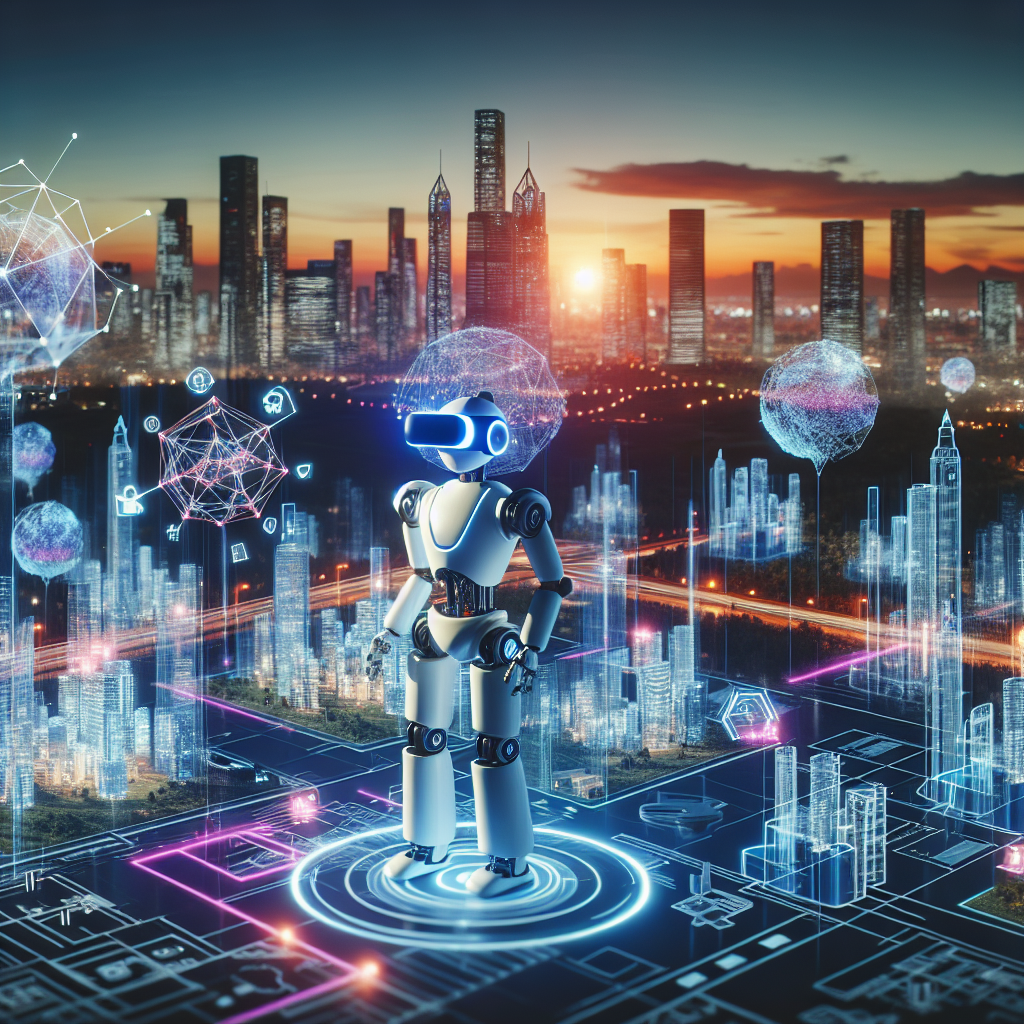
Artificial Intelligence (AI) and virtual reality (VR) are two cutting-edge technologies that are revolutionizing the field of urban design. By combining the power of AI with the immersive experience of VR, architects and city planners are able to create more efficient, sustainable, and user-friendly urban environments. In this article, we will explore the ways in which AI and VR are being used in urban design, and the potential impact they could have on the future of cities.
AI in Urban Design
AI is rapidly transforming the way urban designers approach the planning and development of cities. By analyzing vast amounts of data, AI algorithms are able to identify patterns and trends that can inform more effective decision-making. For example, AI can be used to analyze traffic patterns, population demographics, and environmental factors to optimize the layout of a city and improve transportation systems.
One of the key advantages of AI in urban design is its ability to predict future trends and anticipate potential problems. By using machine learning algorithms, urban planners can simulate different scenarios and assess the impact of various interventions before they are implemented. This allows for more informed decision-making and reduces the risk of costly mistakes.
AI can also be used to optimize the energy efficiency of buildings and infrastructure. By analyzing data on energy consumption and environmental conditions, AI algorithms can identify opportunities for improving energy efficiency and reducing carbon emissions. This can help cities meet their sustainability goals and reduce their impact on the environment.
Overall, AI has the potential to revolutionize urban design by providing designers with valuable insights and tools to create more livable, sustainable, and resilient cities.
VR in Urban Design
Virtual reality is another technology that is transforming the field of urban design. By creating immersive 3D environments, VR allows designers to visualize their projects in a more realistic and interactive way. This can help stakeholders, such as city officials and residents, better understand the proposed design and provide feedback before construction begins.
VR can also be used to simulate the experience of walking or driving through a city, allowing designers to test different design options and assess their impact on the user experience. This can help identify potential problems, such as congestion or lack of accessibility, before they become issues in the real world.
One of the key advantages of VR in urban design is its ability to engage stakeholders in the design process. By allowing residents to explore and interact with proposed designs in a virtual environment, designers can gather valuable feedback and ensure that the final design meets the needs and preferences of the community.
Overall, VR is a powerful tool for urban designers to create more user-friendly and inclusive urban environments that enhance the quality of life for residents.
The Exploration of AI and VR in Urban Design
The combination of AI and VR in urban design has the potential to revolutionize the way cities are planned and developed. By harnessing the power of AI to analyze data and predict future trends, and using VR to visualize and simulate design options, designers can create more efficient, sustainable, and user-friendly urban environments.
One of the key benefits of using AI and VR in urban design is the ability to test different scenarios and assess their impact before construction begins. By simulating various design options in a virtual environment, designers can identify potential problems and optimize their designs to create the best possible outcome.
For example, AI algorithms can analyze data on traffic patterns and population demographics to optimize the layout of a city and improve transportation systems. VR can then be used to simulate the experience of walking or driving through the city, allowing designers to test different design options and assess their impact on the user experience.
Another advantage of using AI and VR in urban design is the ability to engage stakeholders in the design process. By creating immersive virtual environments, designers can allow residents to explore and interact with proposed designs, gather feedback, and ensure that the final design meets the needs and preferences of the community.
The combination of AI and VR in urban design also has the potential to improve the energy efficiency of buildings and infrastructure. By analyzing data on energy consumption and environmental conditions, AI algorithms can identify opportunities for improving energy efficiency and reducing carbon emissions. VR can then be used to visualize the impact of these interventions and help stakeholders understand the benefits of sustainable design.
Overall, the exploration of AI and VR in urban design has the potential to transform the way cities are planned and developed, creating more livable, sustainable, and resilient urban environments.
FAQs
Q: How is AI being used in urban design?
A: AI is being used in urban design to analyze data, predict future trends, optimize energy efficiency, and simulate different scenarios to inform decision-making.
Q: How is VR being used in urban design?
A: VR is being used in urban design to create immersive 3D environments, visualize design options, simulate user experiences, and engage stakeholders in the design process.
Q: What are the advantages of using AI and VR in urban design?
A: The advantages of using AI and VR in urban design include the ability to test different scenarios, engage stakeholders, optimize designs, and improve energy efficiency.
Q: How can AI and VR help create more sustainable cities?
A: AI and VR can help create more sustainable cities by optimizing energy efficiency, reducing carbon emissions, and engaging stakeholders in the design process to ensure that the final design meets the needs and preferences of the community.
In conclusion, AI and VR are revolutionizing the field of urban design by providing designers with valuable insights and tools to create more efficient, sustainable, and user-friendly urban environments. By harnessing the power of AI to analyze data and predict future trends, and using VR to visualize and simulate design options, designers can create more inclusive and resilient cities that enhance the quality of life for residents. The exploration of AI and VR in urban design has the potential to transform the way cities are planned and developed, creating more livable and sustainable urban environments for future generations.