
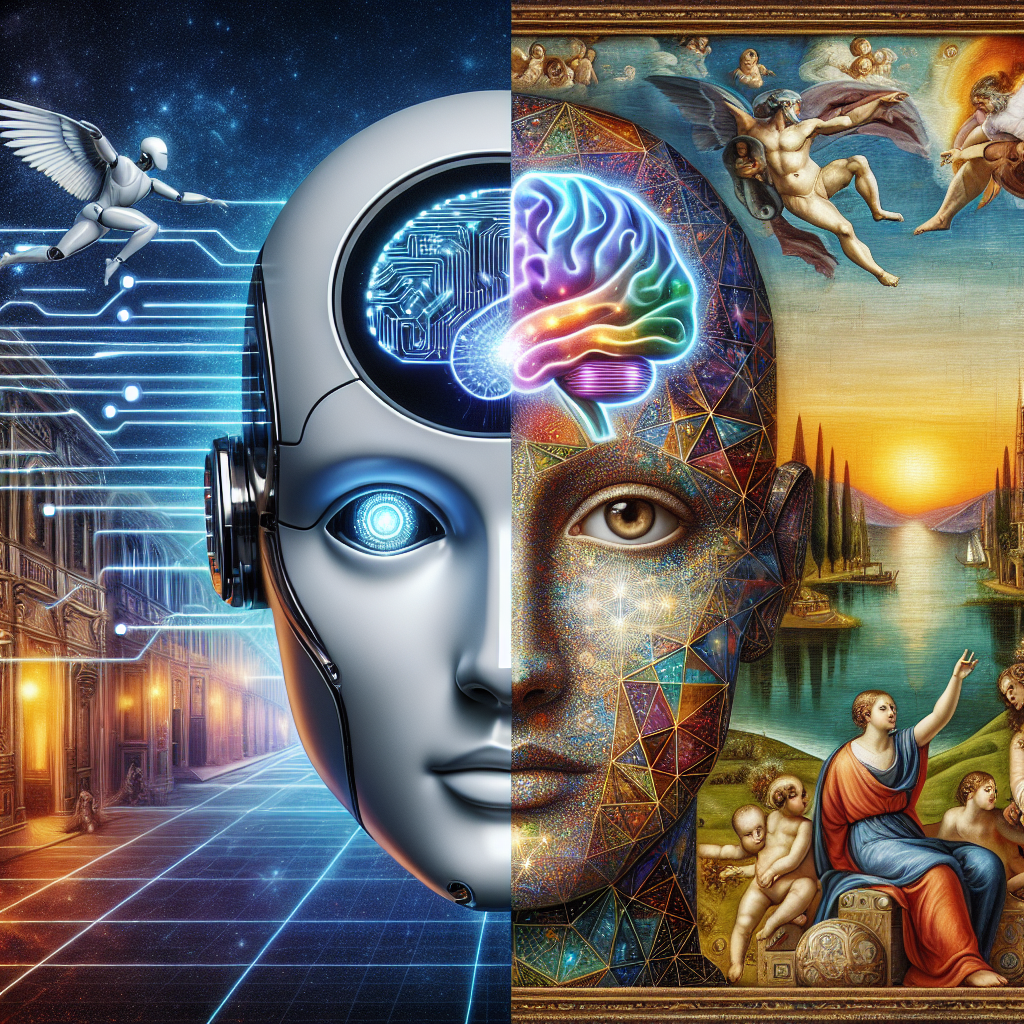
Artificial Intelligence (AI) has become a hot topic in recent years, with its applications expanding into various industries, including art. The intersection of AI and art has led to a new era of creativity and innovation, sparking discussions about the future of art and whether we are on the brink of a new Renaissance.
AI has the potential to revolutionize the art world in many ways, from creating new forms of art to enhancing the creative process for artists. With AI algorithms becoming more sophisticated and capable, artists are able to explore new techniques and styles that were previously out of reach. AI can generate art, compose music, write poetry, and even create virtual reality experiences, blurring the lines between human and machine creativity.
One of the most exciting developments in AI art is the use of Generative Adversarial Networks (GANs), a type of neural network that can generate new images, videos, and music based on existing data. Artists can input a dataset of images or sounds into a GAN and let the algorithm generate new, unique creations. This process allows for endless possibilities and opens up new avenues for artistic expression.
Another area where AI is making a significant impact is in the curation and discovery of art. AI algorithms can analyze vast amounts of data to identify trends, patterns, and connections in the art world. This can help art collectors, museums, and galleries discover new artists, predict market trends, and curate exhibitions more efficiently. AI can also personalize the art viewing experience for individuals by recommending artworks based on their preferences and tastes.
AI is also being used to restore and preserve artworks. With the help of AI algorithms, damaged or deteriorating artworks can be digitally restored, preserving their cultural heritage for future generations. AI can also analyze artworks to detect forgeries and authenticate pieces, ensuring the integrity of the art market.
Despite the many benefits of AI in the art world, there are also concerns about the impact of AI on creativity and artistic expression. Some critics argue that AI-generated art lacks the emotional depth and human touch that is essential to art. They fear that AI could replace human artists and devalue the traditional artistic process.
However, proponents of AI art believe that technology can enhance human creativity rather than replace it. AI can be used as a tool to inspire new ideas, experiment with different styles, and push the boundaries of traditional art forms. Artists can collaborate with AI algorithms to create hybrid artworks that combine the best of human and machine creativity.
The future of art in the age of AI is still uncertain, but one thing is clear: AI is here to stay and will continue to shape the art world in profound ways. Whether we are on the cusp of a new Renaissance or not, one thing is certain: AI has the potential to revolutionize art and open up new possibilities for artists and art lovers alike.
FAQs:
Q: Can AI truly be creative?
A: While AI algorithms can generate art and music that mimic human creativity, the question of whether AI can be truly creative is still up for debate. Some argue that creativity is a uniquely human trait that involves emotions, intuition, and consciousness, which AI lacks. Others believe that AI can be creative in its own way, by processing vast amounts of data and generating novel solutions.
Q: Will AI replace human artists?
A: While AI has the potential to enhance the creative process for artists, it is unlikely to replace human artists entirely. AI-generated art can complement human creativity and inspire new ideas, but the emotional depth and personal touch that human artists bring to their work cannot be replicated by machines.
Q: How can artists collaborate with AI?
A: Artists can collaborate with AI by using algorithms to generate new ideas, experiment with different styles, and push the boundaries of traditional art forms. By incorporating AI into their creative process, artists can explore new techniques and possibilities that were previously out of reach.
Q: What are the ethical implications of AI in art?
A: There are many ethical implications to consider when using AI in art, such as ownership of AI-generated artworks, copyright issues, and the impact of AI on artistic expression. Artists and policymakers must navigate these complex issues to ensure that AI is used responsibly and ethically in the art world.