
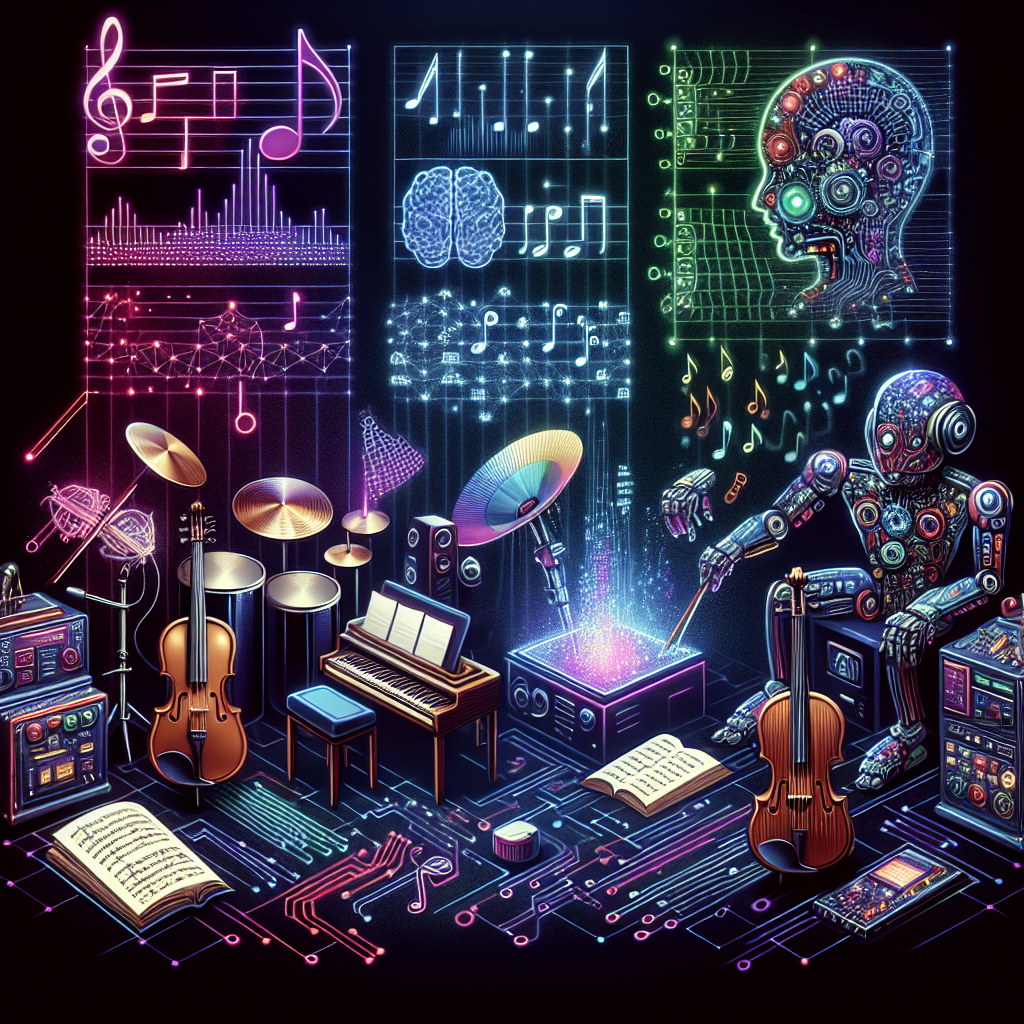
In recent years, artificial intelligence (AI) has made significant advancements in various fields, including music performance analysis. AI technology has the potential to revolutionize the way we understand and analyze music performances, offering new insights and opportunities for musicians, music scholars, and music enthusiasts alike. In this article, we will explore the current state of AI in music performance analysis and its potential impact on the future of music.
AI in Music Performance Analysis
Music performance analysis is the study of musical performances, including aspects such as timing, pitch, dynamics, and expression. Traditionally, music performance analysis has been a time-consuming and labor-intensive process, requiring experts to manually transcribe and analyze performances. However, with the advent of AI technology, music performance analysis has become more efficient and accurate than ever before.
One of the key applications of AI in music performance analysis is the use of machine learning algorithms to automatically transcribe and analyze musical performances. These algorithms can analyze audio recordings of performances and extract valuable information such as note pitch, timing, dynamics, and articulation. By analyzing large amounts of data, AI algorithms can identify patterns and trends in performances that may be difficult for human analysts to detect.
Another important application of AI in music performance analysis is the use of deep learning algorithms to model and analyze musical expression. Deep learning algorithms can learn to recognize and interpret subtle nuances in performances, such as phrasing, dynamics, and emotion. By analyzing these aspects of performances, AI algorithms can provide valuable insights into the artistic and expressive qualities of music.
The Future of Music Performance Analysis
As AI technology continues to advance, the future of music performance analysis looks promising. AI algorithms are becoming increasingly sophisticated and capable of analyzing performances with greater accuracy and detail. In the future, AI technology may be able to analyze performances in real-time, providing instant feedback to musicians and audiences.
AI algorithms may also be able to analyze performances across different genres and styles, providing new insights into the diversity and richness of musical expression. By analyzing performances from a wide range of cultures and traditions, AI technology can help to promote cross-cultural understanding and appreciation of music.
Furthermore, AI technology may enable new forms of musical collaboration and creativity. By analyzing performances and identifying common patterns and structures, AI algorithms can help musicians to explore new ways of composing and performing music. AI algorithms may also be able to generate new musical ideas and compositions, providing inspiration and guidance to musicians.
FAQs
Q: How accurate is AI in analyzing music performances?
A: AI algorithms can analyze music performances with a high degree of accuracy, often outperforming human analysts in terms of speed and efficiency. However, the accuracy of AI algorithms can vary depending on the complexity of the music and the quality of the audio recordings.
Q: Can AI replace human musicians?
A: While AI technology has the potential to assist and enhance the work of musicians, it is unlikely to completely replace human musicians. Music is a deeply human art form that relies on creativity, emotion, and expression, qualities that are difficult for AI algorithms to replicate.
Q: How can musicians benefit from AI in music performance analysis?
A: Musicians can benefit from AI technology in a variety of ways, including receiving feedback on their performances, analyzing their playing technique, and exploring new musical ideas and compositions. AI technology can help musicians to improve their skills, expand their creative horizons, and connect with audiences in new and exciting ways.
In conclusion, AI technology has the potential to revolutionize the way we understand and analyze music performances. By harnessing the power of AI algorithms, we can gain new insights into the artistic and expressive qualities of music, promote cross-cultural understanding and appreciation, and explore new forms of musical collaboration and creativity. As AI technology continues to advance, the future of music performance analysis looks bright, offering exciting opportunities for musicians, music scholars, and music enthusiasts alike.