
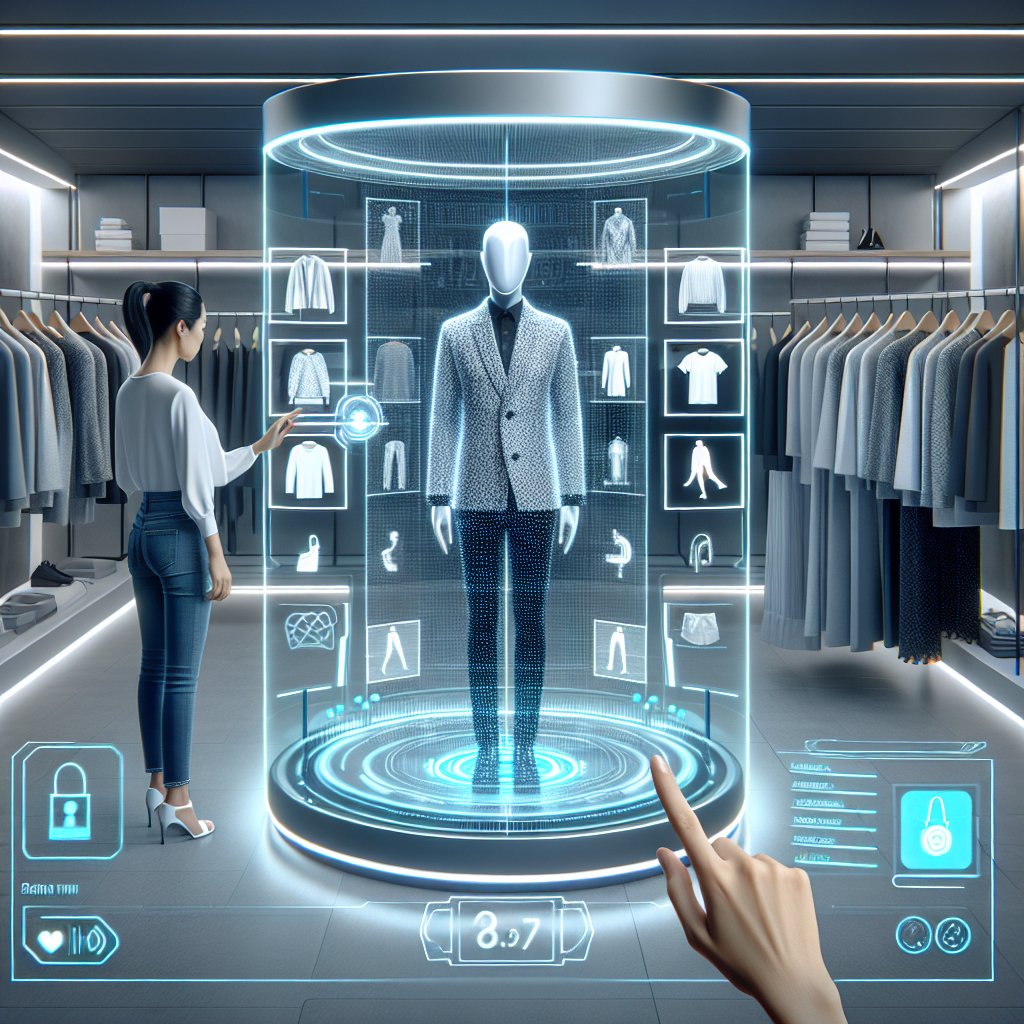
The world of retail is constantly evolving, with technology playing a major role in shaping the way consumers shop. One of the latest innovations to hit the retail scene is virtual fitting rooms powered by artificial intelligence (AI). These virtual fitting rooms are changing the way consumers try on clothing and accessories, offering a more convenient and efficient shopping experience.
AI technology has advanced significantly in recent years, allowing retailers to create virtual fitting rooms that accurately simulate the experience of trying on clothes in person. By using AI algorithms, virtual fitting rooms can analyze a customer’s body measurements and style preferences to recommend the best-fitting and most flattering clothing options. This technology has the potential to revolutionize the way consumers shop for clothes, making the process more personalized and enjoyable.
One of the key benefits of virtual fitting rooms is the ability to try on clothes without physically being in a store. This is particularly useful for consumers who prefer to shop online or who live in remote areas without easy access to brick-and-mortar stores. Virtual fitting rooms allow customers to see how clothes will look on them before making a purchase, reducing the need for returns and exchanges. This can save both the consumer and the retailer time and money, leading to a more efficient shopping experience for all parties involved.
Another advantage of virtual fitting rooms is the ability to try on a wide variety of clothing options in a short amount of time. With traditional in-store fitting rooms, customers are limited by the number of items they can physically try on at once. Virtual fitting rooms eliminate this limitation by allowing customers to virtually try on as many items as they like, quickly and easily. This can help customers make more informed purchasing decisions and find the perfect outfit for any occasion.
In addition to trying on clothes, some virtual fitting rooms also offer the ability to mix and match different items to create complete outfits. This can be particularly useful for customers who struggle with styling or who are looking for inspiration for new looks. By using AI algorithms to suggest complementary pieces, virtual fitting rooms can help customers create cohesive and stylish outfits that suit their individual tastes.
Virtual fitting rooms are also beneficial for retailers, as they can help increase sales and reduce returns. By offering customers a more personalized and convenient shopping experience, retailers can build brand loyalty and encourage repeat purchases. Virtual fitting rooms can also provide valuable data on customer preferences and buying behavior, which can help retailers improve their marketing strategies and product offerings.
While virtual fitting rooms offer many benefits, there are some challenges to consider as well. One of the main concerns is the accuracy of the virtual try-on experience. AI algorithms are constantly improving, but there is still a risk of inaccuracies in body measurements and clothing fit. Additionally, some customers may prefer the tactile experience of trying on clothes in person and may not be fully satisfied with a virtual fitting room experience.
Despite these challenges, virtual fitting rooms are likely to become more common in the future as retailers continue to invest in AI technology. As the technology improves, virtual fitting rooms have the potential to revolutionize the way consumers shop for clothes, offering a more personalized, efficient, and enjoyable shopping experience.
FAQs:
Q: How accurate are virtual fitting rooms in determining the best fit for clothing?
A: Virtual fitting rooms use AI algorithms to analyze a customer’s body measurements and style preferences to recommend the best-fitting clothing options. While the technology is constantly improving, there is still a risk of inaccuracies in body measurements and clothing fit.
Q: Can virtual fitting rooms help reduce returns and exchanges?
A: Yes, virtual fitting rooms can help reduce returns and exchanges by allowing customers to see how clothes will look on them before making a purchase. This can help customers make more informed purchasing decisions and find the perfect outfit for any occasion.
Q: Are virtual fitting rooms only available for online shopping?
A: While virtual fitting rooms are particularly useful for online shopping, some retailers are also incorporating them into their brick-and-mortar stores. This allows customers to try on clothes virtually in-store before making a purchase.
Q: Can virtual fitting rooms help customers create complete outfits?
A: Yes, some virtual fitting rooms offer the ability to mix and match different items to create complete outfits. By using AI algorithms to suggest complementary pieces, virtual fitting rooms can help customers create cohesive and stylish outfits that suit their individual tastes.