
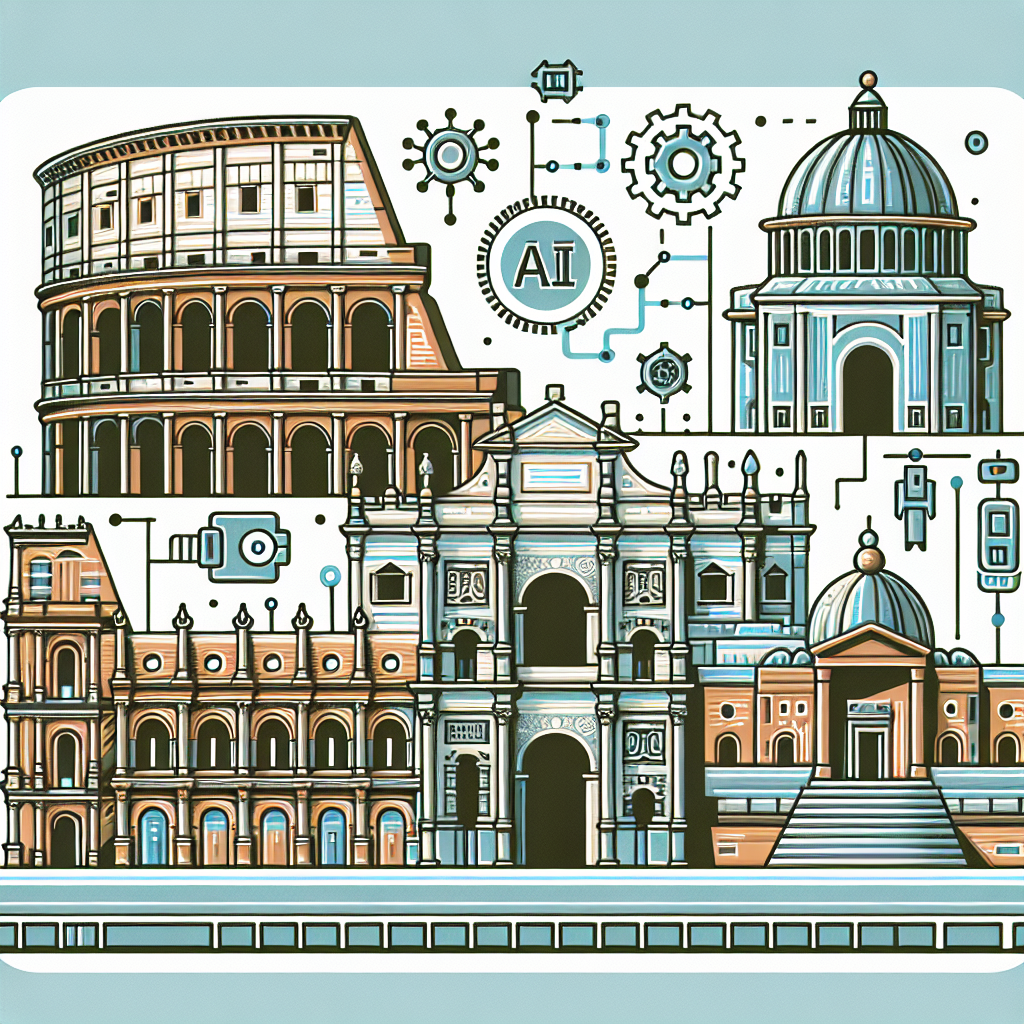
In recent years, artificial intelligence (AI) has been making significant strides in various fields, including architecture. One of the most fascinating applications of AI in architecture is its role in the preservation of cultural heritage. This technology has the potential to revolutionize the way we understand, document, and protect historical buildings and sites.
AI technology has the capability to analyze vast amounts of data and information, which can be incredibly useful in the preservation of cultural heritage in architecture. By using AI, architects and historians can gather and process data more efficiently and accurately than ever before. This can help in the documentation and preservation of historical buildings and sites, ensuring that they are protected for future generations to enjoy.
One of the ways in which AI can help in the preservation of cultural heritage in architecture is through the use of 3D scanning and modeling. AI algorithms can analyze the data collected from 3D scans of buildings and sites, allowing for the creation of detailed and accurate digital models. These models can be used to document and preserve historical structures, as well as to study and analyze their architectural features.
Another way in which AI can aid in the preservation of cultural heritage in architecture is through the use of machine learning algorithms. These algorithms can analyze historical data and information to identify patterns and trends, helping to understand the evolution of architectural styles and techniques over time. This can be incredibly valuable in the preservation of historical buildings and sites, as it can provide insights into the cultural significance and architectural value of these structures.
Furthermore, AI can also be used to assist in the restoration and conservation of historical buildings and sites. By analyzing data and information, AI algorithms can help architects and historians make informed decisions about the best ways to preserve and restore these structures. This can help ensure that historical buildings are restored in a way that is true to their original design and intent, preserving their cultural heritage for future generations.
In addition to its applications in the preservation of cultural heritage, AI can also be used to enhance the visitor experience at historical buildings and sites. By using AI-powered virtual reality and augmented reality technologies, visitors can explore historical structures in immersive and interactive ways, gaining a deeper understanding and appreciation of their cultural significance.
Overall, the use of AI in the preservation of cultural heritage in architecture has the potential to revolutionize the way we understand and protect historical buildings and sites. By harnessing the power of AI technology, architects and historians can better document, analyze, and preserve our cultural heritage for future generations to enjoy.
FAQs:
Q: How can AI be used in the preservation of cultural heritage in architecture?
A: AI can be used in various ways in the preservation of cultural heritage in architecture, including 3D scanning and modeling, machine learning algorithms, and restoration and conservation assistance.
Q: What are the benefits of using AI in the preservation of cultural heritage in architecture?
A: The benefits of using AI in the preservation of cultural heritage in architecture include improved data analysis and processing, enhanced documentation and preservation capabilities, and better restoration and conservation decision-making.
Q: How can AI enhance the visitor experience at historical buildings and sites?
A: AI-powered virtual reality and augmented reality technologies can enhance the visitor experience at historical buildings and sites by providing immersive and interactive ways to explore and learn about these structures.
Q: What are the challenges of using AI in the preservation of cultural heritage in architecture?
A: Some of the challenges of using AI in the preservation of cultural heritage in architecture include data privacy and security concerns, the need for specialized expertise in AI technology, and potential biases in data analysis algorithms.
Q: How can architects and historians benefit from using AI in the preservation of cultural heritage in architecture?
A: Architects and historians can benefit from using AI in the preservation of cultural heritage in architecture by gaining access to advanced data analysis and processing capabilities, enhanced documentation and preservation tools, and improved restoration and conservation decision-making support.