
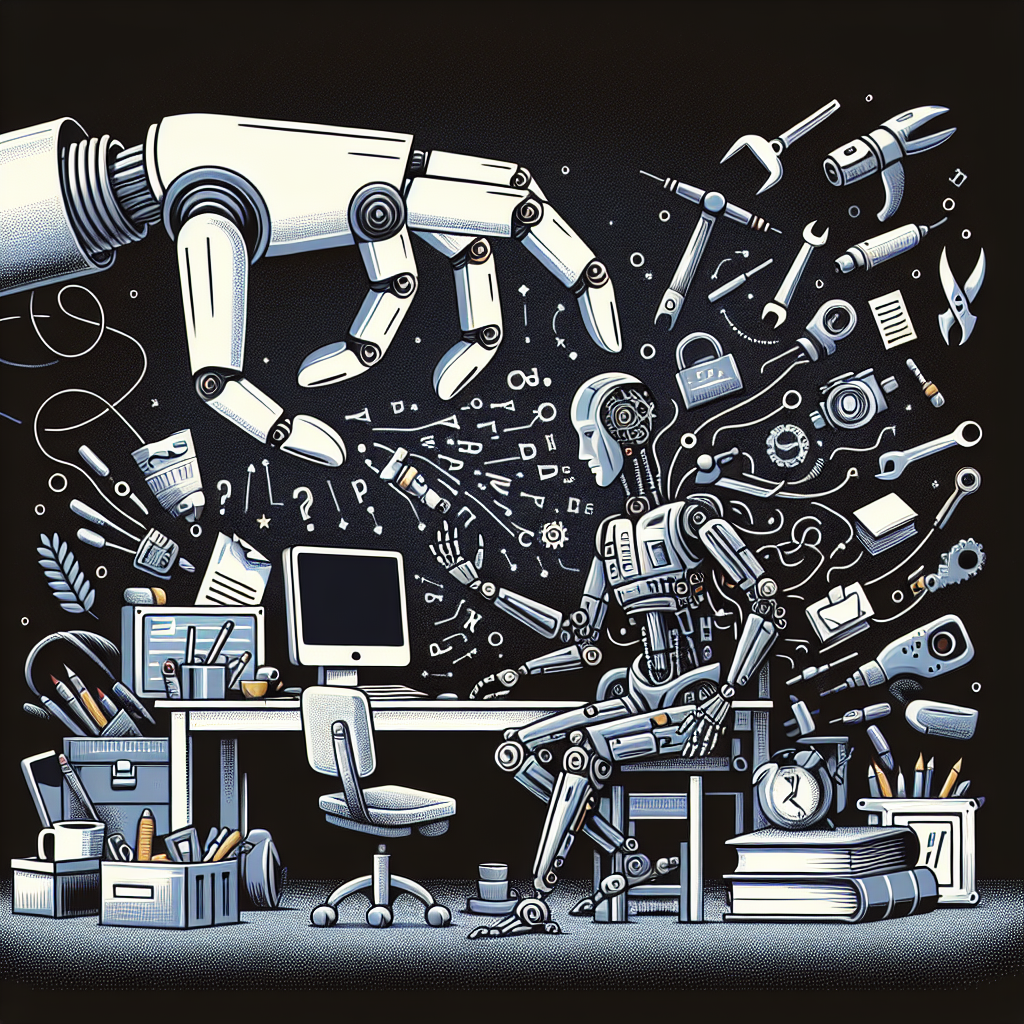
Artificial Intelligence (AI) has been a hot topic in recent years, with advancements in technology leading to the automation of various tasks previously performed by humans. While AI has the potential to greatly benefit society by increasing efficiency and productivity, there is also growing concern about the threat of job displacement. As AI continues to advance, many fear that it will lead to the loss of jobs across various industries, leaving many workers unemployed.
The threat of job displacement due to AI is a complex and multifaceted issue that requires careful consideration. While some argue that AI will create new job opportunities and increase overall economic growth, others believe that the rapid pace of technological advancement will outpace the ability of workers to adapt, leading to widespread job losses.
One of the main arguments in favor of AI is that it has the potential to increase efficiency and productivity, leading to economic growth and job creation. For example, AI can automate repetitive tasks, freeing up human workers to focus on more complex and creative tasks. This can lead to increased productivity and innovation, ultimately creating new job opportunities in industries that rely on AI technology.
However, the rapid pace of technological advancement has raised concerns about the ability of workers to adapt to these changes. As AI becomes more advanced and capable of performing tasks that were previously done by humans, there is a risk that many workers will be left behind. This is particularly concerning for workers in industries that are highly susceptible to automation, such as manufacturing, transportation, and customer service.
In addition, the rise of AI has also raised concerns about the potential for job polarization, where high-skilled workers benefit from the use of AI technology while low-skilled workers face job displacement. This can lead to increased income inequality and social unrest, as those who are unable to adapt to the changing job market are left behind.
Another issue to consider is the impact of job displacement on society as a whole. As more jobs become automated, there is a risk of widespread unemployment and economic instability. This can have far-reaching consequences, including increased poverty, social unrest, and a decrease in overall well-being.
In order to address the threat of job displacement due to AI, it is important for policymakers, businesses, and workers to work together to find solutions that will benefit everyone. This may include investing in education and training programs to help workers adapt to the changing job market, as well as implementing policies that promote job creation and economic growth.
Overall, while AI has the potential to greatly benefit society, it is important to consider the potential risks and challenges associated with job displacement. By working together to find solutions that benefit everyone, we can ensure that AI technology is used in a way that promotes economic growth and social well-being.
FAQs:
Q: Will AI lead to widespread job displacement?
A: While AI has the potential to automate many tasks currently performed by humans, it is difficult to predict the exact impact on job displacement. Some argue that AI will create new job opportunities and increase overall economic growth, while others are concerned about the rapid pace of technological advancement leading to job losses.
Q: What industries are most at risk of job displacement due to AI?
A: Industries that rely heavily on repetitive tasks and routine processes, such as manufacturing, transportation, and customer service, are most at risk of job displacement due to AI automation.
Q: How can workers adapt to the changing job market?
A: Workers can adapt to the changing job market by investing in education and training programs to develop new skills and stay competitive in the workforce. Additionally, policymakers and businesses can work together to create policies that promote job creation and economic growth.
Q: What are the potential consequences of job displacement due to AI?
A: The potential consequences of job displacement due to AI include increased unemployment, income inequality, social unrest, and economic instability. It is important for policymakers, businesses, and workers to work together to find solutions that benefit everyone.