
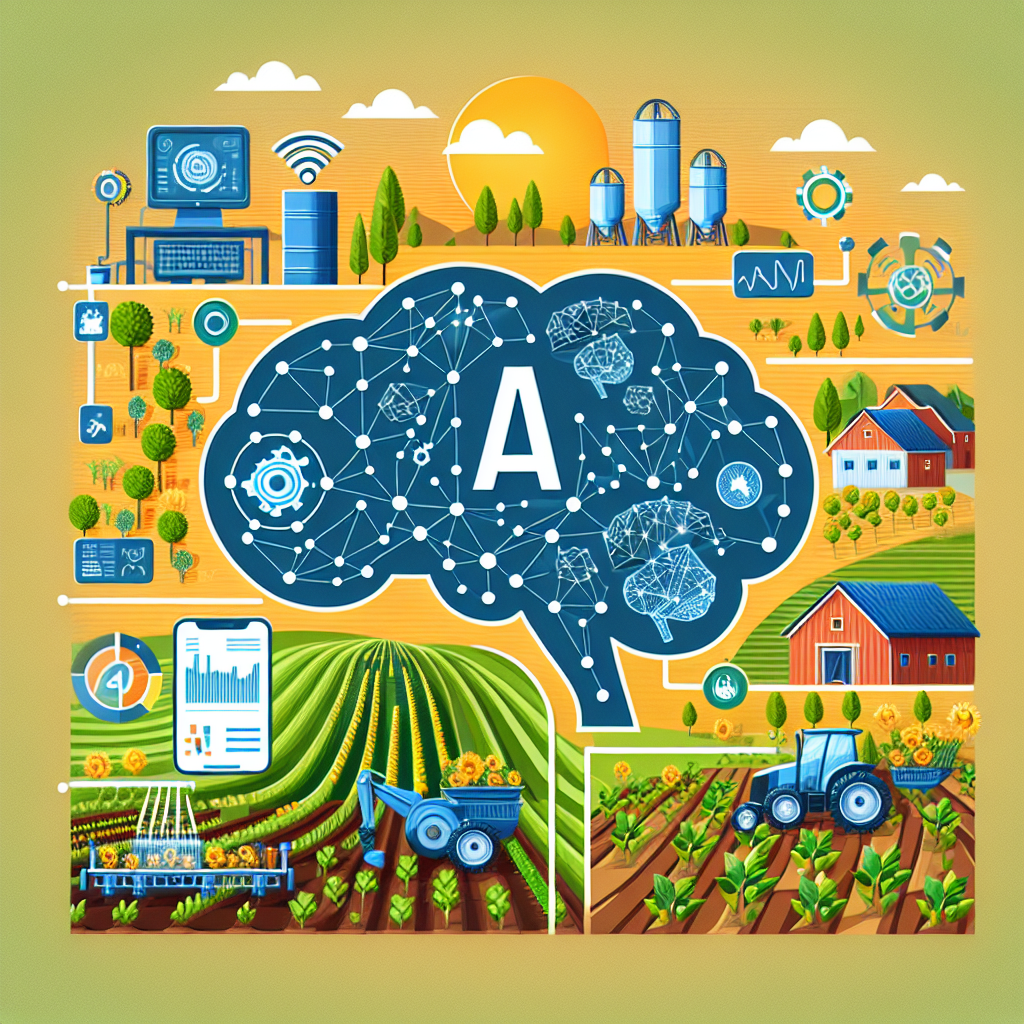
With the increasing demand for food production to support a growing global population, the agriculture industry is facing numerous challenges such as climate change, resource scarcity, and environmental degradation. In order to address these challenges and ensure the sustainability of agricultural practices, there has been a growing interest in the use of artificial intelligence (AI) technology.
AI has the potential to revolutionize the way we approach agriculture by providing data-driven insights and solutions to improve productivity, efficiency, and sustainability. In this article, we will explore the various applications of AI in enhancing agricultural sustainability reporting and how it can help farmers, researchers, and policymakers make informed decisions to promote sustainable agriculture.
AI Applications in Enhancing Agricultural Sustainability Reporting
1. Precision Agriculture: One of the key applications of AI in agriculture is precision agriculture, which involves using advanced technologies such as drones, sensors, and AI algorithms to monitor and analyze crop health, soil conditions, and weather patterns. By collecting and analyzing data in real-time, farmers can make more informed decisions about irrigation, fertilization, and pest control, leading to increased productivity and reduced environmental impact.
2. Crop Monitoring and Management: AI-powered drones and satellites can capture high-resolution images of crops to monitor their growth and health. By analyzing these images using computer vision algorithms, farmers can identify areas of stress or disease early on and take corrective action to prevent crop loss. AI can also help optimize planting patterns and crop rotation schedules to maximize yield and minimize the use of pesticides and fertilizers.
3. Predictive Analytics: AI can analyze historical data on weather patterns, soil quality, and crop yields to predict future trends and potential risks. By using machine learning algorithms, farmers can anticipate changes in weather conditions, pest outbreaks, or market demand, allowing them to adjust their farming practices accordingly. This proactive approach can help reduce crop losses, increase profitability, and minimize the environmental impact of agriculture.
4. Supply Chain Management: AI can streamline the supply chain process by optimizing logistics, inventory management, and distribution networks. By analyzing data on crop yields, market demand, and transportation costs, AI algorithms can help farmers and food producers make more efficient decisions about when and where to sell their products. This can reduce food waste, improve profitability, and ensure a more sustainable and resilient food supply chain.
5. Soil Health Monitoring: AI can analyze soil samples to assess soil health and fertility levels. By using machine learning algorithms to correlate soil data with crop performance, farmers can optimize their soil management practices to improve yields and reduce the need for chemical inputs. AI can also help identify areas of soil erosion or contamination, allowing farmers to take remedial action to protect soil quality and ecosystem health.
6. Water Management: AI can help farmers optimize water usage by analyzing data on soil moisture levels, weather forecasts, and crop water requirements. By using sensors and AI algorithms to automate irrigation systems, farmers can ensure that crops receive the right amount of water at the right time, reducing water waste and energy costs. AI can also help monitor water quality and detect pollution sources, enabling farmers to protect water resources and comply with regulatory requirements.
FAQs
Q: How can AI help farmers reduce the use of pesticides and fertilizers?
A: AI can analyze data on crop health, pest infestations, and weather patterns to help farmers identify early signs of pest outbreaks and disease. By using predictive analytics, farmers can take preventive measures such as introducing natural predators, adjusting planting schedules, or using targeted spraying techniques to minimize the use of chemical inputs.
Q: Can AI help small-scale farmers improve their productivity and profitability?
A: Yes, AI technology can be scaled down to meet the needs of small-scale farmers by providing affordable and user-friendly tools for data collection, analysis, and decision-making. By leveraging AI-powered solutions, small-scale farmers can access valuable insights and recommendations to optimize their farming practices, increase yields, and improve their livelihoods.
Q: How can AI contribute to sustainable agriculture practices?
A: AI can support sustainable agriculture practices by promoting resource efficiency, reducing environmental impact, and enhancing ecosystem resilience. By providing data-driven insights and solutions, AI can help farmers make informed decisions that balance economic, social, and environmental objectives. Ultimately, AI can contribute to the long-term sustainability of agriculture by improving productivity, profitability, and ecosystem health.
In conclusion, AI has the potential to revolutionize the agriculture industry by enhancing sustainability reporting and promoting more efficient, resilient, and environmentally friendly farming practices. By leveraging AI technology, farmers, researchers, and policymakers can make informed decisions to address the challenges of climate change, resource scarcity, and environmental degradation. As AI continues to evolve and become more accessible, the future of agriculture looks promising with the potential to feed a growing global population while preserving the health of our planet.