
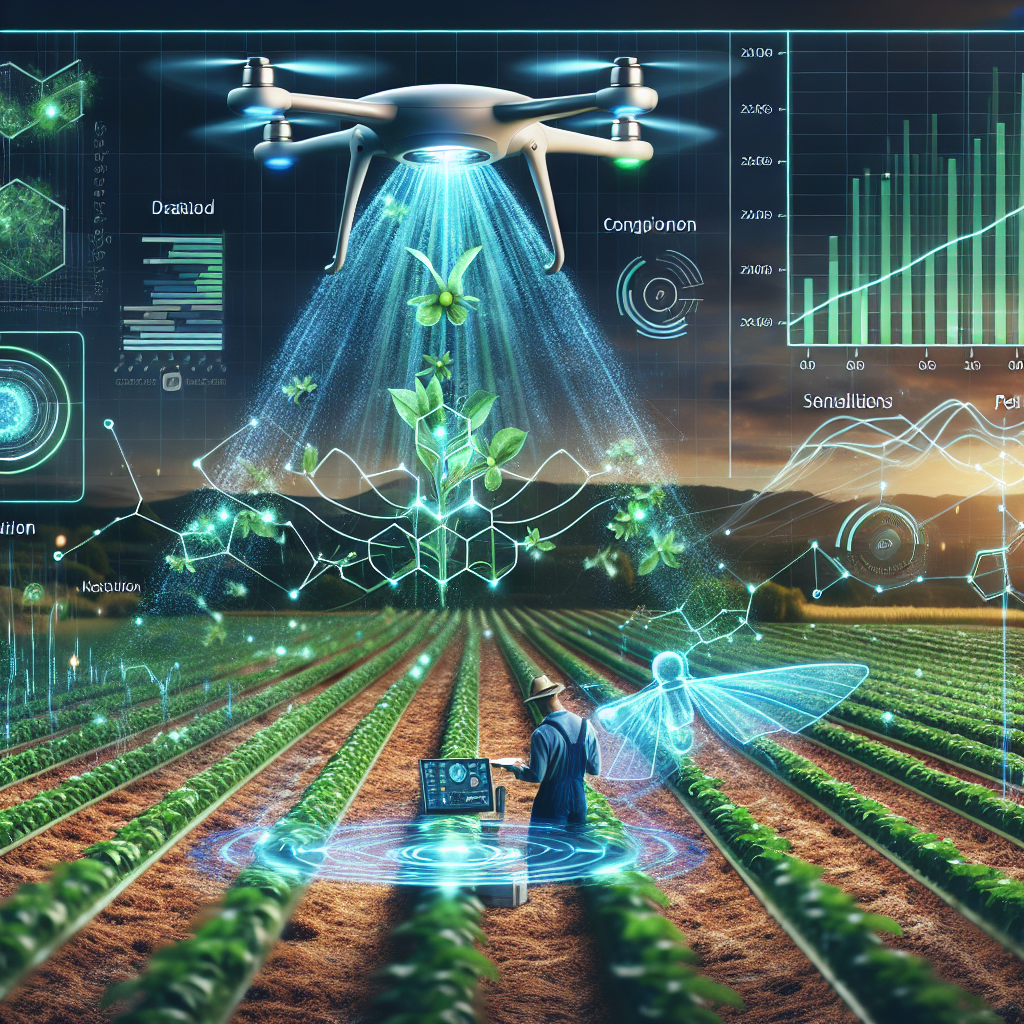
With the increasing global population, there is a growing demand for food production. However, pests and diseases pose a significant threat to agricultural crops, leading to reduced yields and economic losses for farmers. Traditional methods of pest and disease management often involve the use of chemical pesticides, which can have detrimental effects on the environment and human health. As a result, there is a growing interest in using artificial intelligence (AI) technologies to help farmers better manage pests and diseases in agriculture.
AI applications in pest and disease management in agriculture have the potential to revolutionize the way farmers monitor, detect, and control pests and diseases in their crops. By leveraging AI technologies such as machine learning, computer vision, and predictive analytics, farmers can make more informed decisions about when and where to apply pesticides, ultimately reducing their use and minimizing the impact on the environment.
One of the key benefits of using AI in pest and disease management is its ability to monitor crops continuously and in real-time. Traditional methods of scouting for pests and diseases involve manual labor and can be time-consuming and labor-intensive. AI technologies, on the other hand, can be deployed in the field using drones or sensors to monitor crops and identify signs of pest and disease infestations much more quickly and efficiently.
For example, computer vision algorithms can analyze images of crops taken by drones or sensors to identify specific pests or diseases based on their visual characteristics. Machine learning algorithms can then use this data to predict the likelihood of an infestation occurring in a particular area, allowing farmers to take preventive measures before a problem becomes widespread.
In addition to monitoring crops, AI can also help farmers make more informed decisions about when and where to apply pesticides. By analyzing data on weather conditions, crop health, and pest populations, AI algorithms can generate recommendations on the optimal timing and location for pesticide applications. This can help farmers reduce the amount of pesticides they use, saving them time and money while also minimizing the environmental impact of their operations.
Another promising application of AI in pest and disease management is the development of predictive models that can forecast pest and disease outbreaks before they occur. By analyzing historical data on pest and disease populations, weather patterns, and crop health, AI algorithms can predict when and where outbreaks are likely to occur, allowing farmers to take preventive measures to mitigate their impact.
Overall, AI applications in pest and disease management have the potential to revolutionize the way farmers approach crop protection. By leveraging the power of AI technologies, farmers can improve the efficiency and effectiveness of their pest and disease management strategies, ultimately leading to higher yields, lower costs, and a more sustainable agricultural system.
FAQs:
Q: What are some examples of AI technologies used in pest and disease management in agriculture?
A: Some examples of AI technologies used in pest and disease management in agriculture include machine learning algorithms, computer vision systems, and predictive analytics tools.
Q: How can AI help farmers reduce the use of chemical pesticides?
A: By providing farmers with real-time monitoring and predictive analytics, AI can help farmers make more informed decisions about when and where to apply pesticides, ultimately reducing their use and minimizing the impact on the environment.
Q: What are the benefits of using AI in pest and disease management in agriculture?
A: The benefits of using AI in pest and disease management in agriculture include improved monitoring and detection of pests and diseases, more precise and targeted pesticide applications, and the ability to forecast pest and disease outbreaks before they occur.
Q: Are there any drawbacks to using AI in pest and disease management in agriculture?
A: While AI technologies have the potential to revolutionize pest and disease management in agriculture, there are some challenges to consider, such as the cost of implementing AI systems, the need for specialized expertise to operate and maintain AI technologies, and concerns about data privacy and security.
Q: How can farmers implement AI technologies in their pest and disease management strategies?
A: Farmers can implement AI technologies in their pest and disease management strategies by partnering with technology providers, investing in training for their staff, and integrating AI systems into their existing operations. It is important for farmers to work closely with AI experts to ensure that they are using these technologies effectively and responsibly.