
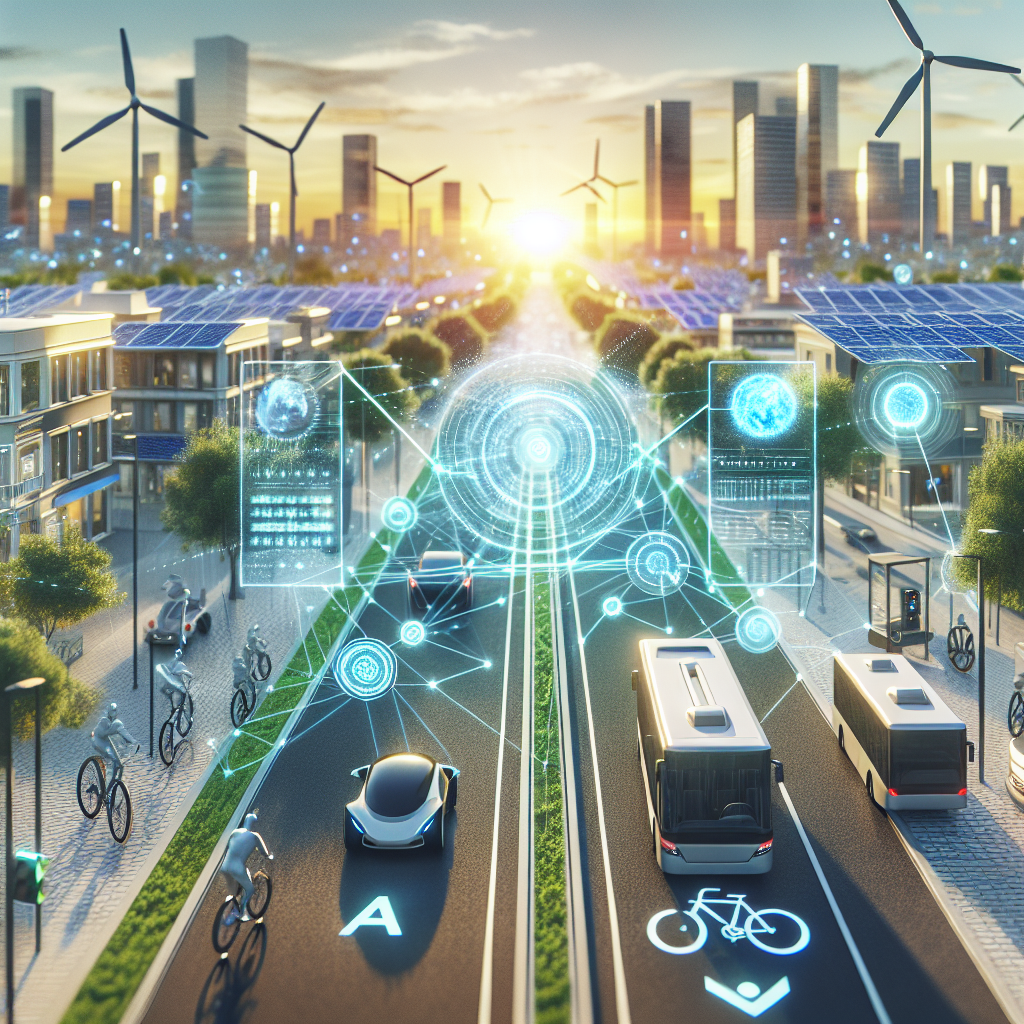
In recent years, urban mobility and transportation have become major challenges for cities around the world. With growing populations, increasing traffic congestion, and concerns about air pollution and greenhouse gas emissions, there is a pressing need for innovative solutions to make urban transportation more sustainable. Artificial Intelligence (AI) is playing an increasingly important role in addressing these challenges, with applications ranging from traffic management and optimization to autonomous vehicles and ride-sharing services. In this article, we will explore some of the key AI applications in sustainable urban mobility and transportation.
AI Applications in Traffic Management
One of the most promising applications of AI in urban transportation is in traffic management. AI-powered systems can analyze real-time traffic data from sensors, cameras, and other sources to optimize traffic flow, reduce congestion, and improve overall efficiency. For example, AI algorithms can predict traffic patterns and adjust traffic signals in real-time to reduce delays and improve the flow of vehicles. This can help decrease travel times, lower fuel consumption, and reduce emissions.
AI can also be used to optimize public transportation routes and schedules. By analyzing data on passenger demand, traffic conditions, and other factors, AI algorithms can recommend the most efficient routes and schedules for buses, trains, and other forms of public transportation. This can help reduce wait times, increase ridership, and improve the overall quality of public transportation services.
Autonomous Vehicles
Another major application of AI in urban transportation is in the development of autonomous vehicles. Autonomous vehicles use AI algorithms to navigate roads, avoid obstacles, and make decisions in real-time. These vehicles have the potential to revolutionize urban transportation by reducing accidents, improving traffic flow, and increasing efficiency.
Autonomous vehicles can also be integrated into ride-sharing services, allowing users to request a ride from a self-driving car. This can help reduce the number of cars on the road, decrease traffic congestion, and lower emissions. In addition, autonomous vehicles can provide mobility solutions for people with disabilities or those who are unable to drive.
Ride-Sharing and Mobility as a Service (MaaS)
AI is also being used to optimize ride-sharing services and Mobility as a Service (MaaS) platforms. These platforms allow users to book rides, share vehicles, and access different modes of transportation through a single app. AI algorithms can analyze data on user preferences, traffic conditions, and other factors to recommend the most efficient and cost-effective transportation options for each user.
By promoting ride-sharing and MaaS platforms, cities can reduce the number of single-occupancy vehicles on the road, decrease traffic congestion, and lower emissions. These platforms also provide users with more convenient and flexible transportation options, making it easier to navigate urban environments without the need for private vehicles.
FAQs
Q: How can AI help reduce traffic congestion in cities?
A: AI-powered systems can analyze real-time traffic data to optimize traffic flow, adjust traffic signals, and recommend the most efficient transportation routes and schedules. By reducing delays and improving the overall efficiency of transportation systems, AI can help decrease traffic congestion in cities.
Q: What are the benefits of autonomous vehicles in urban transportation?
A: Autonomous vehicles have the potential to reduce accidents, improve traffic flow, and increase efficiency in urban transportation. They can also be integrated into ride-sharing services, providing users with convenient and cost-effective transportation options.
Q: How can AI improve public transportation services?
A: AI algorithms can optimize public transportation routes and schedules, recommend the most efficient transportation options for users, and help reduce wait times and increase ridership. By improving the quality and efficiency of public transportation services, AI can help cities provide better transportation options for residents.
Q: What are some examples of AI-powered ride-sharing and MaaS platforms?
A: Some examples of AI-powered ride-sharing and MaaS platforms include Uber, Lyft, and other similar services. These platforms use AI algorithms to analyze user preferences, traffic conditions, and other factors to recommend the most efficient and cost-effective transportation options for users.
In conclusion, AI has the potential to revolutionize urban mobility and transportation by optimizing traffic management, developing autonomous vehicles, and improving ride-sharing and MaaS platforms. By harnessing the power of AI, cities can create more sustainable, efficient, and convenient transportation systems that benefit both residents and the environment.