
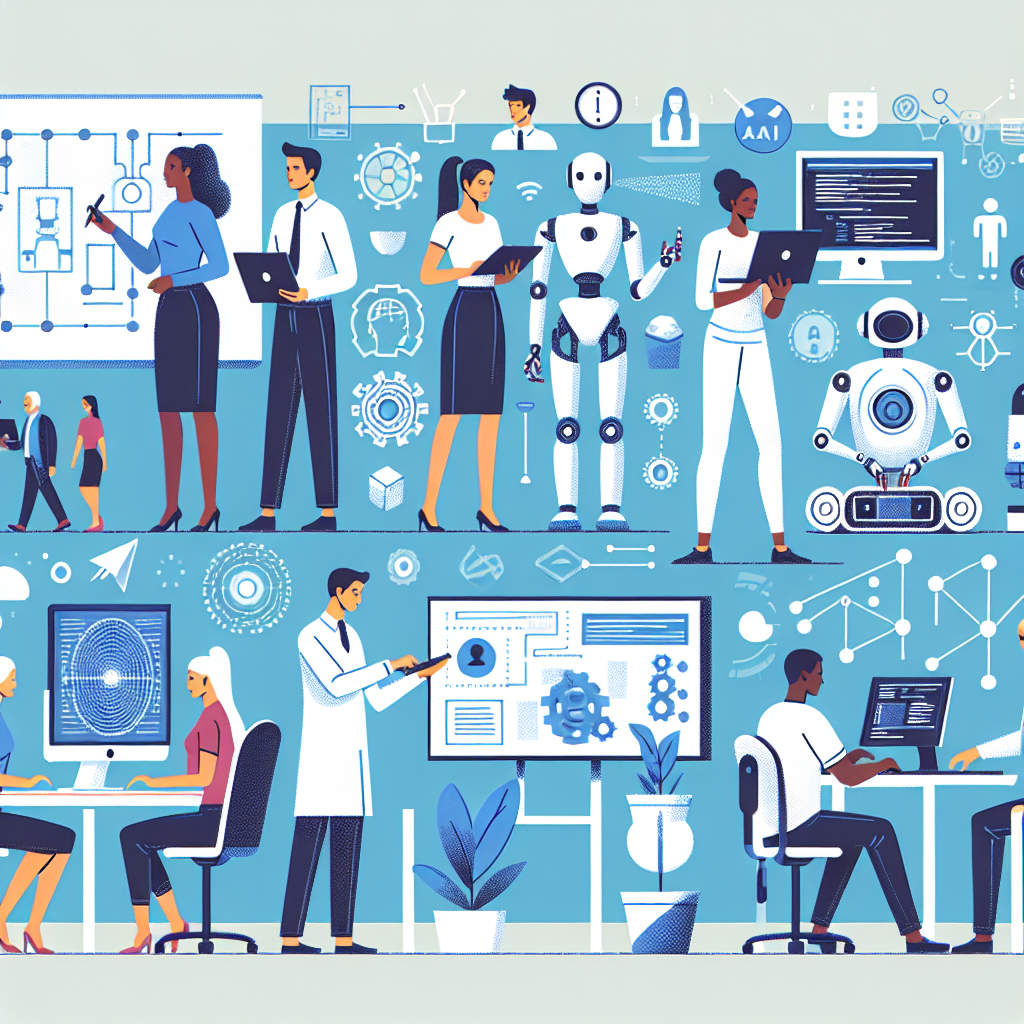
AI Automation and Diversity in the Workplace
Introduction
Artificial Intelligence (AI) automation has been rapidly transforming the workplace, revolutionizing how businesses operate and increasing efficiency across various industries. With the rise of AI technology, there has been a growing concern about its impact on diversity and inclusion in the workplace. As AI continues to play a significant role in decision-making processes, there is a need to address the potential biases that can arise from its implementation and ensure that diversity is maintained in the workplace.
The Role of AI Automation in the Workplace
AI automation refers to the use of artificial intelligence technology to automate tasks that were previously performed by humans. This technology has the potential to streamline processes, increase productivity, and reduce human error. In the workplace, AI automation is being used in a wide range of applications, from customer service to financial analysis to human resources.
One of the key benefits of AI automation is its ability to analyze large amounts of data quickly and accurately. This can help businesses make more informed decisions and improve overall efficiency. For example, AI-powered software can analyze customer feedback to identify trends and improve products or services. In the financial industry, AI algorithms can quickly analyze market data to make trading decisions in real-time.
However, as AI technology becomes more prevalent in the workplace, there is a growing concern about its impact on diversity and inclusion. AI algorithms are trained on historical data, which can contain biases that are reflected in their decision-making processes. This can lead to discriminatory outcomes, such as biased hiring practices or unequal treatment of employees.
The Impact of AI Automation on Diversity in the Workplace
One of the main concerns about AI automation in the workplace is its potential to perpetuate existing biases and inequalities. For example, if an AI algorithm is trained on historical data that contains biases against certain groups, it may inadvertently discriminate against those groups in its decision-making processes. This can have serious implications for diversity and inclusion in the workplace.
To address this issue, businesses must take proactive steps to ensure that AI algorithms are trained on unbiased data and regularly monitored for any signs of bias. This can involve implementing diversity and inclusion training for employees who work with AI technology, as well as conducting regular audits of AI systems to identify and address any biases that may arise.
Another concern about AI automation in the workplace is its potential to replace human workers, particularly those in low-skilled or routine roles. While AI technology can increase efficiency and productivity, it also has the potential to displace workers and contribute to job loss. This can have a disproportionate impact on marginalized groups who may already face barriers to employment.
To mitigate the impact of AI automation on diversity in the workplace, businesses must prioritize reskilling and upskilling programs to help employees adapt to the changing nature of work. This can involve providing training in new technologies and skills that are in demand in the digital economy, as well as offering support for workers who may be displaced by automation.
FAQs
Q: How can businesses ensure that AI algorithms are trained on unbiased data?
A: To ensure that AI algorithms are trained on unbiased data, businesses can implement diversity and inclusion training for employees who work with AI technology. This can help employees understand the importance of diversity in the workplace and how biases can impact AI algorithms. Additionally, businesses can conduct regular audits of AI systems to identify and address any biases that may arise.
Q: What steps can businesses take to mitigate the impact of AI automation on diversity in the workplace?
A: Businesses can prioritize reskilling and upskilling programs to help employees adapt to the changing nature of work. This can involve providing training in new technologies and skills that are in demand in the digital economy, as well as offering support for workers who may be displaced by automation. Additionally, businesses can implement diversity and inclusion initiatives to ensure that all employees have equal opportunities for advancement.
Q: How can businesses promote diversity and inclusion in the workplace while implementing AI automation?
A: Businesses can promote diversity and inclusion in the workplace by implementing policies and practices that prioritize equality and fairness. This can involve creating diverse hiring practices, providing opportunities for career advancement for all employees, and fostering a culture of inclusion and belonging. Additionally, businesses can ensure that AI algorithms are trained on unbiased data and regularly monitored for any signs of bias.
Conclusion
AI automation has the potential to transform the workplace and increase efficiency across various industries. However, businesses must be mindful of the potential impact of AI technology on diversity and inclusion. By implementing proactive measures to address bias in AI algorithms and prioritizing reskilling and upskilling programs for employees, businesses can ensure that AI automation enhances diversity in the workplace rather than perpetuating existing inequalities. Ultimately, by promoting diversity and inclusion in the workplace, businesses can create a more equitable and inclusive work environment for all employees.