
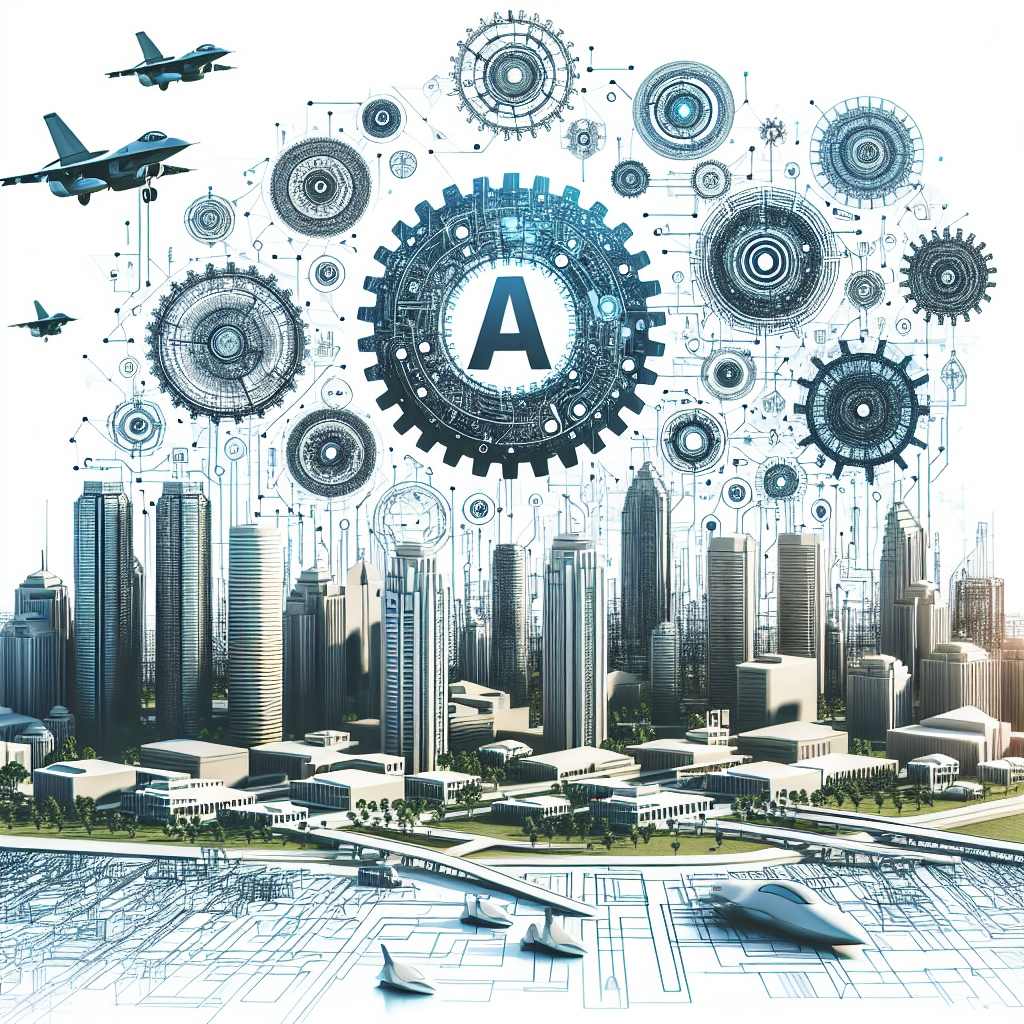
The world of urban planning is constantly evolving, as cities grow and change in response to various social, economic, and environmental factors. One of the most significant changes in recent years has been the increasing use of artificial intelligence (AI) automation in the field of urban planning.
AI automation refers to the use of computer algorithms and machine learning techniques to automate various tasks and decision-making processes in urban planning. This can include everything from analyzing data and generating reports to designing transportation systems and predicting future trends.
The use of AI automation in urban planning has the potential to revolutionize the way cities are designed and managed. By leveraging the power of AI, planners can make more informed decisions, optimize resources, and create more sustainable and livable cities.
One of the key benefits of AI automation in urban planning is its ability to process and analyze vast amounts of data in a fraction of the time it would take a human. This can help planners identify patterns and trends that would otherwise go unnoticed, allowing them to make more informed decisions about how to design and manage urban spaces.
AI automation can also help planners simulate and model different scenarios, allowing them to test out different strategies and predict the potential outcomes of their decisions. This can help cities better prepare for future challenges and adapt to changing conditions.
Another benefit of AI automation in urban planning is its ability to optimize resources and improve efficiency. By automating routine tasks and processes, planners can free up time and resources to focus on more strategic and creative aspects of their work. This can lead to better outcomes for cities and their residents.
However, the use of AI automation in urban planning also raises some important questions and concerns. Some critics worry that AI automation could lead to job losses for urban planners, as more tasks become automated. Others are concerned about the potential for AI algorithms to perpetuate bias and inequality in urban planning decisions.
Despite these concerns, many experts believe that AI automation has the potential to greatly benefit urban planning in the long run. By leveraging the power of AI, planners can make more informed decisions, optimize resources, and create more sustainable and livable cities.
In conclusion, the use of AI automation in urban planning has the potential to revolutionize the way cities are designed and managed. By leveraging the power of AI, planners can make more informed decisions, optimize resources, and create more sustainable and livable cities. While there are some concerns and challenges associated with the use of AI in urban planning, the benefits far outweigh the risks. As cities continue to grow and evolve, AI automation will play an increasingly important role in shaping the future of urban planning.
FAQs:
Q: Will AI automation replace human urban planners?
A: While AI automation has the potential to automate routine tasks and processes in urban planning, it is unlikely to replace human planners entirely. Human planners bring a unique perspective and creativity to the field that AI cannot replicate.
Q: How can AI automation help cities become more sustainable?
A: AI automation can help cities become more sustainable by analyzing data and predicting future trends, allowing planners to make more informed decisions about how to design and manage urban spaces. This can lead to more efficient use of resources and a reduction in environmental impact.
Q: What are some examples of AI automation in urban planning?
A: Some examples of AI automation in urban planning include using algorithms to analyze transportation data and optimize traffic flow, using machine learning techniques to predict future population growth, and using computer simulations to model different urban planning scenarios.
Q: How can cities ensure that AI algorithms are unbiased and fair?
A: Cities can ensure that AI algorithms are unbiased and fair by carefully monitoring and testing the algorithms for bias, ensuring that they are transparent and accountable, and involving diverse stakeholders in the decision-making process. By taking these steps, cities can help ensure that AI automation in urban planning is used in a responsible and ethical manner.