
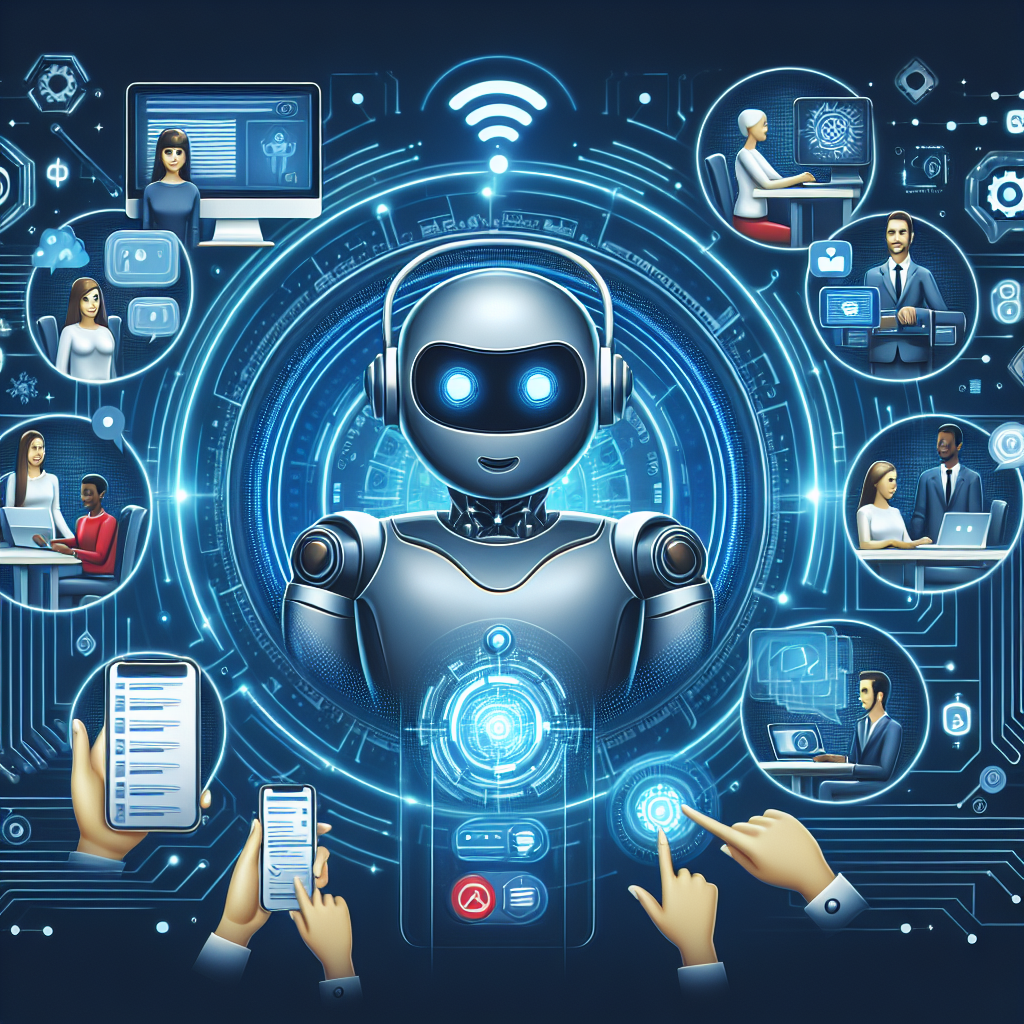
AI Chatbots: The Future of Customer Service Support
In today’s digital age, customer service has become a critical aspect of business success. With the rise of online shopping and e-commerce, customers expect quick and efficient support whenever they have a question or issue. This is where AI chatbots come in. AI chatbots are revolutionizing the way companies interact with their customers, providing instant and personalized support 24/7.
What are AI Chatbots?
AI chatbots are computer programs that use artificial intelligence and natural language processing to interact with users in a conversational manner. These virtual assistants can be integrated into websites, messaging platforms, and mobile apps to provide automated support to customers. AI chatbots are designed to understand natural language inputs from users and respond with relevant information or assistance.
How do AI Chatbots Work?
AI chatbots work by analyzing the text input from users and using algorithms to generate a response. They are trained on a large dataset of conversations to help them understand and respond to user queries effectively. AI chatbots can be programmed to handle a wide range of tasks, from answering frequently asked questions to guiding users through complex processes.
Benefits of AI Chatbots for Customer Service Support
There are several benefits of using AI chatbots for customer service support:
1. Instant responses: AI chatbots can provide instant responses to customer queries, reducing wait times and improving customer satisfaction.
2. 24/7 availability: AI chatbots can work around the clock, providing support to customers at any time of the day or night.
3. Cost-effective: AI chatbots can handle a large volume of customer inquiries simultaneously, reducing the need for human agents and saving on customer service costs.
4. Personalized interactions: AI chatbots can be programmed to provide personalized responses based on user data, creating a more engaging and customized experience for customers.
5. Scalability: AI chatbots can easily scale to handle a growing number of customer inquiries, making them ideal for businesses of all sizes.
6. Improved efficiency: AI chatbots can automate routine tasks and processes, freeing up human agents to focus on more complex issues and providing a faster and more efficient customer service experience.
7. Data collection and analysis: AI chatbots can collect and analyze data from customer interactions, providing valuable insights into customer behavior and preferences.
Examples of AI Chatbots in Action
Many companies have already implemented AI chatbots to enhance their customer service support. Here are some examples of AI chatbots in action:
1. Starbucks: Starbucks uses a chatbot called Barista to help customers place orders and answer questions about their products and services.
2. Sephora: Sephora’s chatbot can recommend products, provide beauty tips, and help customers find the nearest store location.
3. H&M: H&M’s chatbot can assist customers with finding the right size, style, and color of clothing items, as well as provide styling tips and inspiration.
4. Domino’s Pizza: Domino’s Pizza has a chatbot that allows customers to order pizza, track their delivery, and ask questions about their menu.
FAQs about AI Chatbots
Q: How accurate are AI chatbots in understanding user queries?
A: AI chatbots are constantly improving in their ability to understand natural language inputs from users. With advancements in natural language processing and machine learning, AI chatbots can now accurately interpret a wide range of user queries and provide relevant responses.
Q: Can AI chatbots handle complex customer inquiries?
A: AI chatbots can be programmed to handle a wide range of tasks, from answering simple questions to guiding users through complex processes. While AI chatbots may not be able to solve every issue on their own, they can assist customers in finding the information they need and escalate more complex inquiries to human agents when necessary.
Q: Are AI chatbots secure?
A: Security is a top priority for companies implementing AI chatbots. AI chatbots are designed to adhere to strict security protocols to protect user data and ensure the privacy of customer interactions. Companies can also implement additional security measures, such as encryption and authentication, to further safeguard customer information.
Q: How can businesses measure the effectiveness of AI chatbots?
A: Businesses can measure the effectiveness of AI chatbots by tracking key performance indicators, such as response time, resolution rate, customer satisfaction, and cost savings. By analyzing these metrics, companies can assess the impact of AI chatbots on their customer service support and make adjustments to improve their performance.
Q: What are the limitations of AI chatbots?
A: While AI chatbots have many benefits, they also have limitations. AI chatbots may struggle to understand complex or ambiguous user queries, leading to misunderstandings and incorrect responses. Additionally, AI chatbots may lack the emotional intelligence and empathy of human agents, making it challenging to provide personalized support in certain situations.
In conclusion, AI chatbots are transforming the way companies provide customer service support, offering instant, personalized, and efficient assistance to customers. With advancements in artificial intelligence and natural language processing, AI chatbots are becoming increasingly sophisticated in their ability to understand and respond to user queries. By leveraging the power of AI chatbots, businesses can improve customer satisfaction, reduce costs, and gain valuable insights into customer behavior. As the future of customer service support, AI chatbots are poised to revolutionize the way companies interact with their customers and enhance the overall customer experience.