
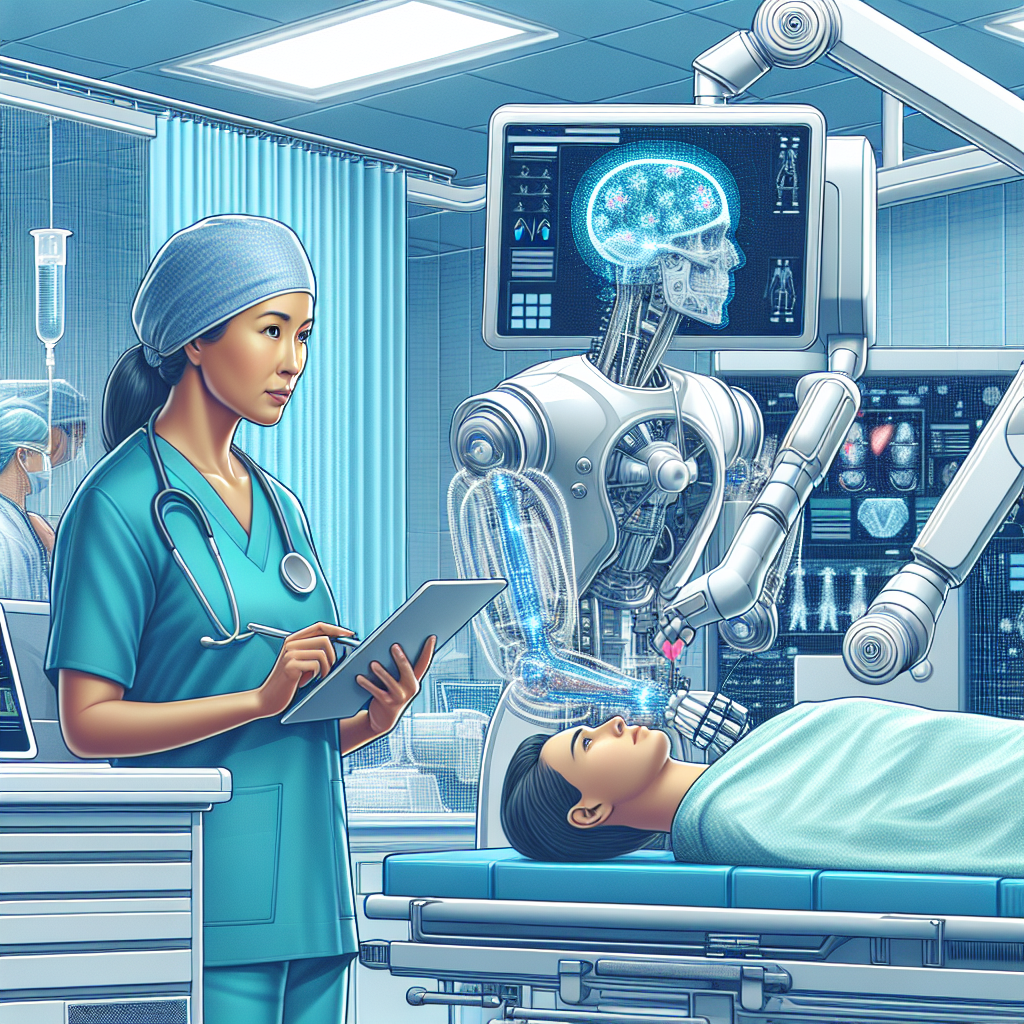
In recent years, the healthcare industry has seen a significant increase in the deployment of artificial intelligence (AI) technologies to improve patient care and outcomes. AI has the potential to revolutionize the way healthcare is delivered by providing more personalized and efficient care to patients. From predictive analytics to image recognition, AI has the capability to enhance healthcare services in various ways.
AI technologies can help healthcare providers in diagnosing diseases, predicting patient outcomes, and recommending treatment plans. By analyzing vast amounts of data, AI algorithms can identify patterns and trends that human experts may overlook. This can lead to earlier detection of diseases, more accurate diagnoses, and more effective treatment plans.
One of the key areas where AI is making a significant impact is in medical imaging. AI-powered algorithms can analyze medical images such as X-rays, MRIs, and CT scans to detect abnormalities and assist radiologists in making a diagnosis. These algorithms can help reduce the time it takes to interpret images, leading to faster diagnosis and treatment for patients.
AI can also be used to predict patient outcomes by analyzing data from electronic health records, medical imaging, and other sources. By identifying risk factors and patterns in patient data, AI algorithms can help healthcare providers anticipate and prevent adverse events such as hospital readmissions or complications.
Additionally, AI can help improve patient care by personalizing treatment plans. By analyzing patient data and medical literature, AI algorithms can recommend tailored treatment options based on the individual patient’s characteristics and medical history. This can lead to more effective and efficient care, ultimately improving patient outcomes.
Despite the potential benefits of AI deployment in healthcare, there are also challenges and concerns that need to be addressed. One of the main challenges is ensuring the accuracy and reliability of AI algorithms. Healthcare providers need to validate the performance of AI algorithms and ensure that they are safe and effective before integrating them into clinical practice.
Another challenge is the ethical and regulatory considerations surrounding AI in healthcare. Issues such as patient privacy, data security, and transparency in AI decision-making need to be carefully addressed to ensure that patient rights are protected and ethical standards are upheld.
Overall, AI deployment in healthcare has the potential to transform the way healthcare is delivered and improve patient care and outcomes. By leveraging the power of AI technologies, healthcare providers can enhance diagnosis, prediction, and treatment planning, leading to better patient outcomes and a more efficient healthcare system.
FAQs:
1. How is AI being used in healthcare?
AI is being used in healthcare in various ways, including medical imaging analysis, predictive analytics, personalized treatment planning, and virtual health assistants.
2. What are the benefits of AI deployment in healthcare?
Some of the benefits of AI deployment in healthcare include faster diagnosis, more accurate treatment planning, personalized care, and improved patient outcomes.
3. What are the challenges of AI deployment in healthcare?
Some of the challenges of AI deployment in healthcare include ensuring the accuracy and reliability of AI algorithms, addressing ethical and regulatory concerns, and integrating AI technologies into clinical practice.
4. How can healthcare providers ensure the safety and effectiveness of AI algorithms?
Healthcare providers can ensure the safety and effectiveness of AI algorithms by validating their performance, conducting rigorous testing, and following best practices in AI deployment.
5. What are the ethical considerations surrounding AI deployment in healthcare?
Ethical considerations surrounding AI deployment in healthcare include patient privacy, data security, transparency in AI decision-making, and ensuring that AI technologies are used in a fair and unbiased manner.