
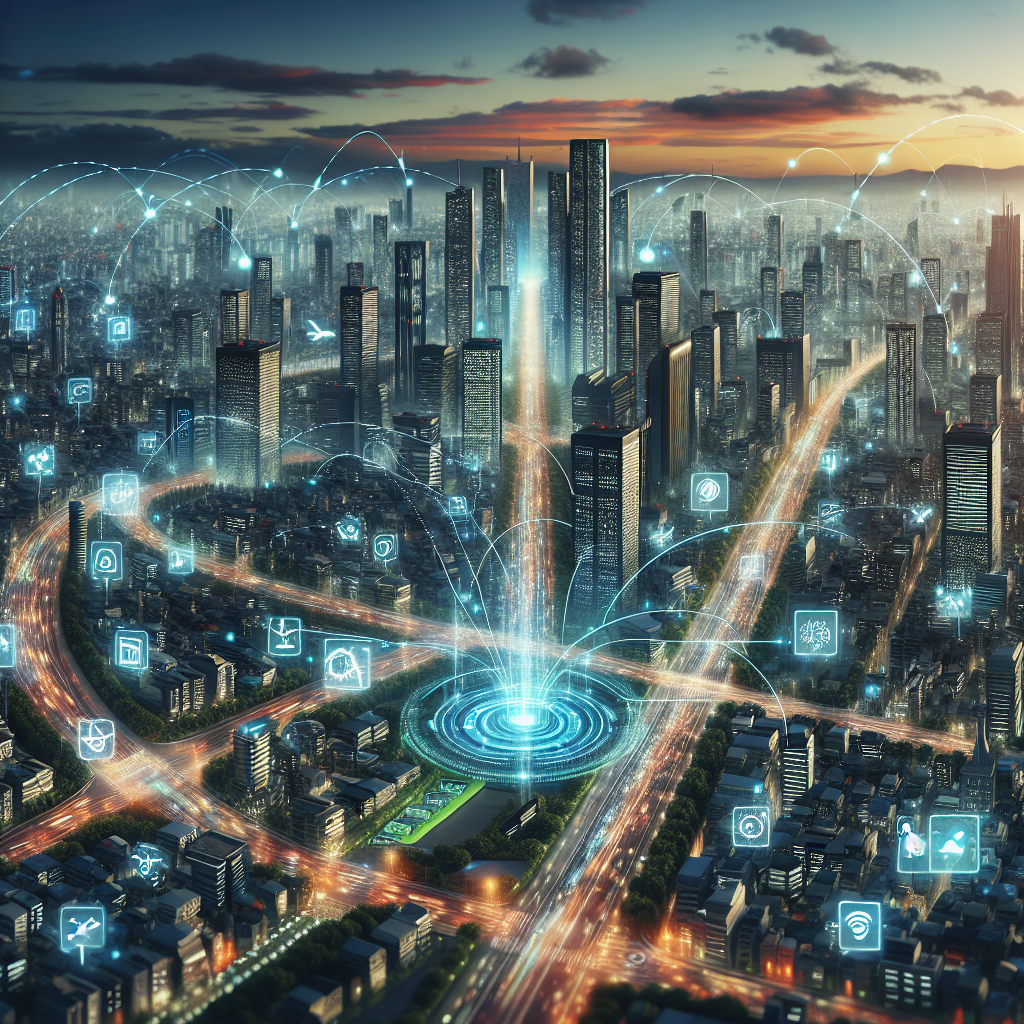
Artificial Intelligence (AI) is playing an increasingly important role in the development of smart cities around the world. By leveraging AI technologies, cities are able to improve efficiency, enhance public safety, and provide better services to residents. In this article, we will explore how AI is being used in the development of smart cities and the potential benefits it brings.
One of the key areas where AI is making a significant impact in smart cities is in the field of traffic management. With the help of AI-powered sensors and cameras, cities are able to monitor traffic flow in real-time, predict congestion hotspots, and adjust traffic signals accordingly to reduce traffic jams. This not only saves time for commuters but also helps to reduce carbon emissions by minimizing idling vehicles.
AI is also being used to improve public safety in smart cities. By analyzing data from various sources such as surveillance cameras, social media, and emergency calls, AI algorithms can detect patterns and anomalies that may indicate potential criminal activities or emergencies. This allows law enforcement agencies to respond quickly and effectively to incidents, ultimately making cities safer for residents.
Another area where AI is transforming smart cities is in the field of energy management. By using AI algorithms to analyze energy consumption patterns, cities can optimize energy usage, reduce wastage, and lower costs. AI-powered systems can also help to integrate renewable energy sources such as solar and wind power into the grid more efficiently, leading to a more sustainable and environmentally friendly energy infrastructure.
AI is also being used in the development of smart buildings in smart cities. By installing sensors and smart devices that are connected to AI systems, buildings can be made more energy-efficient, secure, and comfortable for occupants. For example, AI-controlled heating and lighting systems can adjust settings based on occupancy levels and weather conditions, leading to significant energy savings.
In addition to these benefits, AI is also helping to improve the overall quality of life in smart cities. By analyzing data on air quality, noise levels, and other environmental factors, AI systems can provide insights that help city planners make informed decisions on urban planning and design. This leads to the creation of more livable and sustainable urban environments for residents.
Despite the numerous benefits that AI brings to smart cities, there are also challenges and concerns that need to be addressed. One of the main concerns is the potential for AI systems to infringe on privacy rights. As AI technologies become more advanced and capable of analyzing vast amounts of data, there is a risk that personal information could be misused or compromised. It is important for city authorities to implement robust data protection measures and ensure transparency in the use of AI systems to address these concerns.
Another challenge is the need for skilled professionals to develop and maintain AI systems in smart cities. As AI technologies continue to evolve rapidly, there is a growing demand for experts in data science, machine learning, and AI programming to design and implement AI solutions. City authorities need to invest in training programs and partnerships with educational institutions to build a workforce with the necessary skills to support AI development in smart cities.
In conclusion, AI is playing a crucial role in the development of smart cities by enabling more efficient and sustainable urban environments. By leveraging AI technologies, cities are able to improve traffic management, enhance public safety, optimize energy usage, and create more livable urban spaces for residents. While there are challenges and concerns that need to be addressed, the potential benefits of AI in smart cities are vast and promising. With proper planning and investment, AI has the power to transform cities into more connected, efficient, and vibrant communities for all.
FAQs:
1. What are some examples of AI applications in smart cities?
– AI is used in traffic management systems to reduce congestion and improve traffic flow.
– AI-powered surveillance systems help to enhance public safety by detecting criminal activities and emergencies.
– AI algorithms are used to optimize energy consumption and integrate renewable energy sources in smart cities.
– AI-controlled smart buildings use sensors and devices to make buildings more energy-efficient and secure.
2. How can AI improve the quality of life in smart cities?
– By analyzing environmental data, AI systems provide insights that help city planners make informed decisions on urban planning and design.
– AI technologies help to create more livable and sustainable urban environments by optimizing energy usage and reducing wastage.
– AI-powered systems in smart buildings enhance comfort and security for occupants, leading to a better quality of life.
3. What are some challenges of using AI in smart cities?
– Privacy concerns: There is a risk that AI systems could infringe on privacy rights by analyzing personal data.
– Skills gap: There is a shortage of professionals with the necessary skills to develop and maintain AI systems in smart cities.
– Transparency: City authorities need to ensure transparency in the use of AI technologies to build trust with residents and address concerns about data misuse.
4. How can city authorities address privacy concerns related to AI in smart cities?
– Implement robust data protection measures to safeguard personal information.
– Ensure transparency in the use of AI systems and provide clear guidelines on data collection and usage.
– Engage with residents and stakeholders to gather feedback and address concerns about privacy issues.