
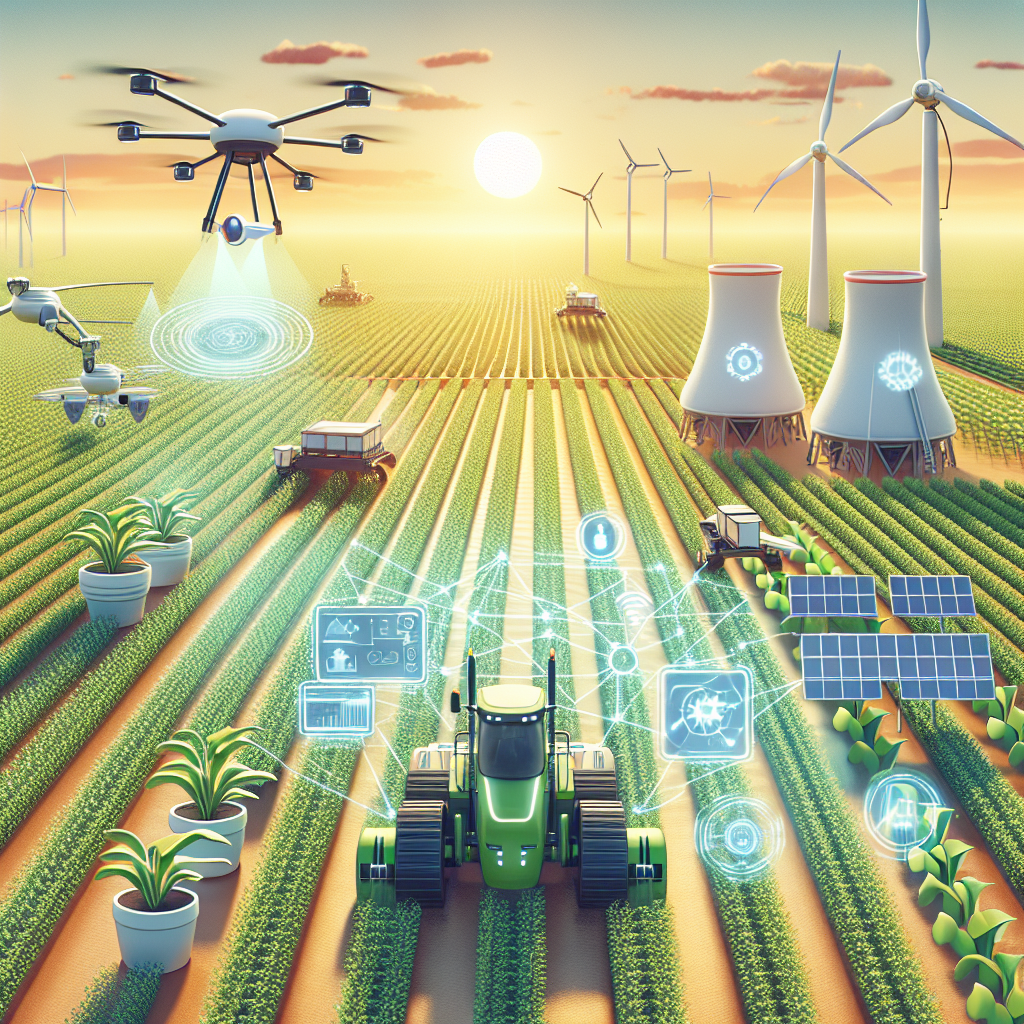
AI Development in Agriculture: Improving Efficiency and Sustainability
Introduction
In recent years, the agriculture industry has seen a surge in the development and implementation of artificial intelligence (AI) technologies. These technologies have the potential to revolutionize the way we produce food by improving efficiency, sustainability, and productivity. From crop monitoring and pest management to precision agriculture and autonomous farming, AI is playing a crucial role in shaping the future of agriculture.
Improving Efficiency
One of the key benefits of AI in agriculture is its ability to improve efficiency. By utilizing AI-powered tools and technologies, farmers can optimize their operations and make more informed decisions. For example, AI can analyze large amounts of data collected from sensors, satellites, and other sources to provide insights on crop health, soil conditions, and weather patterns. This information can help farmers make better decisions about when to plant, irrigate, and harvest their crops, leading to higher yields and lower costs.
AI can also help farmers reduce waste and improve resource management. By using AI-powered algorithms to predict crop yields and optimize irrigation and fertilization schedules, farmers can minimize the use of water, fertilizer, and pesticides while maximizing crop production. This not only saves money but also reduces the environmental impact of agriculture by decreasing the amount of chemicals and water that are used.
Sustainability
Another important benefit of AI in agriculture is its ability to promote sustainability. With the global population expected to reach 9.7 billion by 2050, the need for sustainable agriculture practices has never been more urgent. AI technologies can help farmers adopt more sustainable practices by reducing the environmental impact of agriculture and promoting biodiversity.
For example, AI-powered drones and robots can be used to monitor crops and detect pests and diseases early on, allowing farmers to take targeted action to control them. This reduces the need for chemical pesticides and insecticides, which can harm beneficial insects and pollinators. By using AI to optimize crop rotations and diversify planting patterns, farmers can also improve soil health and promote biodiversity on their farms.
In addition, AI can help farmers reduce their carbon footprint by optimizing transportation routes, reducing energy consumption, and minimizing waste. By analyzing data on weather patterns, soil conditions, and crop yields, AI can help farmers make more efficient use of resources and reduce their overall environmental impact.
Challenges and Opportunities
While the potential benefits of AI in agriculture are clear, there are also challenges that need to be addressed. One of the main challenges is the cost of implementing AI technologies, which can be prohibitive for small-scale farmers. In addition, there are concerns about data privacy and security, as AI relies on large amounts of data that need to be collected and analyzed.
However, there are also opportunities for innovation and collaboration in the field of AI in agriculture. Companies and research institutions are developing new AI-powered tools and technologies that are more affordable and accessible to farmers. Governments and organizations are also investing in programs to support the adoption of AI in agriculture and promote sustainable practices.
FAQs
Q: How can AI help farmers improve crop yields?
A: AI can help farmers improve crop yields by analyzing data on soil conditions, weather patterns, and crop health to provide insights on when to plant, irrigate, and harvest crops. By optimizing these processes, farmers can increase their yields and reduce costs.
Q: What are some examples of AI-powered tools and technologies in agriculture?
A: Some examples of AI-powered tools and technologies in agriculture include drones, robots, sensors, and satellite imaging systems. These technologies can be used to monitor crops, detect pests and diseases, and optimize resource management.
Q: How can AI promote sustainability in agriculture?
A: AI can promote sustainability in agriculture by helping farmers adopt more sustainable practices, such as reducing waste, minimizing the use of chemicals, and promoting biodiversity. By optimizing resource management and reducing environmental impact, AI can help farmers produce food more sustainably.
Q: What are the challenges of implementing AI in agriculture?
A: Some of the challenges of implementing AI in agriculture include the cost of technology, data privacy and security concerns, and the need for training and education. However, there are also opportunities for innovation and collaboration to address these challenges and promote the adoption of AI in agriculture.
Conclusion
AI development in agriculture is transforming the way we produce food by improving efficiency, sustainability, and productivity. By utilizing AI-powered tools and technologies, farmers can optimize their operations, reduce waste, and promote sustainable practices. While there are challenges to overcome, the opportunities for innovation and collaboration in the field of AI in agriculture are vast. With continued investment and support, AI has the potential to revolutionize the agriculture industry and help feed a growing global population in a more sustainable way.