
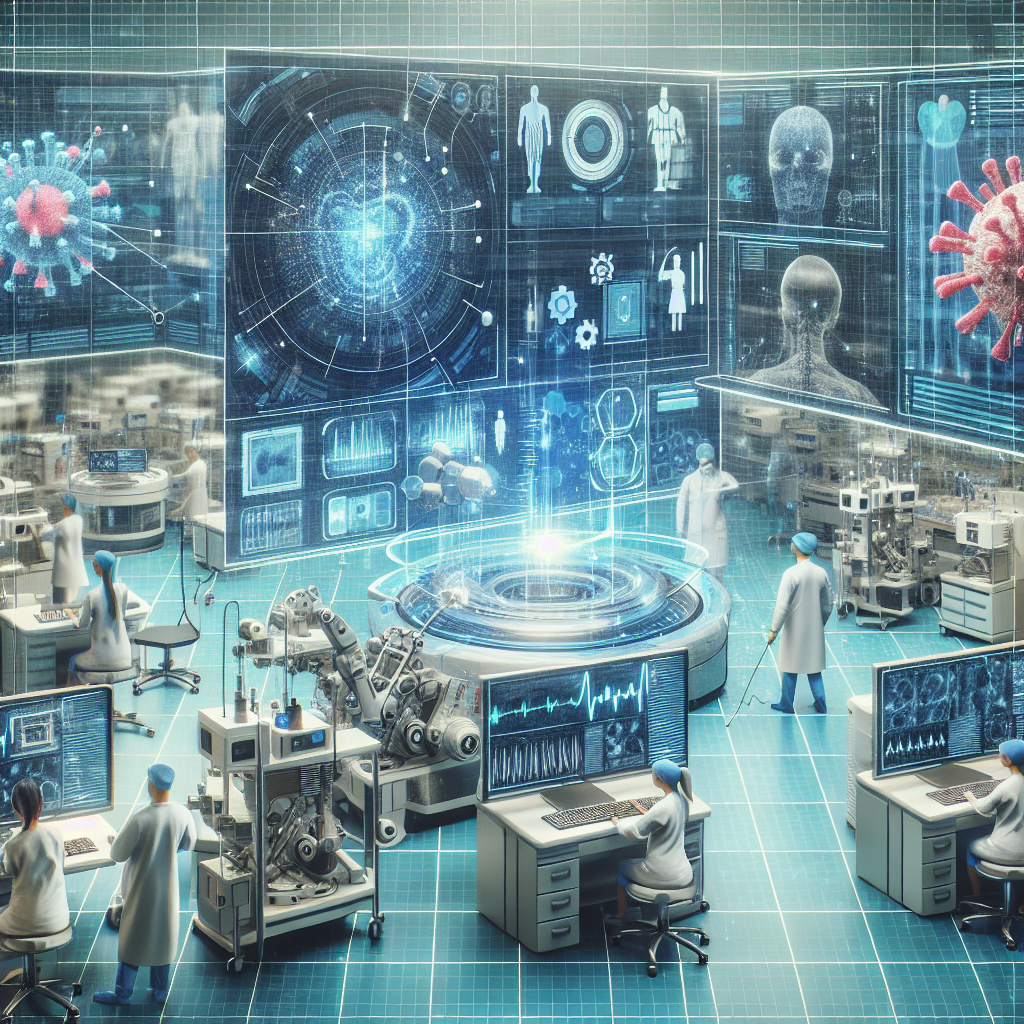
Artificial intelligence (AI) has emerged as a powerful tool in the healthcare industry, revolutionizing patient care and diagnosis. By leveraging machine learning algorithms and big data analytics, AI can help healthcare providers make more accurate diagnoses, predict patient outcomes, and personalize treatment plans. In this article, we will explore the various ways AI is being used in healthcare to improve patient care and diagnosis.
One of the most significant benefits of AI in healthcare is its ability to analyze large amounts of data quickly and accurately. This is particularly useful in medical imaging, where AI can help radiologists detect abnormalities in scans, such as tumors or fractures, with greater accuracy and efficiency. AI-powered imaging systems can also help reduce the time it takes to interpret images, leading to faster diagnosis and treatment for patients.
In addition to medical imaging, AI is also being used to improve the accuracy of diagnostic tests and procedures. For example, AI algorithms can analyze patient data, such as lab results and medical history, to identify patterns and trends that may indicate a specific disease or condition. This can help healthcare providers make more informed decisions about patient care and treatment options.
AI is also being used to personalize treatment plans for patients. By analyzing a patient’s genetic makeup, medical history, and lifestyle factors, AI algorithms can help healthcare providers tailor treatment plans to each individual’s unique needs. This can lead to more effective treatments and better outcomes for patients.
Furthermore, AI can help healthcare providers predict patient outcomes and identify high-risk patients. By analyzing patient data and trends, AI algorithms can help identify patients who are at risk of developing certain conditions or complications, allowing healthcare providers to intervene early and prevent adverse outcomes.
Overall, AI has the potential to transform the healthcare industry by improving patient care and diagnosis. By leveraging the power of machine learning and data analytics, healthcare providers can make more accurate diagnoses, personalize treatment plans, and predict patient outcomes with greater accuracy and efficiency.
FAQs:
Q: How does AI improve patient care in healthcare?
A: AI improves patient care in healthcare by analyzing large amounts of data quickly and accurately, leading to more accurate diagnoses, personalized treatment plans, and the ability to predict patient outcomes.
Q: How is AI used in medical imaging?
A: AI is used in medical imaging to help radiologists detect abnormalities in scans, such as tumors or fractures, with greater accuracy and efficiency. AI-powered imaging systems can also help reduce the time it takes to interpret images, leading to faster diagnosis and treatment for patients.
Q: How does AI personalize treatment plans for patients?
A: AI personalizes treatment plans for patients by analyzing a patient’s genetic makeup, medical history, and lifestyle factors to tailor treatment plans to each individual’s unique needs. This leads to more effective treatments and better outcomes for patients.
Q: How does AI help healthcare providers predict patient outcomes?
A: AI helps healthcare providers predict patient outcomes by analyzing patient data and trends to identify patients who are at risk of developing certain conditions or complications. This allows healthcare providers to intervene early and prevent adverse outcomes.