
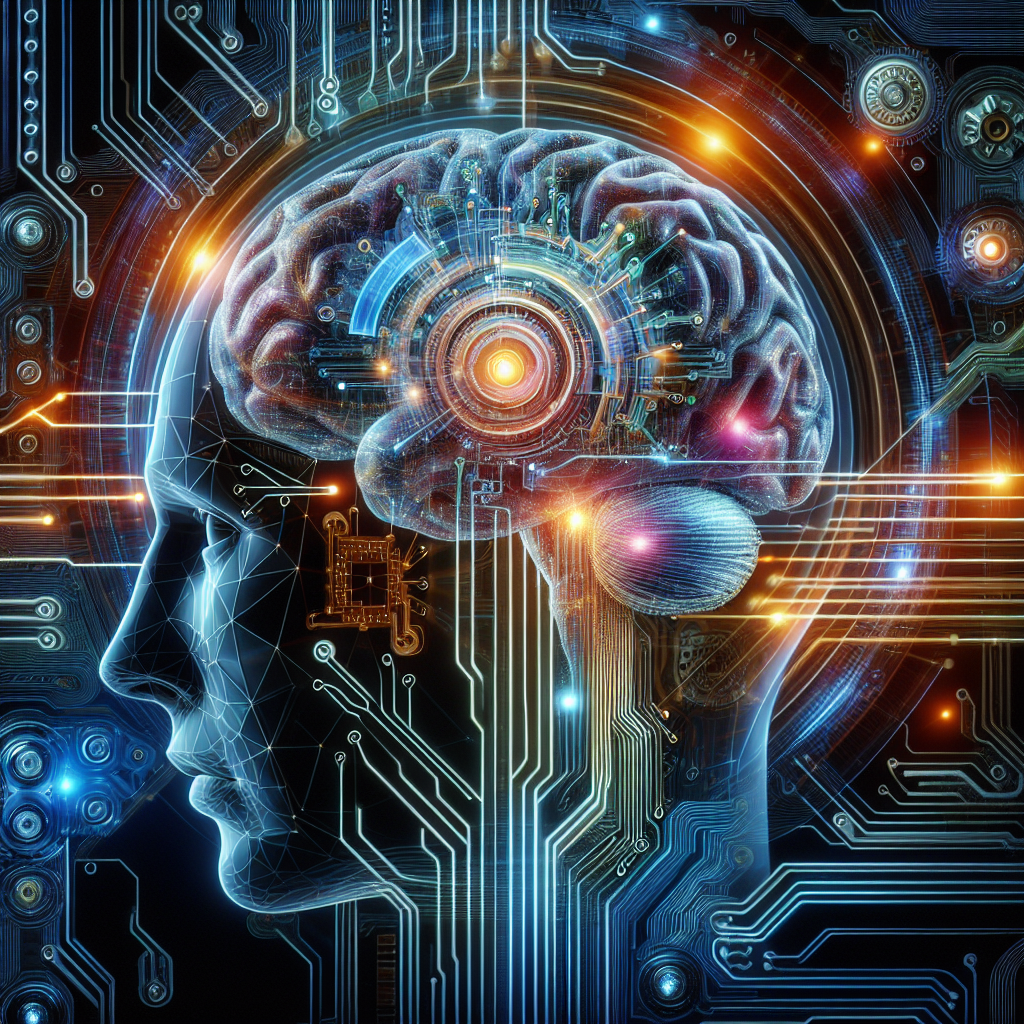
AI Development in Neurotechnology: Advancements in Brain-Computer Interfaces
Neurotechnology, the field that combines neuroscience and technology, has seen significant advancements in recent years, particularly in the development of brain-computer interfaces (BCIs). BCIs are devices that enable direct communication between the brain and an external device, such as a computer or a prosthetic limb, without the need for physical movement.
One of the key drivers of these advancements in BCIs is the integration of artificial intelligence (AI) technology. AI algorithms can help interpret and analyze the complex signals generated by the brain, allowing for more accurate and efficient communication between the brain and external devices. In this article, we will explore the latest developments in AI-driven neurotechnology and their potential impact on various fields, including healthcare, communication, and gaming.
Advancements in Brain-Computer Interfaces
BCIs have been around for decades, but recent advancements in AI technology have greatly improved their performance and usability. One of the key challenges in developing BCIs is the interpretation of brain signals, which are often noisy and difficult to decode. AI algorithms, particularly deep learning models, have shown great promise in accurately decoding these signals and translating them into commands for external devices.
For example, researchers have developed BCIs that allow paralyzed individuals to control robotic arms or even communicate with others using only their thoughts. These BCIs use AI algorithms to analyze the brain signals generated when the individual imagines moving their limbs, allowing them to control the robotic arm with remarkable precision. This technology has the potential to greatly improve the quality of life for individuals with severe disabilities.
In addition to helping individuals with disabilities, AI-driven BCIs are also being used in other applications, such as gaming and virtual reality. For example, companies like Neuralink, founded by Elon Musk, are developing BCIs that can enable individuals to control video games using only their thoughts. This technology could revolutionize the gaming industry, allowing for a more immersive and interactive gaming experience.
Another exciting application of AI-driven BCIs is in healthcare. Researchers are exploring the use of BCIs to monitor and treat neurological disorders, such as epilepsy and Parkinson’s disease. By analyzing the brain signals of patients in real-time, AI algorithms can detect abnormal patterns and provide early warning signs of a seizure or other neurological event. This technology could help improve the management of these disorders and provide better outcomes for patients.
FAQs
Q: How do AI algorithms help improve the performance of BCIs?
A: AI algorithms, particularly deep learning models, can analyze and interpret complex brain signals with greater accuracy and speed than traditional methods. This allows for more efficient communication between the brain and external devices, such as prosthetic limbs or computers.
Q: What are some of the challenges in developing AI-driven BCIs?
A: One of the key challenges is the need for large amounts of training data to train AI algorithms to accurately decode brain signals. Additionally, ensuring the safety and reliability of BCIs is a major concern, as any errors in communication could have serious consequences for the user.
Q: What are some potential ethical concerns with AI-driven BCIs?
A: One concern is the potential for misuse of BCIs for purposes such as surveillance or mind control. Additionally, ensuring the privacy and security of sensitive brain data is a major ethical consideration in the development of BCIs.
In conclusion, AI-driven neurotechnology, particularly in the field of brain-computer interfaces, holds great promise for improving the lives of individuals with disabilities, as well as advancing various other applications in healthcare, gaming, and communication. The integration of AI algorithms with BCIs has enabled more accurate and efficient communication between the brain and external devices, opening up new possibilities for human-machine interaction. As researchers continue to make advancements in this field, we can expect to see even more innovative applications of AI-driven neurotechnology in the near future.