
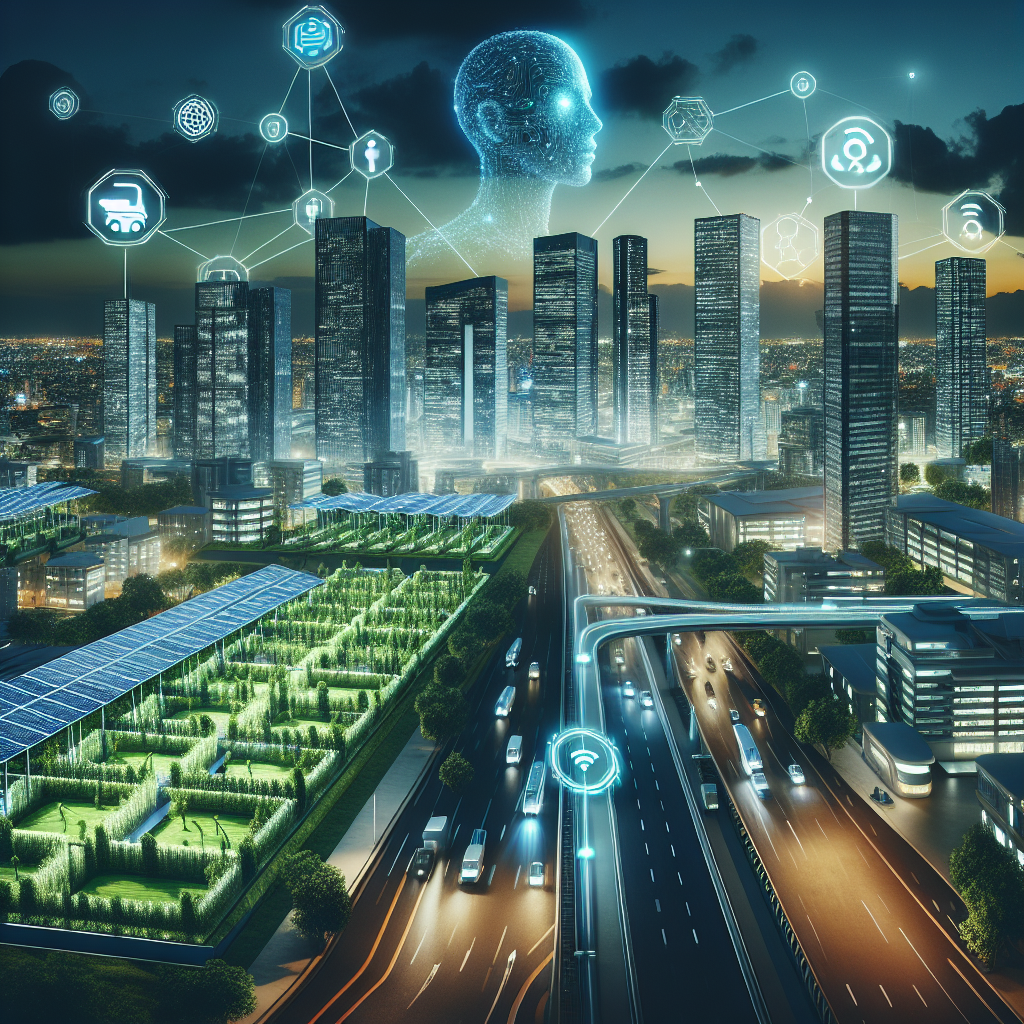
Artificial Intelligence (AI) has become a powerful tool in shaping the future of smart cities. With the rapid urbanization taking place around the world, the need for efficient and sustainable urban infrastructure is more important than ever. AI technology has the potential to revolutionize the way cities operate, making them more sustainable, efficient, and responsive to the needs of their residents.
AI can be used in a variety of ways to improve urban infrastructure and sustainability. From optimizing traffic flow to reducing energy consumption, AI has the ability to make cities more livable and environmentally friendly. In this article, we will explore some of the ways in which AI is being used to develop smart cities and improve urban infrastructure.
One of the key areas where AI is making a significant impact is in transportation. Traffic congestion is a major problem in many cities around the world, leading to wasted time, increased pollution, and decreased productivity. AI-powered traffic management systems can help alleviate these issues by analyzing real-time traffic data and adjusting traffic signals to optimize traffic flow. By reducing congestion, these systems can help reduce emissions and improve air quality in cities.
AI can also be used to improve public transportation systems. By analyzing data on passenger demand and traffic patterns, AI can help transportation agencies optimize routes and schedules to better serve their customers. This can lead to more efficient and reliable public transportation systems, which can encourage more people to use public transit and reduce the number of cars on the road.
In addition to transportation, AI can also be used to improve energy efficiency in buildings. Smart buildings equipped with AI technology can adjust lighting, heating, and cooling systems based on occupancy levels and external weather conditions. This can lead to significant energy savings and reduce the carbon footprint of buildings. In some cases, AI can even predict when equipment is likely to fail and schedule maintenance before a breakdown occurs, saving time and money for building owners.
AI can also be used to improve waste management in cities. By analyzing data on waste generation and collection patterns, AI can help municipalities optimize waste collection routes and schedules. This can lead to cost savings for cities and reduce the environmental impact of waste collection by minimizing fuel consumption and emissions.
Another area where AI is making a significant impact is in public safety. AI-powered surveillance systems can analyze video feeds from cameras around the city to detect suspicious behavior and alert authorities to potential threats. This can help law enforcement agencies respond more quickly to emergencies and prevent crimes from occurring.
Overall, AI technology has the potential to transform the way cities operate and improve the quality of life for their residents. By harnessing the power of AI to optimize urban infrastructure and promote sustainability, cities can become more efficient, livable, and environmentally friendly.
Frequently Asked Questions (FAQs)
Q: How is AI being used to improve transportation in smart cities?
A: AI is being used to optimize traffic flow, improve public transportation systems, and reduce congestion in cities. By analyzing real-time traffic data and passenger demand, AI can help transportation agencies make better decisions about routes, schedules, and traffic management.
Q: How can AI improve energy efficiency in buildings?
A: AI-powered smart buildings can adjust lighting, heating, and cooling systems based on occupancy levels and external weather conditions. This can lead to significant energy savings and reduce the carbon footprint of buildings.
Q: How is AI being used to improve waste management in cities?
A: AI can help municipalities optimize waste collection routes and schedules by analyzing data on waste generation and collection patterns. This can lead to cost savings for cities and reduce the environmental impact of waste collection.
Q: How is AI being used to enhance public safety in smart cities?
A: AI-powered surveillance systems can analyze video feeds from cameras around the city to detect suspicious behavior and alert authorities to potential threats. This can help law enforcement agencies respond more quickly to emergencies and prevent crimes from occurring.
Q: What are some of the challenges of implementing AI in smart cities?
A: Some of the challenges of implementing AI in smart cities include data privacy concerns, lack of interoperability between different systems, and the need for investment in new infrastructure and technology. However, with proper planning and collaboration, these challenges can be overcome to create more efficient and sustainable cities.