
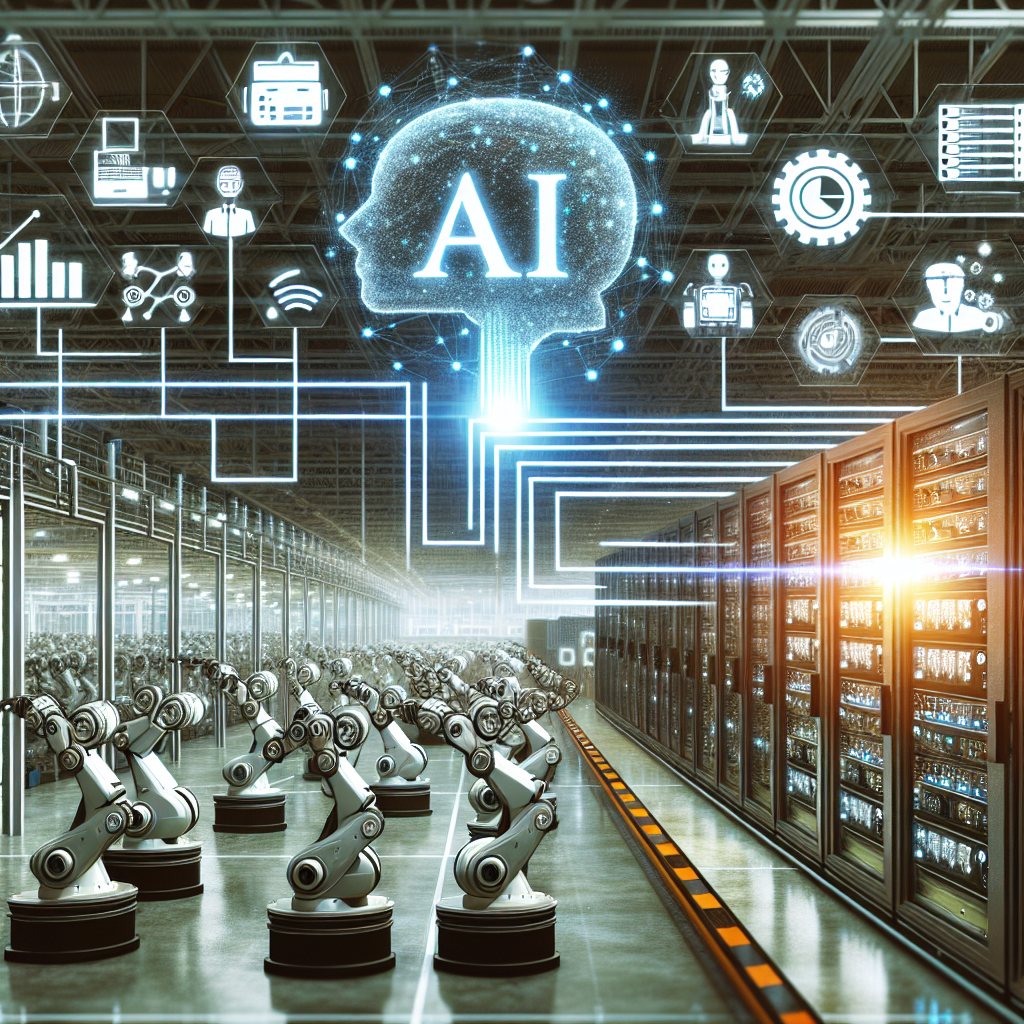
Artificial Intelligence (AI) has been revolutionizing various industries, and manufacturing is no exception. AI-driven decision-making in manufacturing has the potential to significantly enhance efficiency, productivity, and profitability. In this article, we will explore how AI is transforming decision-making processes in the manufacturing sector and the benefits it brings.
AI in Manufacturing: A Game-Changer
Manufacturing involves complex processes that require precise decision-making at every step. From supply chain management to production planning and quality control, there are numerous variables to consider to ensure optimal performance. AI has the ability to analyze vast amounts of data, identify patterns, and make predictions with a level of accuracy that surpasses human capabilities.
One of the key areas where AI is making a significant impact in manufacturing is predictive maintenance. By analyzing historical data and real-time sensor data from machines, AI can predict when equipment is likely to fail and schedule maintenance proactively. This not only minimizes downtime but also reduces maintenance costs and extends the lifespan of machinery.
AI is also being used to optimize production processes. By analyzing production data in real-time, AI can identify inefficiencies and bottlenecks and suggest improvements to increase throughput and reduce waste. AI algorithms can adjust production schedules dynamically based on changing demand, inventory levels, and other factors to maximize efficiency.
Another area where AI is proving to be invaluable in manufacturing is quality control. AI-powered systems can analyze images, videos, and sensor data to detect defects in products with a level of accuracy that surpasses human inspectors. This not only ensures that only high-quality products reach the market but also reduces the need for manual inspection, saving time and resources.
Benefits of AI-Driven Decision-Making in Manufacturing
The adoption of AI-driven decision-making in manufacturing offers a multitude of benefits, including:
1. Improved Efficiency: AI can analyze vast amounts of data quickly and accurately, enabling manufacturers to make informed decisions in real-time. This leads to improved efficiency in production, supply chain management, and other areas of the manufacturing process.
2. Enhanced Quality: AI-powered systems can detect defects and anomalies in products with a level of precision that surpasses human capabilities. This ensures that only high-quality products reach the market, enhancing customer satisfaction and brand reputation.
3. Cost Savings: By optimizing production processes, predicting maintenance needs, and reducing waste, AI can help manufacturers save costs and increase profitability. Proactive maintenance scheduling, for example, can prevent costly equipment failures and downtime.
4. Increased Flexibility: AI algorithms can analyze changing market conditions, demand patterns, and other variables to adjust production schedules and resource allocation dynamically. This enables manufacturers to respond quickly to changing market dynamics and customer demands.
5. Innovation: AI-driven decision-making can unlock new opportunities for innovation in manufacturing. By leveraging AI for product design, process optimization, and other areas, manufacturers can stay ahead of the competition and drive growth.
FAQs
Q: How can AI improve supply chain management in manufacturing?
A: AI can analyze historical data, market trends, and other variables to optimize inventory levels, supplier relationships, and distribution networks. By predicting demand patterns and supply chain disruptions, AI can help manufacturers make informed decisions to improve efficiency and reduce costs.
Q: Are there any risks associated with AI-driven decision-making in manufacturing?
A: While AI offers numerous benefits, there are also potential risks to consider, such as data security and privacy concerns, algorithm bias, and the need for skilled professionals to manage AI systems. Manufacturers should carefully evaluate these risks and implement appropriate safeguards to mitigate them.
Q: How can manufacturers get started with AI-driven decision-making?
A: Manufacturers can start by identifying areas of their operations that can benefit from AI, such as predictive maintenance, production optimization, or quality control. They can then explore AI solutions available in the market or develop custom AI algorithms in collaboration with AI experts.
In conclusion, AI-driven decision-making is transforming the manufacturing industry by enhancing efficiency, quality, and innovation. By leveraging AI technologies, manufacturers can optimize production processes, improve supply chain management, and drive growth. While there are risks associated with AI adoption, the benefits far outweigh the challenges. Manufacturers that embrace AI-driven decision-making are poised to gain a competitive edge in the increasingly complex and dynamic manufacturing landscape.