
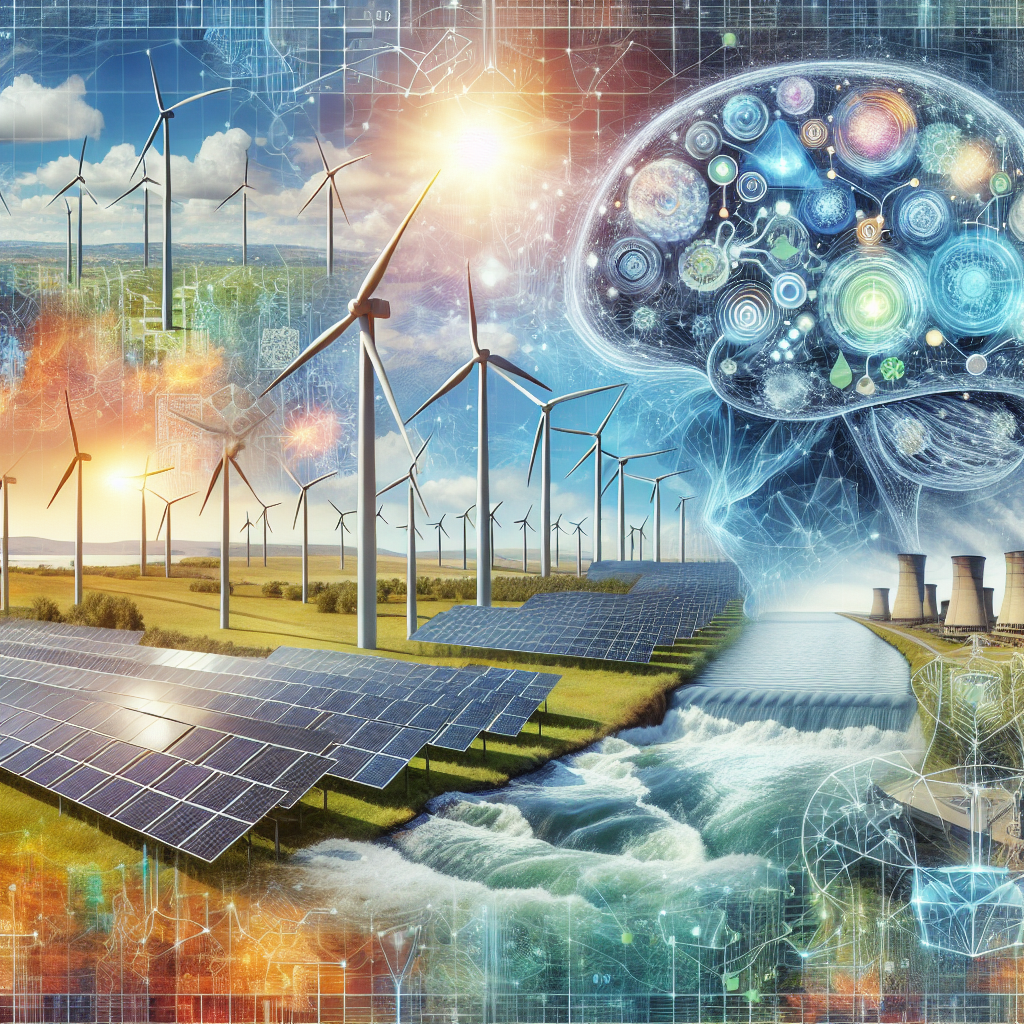
Artificial Intelligence (AI) is revolutionizing the way we approach renewable energy market simulation. By harnessing the power of AI-driven innovations, we are able to create more accurate, efficient, and effective models for understanding and predicting market trends in the renewable energy sector. In this article, we will explore the impact of AI on renewable energy market simulation and how it is shaping the future of the industry.
AI-driven innovations in renewable energy market simulation are transforming the way we analyze and predict market trends. By using advanced algorithms and machine learning techniques, AI can process large amounts of data and identify patterns and correlations that may not be immediately apparent to human analysts. This allows for more accurate forecasting of energy prices, demand, and supply, which is crucial for making informed decisions in the renewable energy market.
One of the key benefits of AI-driven market simulation is its ability to optimize renewable energy production and distribution. By analyzing historical data and real-time market conditions, AI can recommend the best strategies for maximizing the efficiency and profitability of renewable energy projects. This can help companies reduce costs, increase revenue, and achieve a more sustainable energy portfolio.
Another important application of AI in renewable energy market simulation is in risk management. By using AI to predict market fluctuations and potential disruptions, companies can better prepare for and mitigate risks in the renewable energy sector. This can help to minimize losses and ensure the long-term viability of renewable energy projects.
AI-driven innovations in renewable energy market simulation are also helping to accelerate the transition to a cleaner and more sustainable energy system. By optimizing energy production and distribution, AI can help to reduce greenhouse gas emissions, improve air quality, and mitigate the impacts of climate change. This is essential for meeting global energy and environmental goals, such as the Paris Agreement targets.
Overall, AI-driven innovations in renewable energy market simulation are revolutionizing the way we approach the renewable energy sector. By harnessing the power of AI, we are able to create more accurate, efficient, and effective models for understanding and predicting market trends. This is essential for driving the transition to a cleaner, more sustainable energy system and ensuring a brighter future for generations to come.
FAQs:
Q: How is AI being used in renewable energy market simulation?
A: AI is being used in renewable energy market simulation to analyze large amounts of data, identify patterns and correlations, and predict market trends. This allows for more accurate forecasting of energy prices, demand, and supply, which is crucial for making informed decisions in the renewable energy market.
Q: What are the benefits of AI-driven market simulation in the renewable energy sector?
A: The benefits of AI-driven market simulation in the renewable energy sector include optimized energy production and distribution, improved risk management, accelerated transition to a cleaner energy system, and reduced greenhouse gas emissions. AI can help companies reduce costs, increase revenue, and achieve a more sustainable energy portfolio.
Q: How does AI help in risk management in the renewable energy sector?
A: AI helps in risk management in the renewable energy sector by predicting market fluctuations and potential disruptions. This allows companies to better prepare for and mitigate risks, minimize losses, and ensure the long-term viability of renewable energy projects.
Q: What is the impact of AI-driven innovations in renewable energy market simulation?
A: The impact of AI-driven innovations in renewable energy market simulation is significant. AI is revolutionizing the way we approach the renewable energy sector by creating more accurate, efficient, and effective models for understanding and predicting market trends. This is essential for driving the transition to a cleaner, more sustainable energy system and ensuring a brighter future for generations to come.