
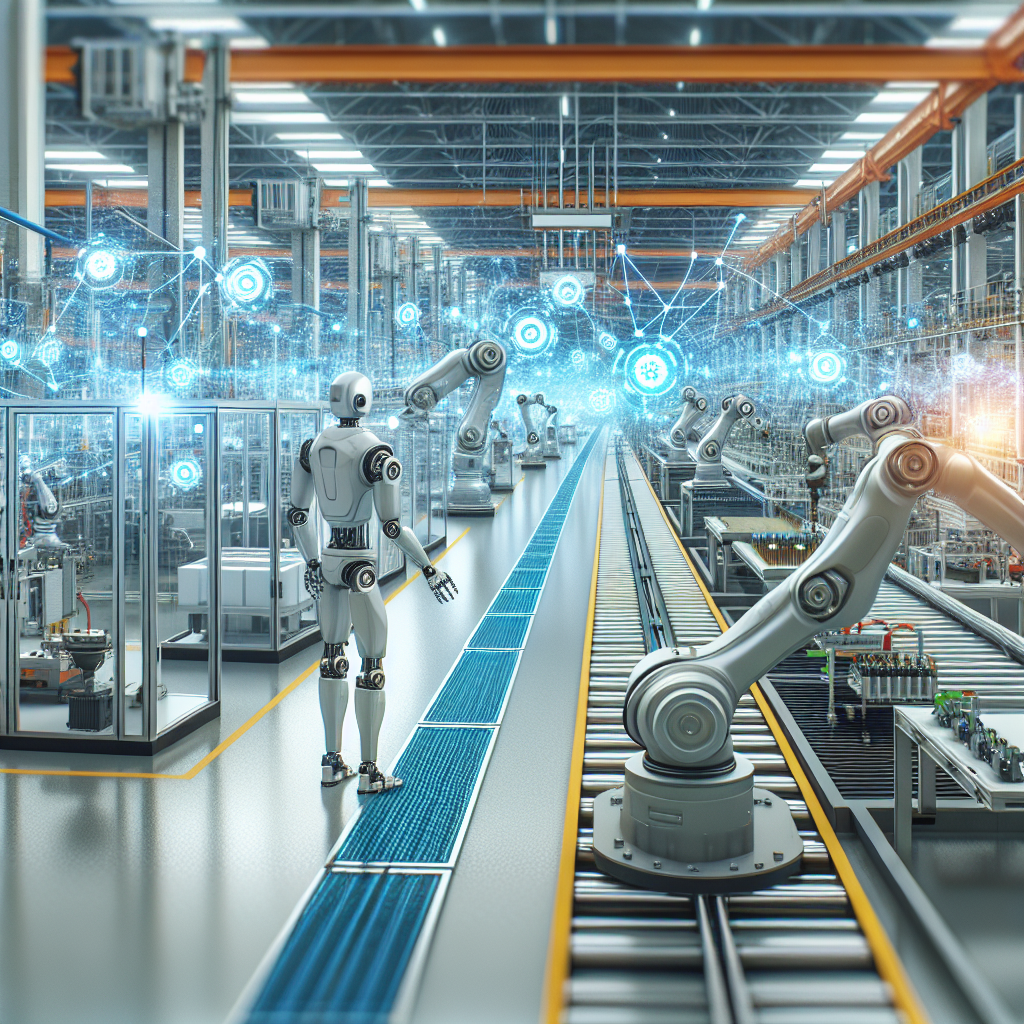
The integration of artificial intelligence (AI) and robotics in smart manufacturing facilities has revolutionized the way products are made and is driving significant improvements in efficiency, productivity, and quality. These AI-driven robots are equipped with advanced sensors, cameras, and algorithms that enable them to perform a wide range of tasks with precision and speed. In this article, we will explore the benefits of AI-driven robotics in smart manufacturing facilities and address some frequently asked questions about this technology.
Benefits of AI-Driven Robotics in Smart Manufacturing Facilities:
1. Increased Efficiency: AI-driven robots are capable of performing repetitive tasks with high precision and accuracy, leading to increased efficiency in manufacturing processes. These robots can work around the clock without the need for breaks, reducing production time and costs.
2. Improved Quality: The use of AI in robotics allows for real-time monitoring and analysis of production processes, leading to improved quality control. AI-driven robots can detect defects or anomalies in products and make adjustments to ensure consistent quality.
3. Flexibility: AI-driven robots are highly adaptable and can be programmed to perform a variety of tasks quickly and easily. This flexibility allows manufacturers to quickly adjust production processes in response to changing market demands or product specifications.
4. Safety: AI-driven robots are designed to work alongside human workers in a safe manner. These robots are equipped with sensors and cameras that allow them to detect and avoid obstacles, reducing the risk of accidents in the workplace.
5. Cost-Effective: While the initial investment in AI-driven robotics may be significant, the long-term cost savings are substantial. These robots can perform tasks more efficiently and accurately than human workers, leading to increased productivity and reduced labor costs.
6. Data Analysis: AI-driven robots generate vast amounts of data that can be analyzed to identify trends, optimize production processes, and make informed decisions. This data can also be used to predict maintenance needs and prevent costly downtime.
Frequently Asked Questions about AI-Driven Robotics in Smart Manufacturing Facilities:
Q: What types of tasks can AI-driven robots perform in smart manufacturing facilities?
A: AI-driven robots can perform a wide range of tasks, including assembly, packaging, welding, painting, and quality control. These robots are highly versatile and can be programmed to perform specific tasks based on the requirements of the manufacturing process.
Q: How are AI-driven robots different from traditional industrial robots?
A: AI-driven robots are equipped with advanced sensors, cameras, and algorithms that allow them to learn from their environment and make decisions in real-time. Traditional industrial robots are pre-programmed to perform specific tasks and do not have the ability to adapt to changing conditions.
Q: How can AI-driven robotics improve the safety of manufacturing facilities?
A: AI-driven robots are designed with safety in mind and are equipped with sensors and cameras that allow them to detect and avoid obstacles. These robots can work alongside human workers in a safe manner, reducing the risk of accidents in the workplace.
Q: Are AI-driven robots easy to program and maintain?
A: While the programming of AI-driven robots can be complex, advancements in AI technology have made it easier for manufacturers to program and maintain these robots. Manufacturers can also take advantage of training programs and support services offered by robotics companies to ensure the successful implementation of AI-driven robotics in their facilities.
Q: What are the challenges associated with implementing AI-driven robotics in smart manufacturing facilities?
A: Some of the challenges associated with implementing AI-driven robotics in smart manufacturing facilities include the initial cost of investment, the need for skilled personnel to program and maintain the robots, and the potential resistance from workers who may fear job displacement. However, with proper planning and training, these challenges can be overcome, and the benefits of AI-driven robotics can be realized.
In conclusion, AI-driven robotics is transforming smart manufacturing facilities by increasing efficiency, improving quality, enhancing safety, and reducing costs. These robots are highly versatile and adaptable, making them an essential tool for manufacturers looking to stay competitive in today’s fast-paced market. By understanding the benefits and challenges associated with AI-driven robotics and addressing common questions about this technology, manufacturers can make informed decisions about implementing this cutting-edge technology in their facilities.