
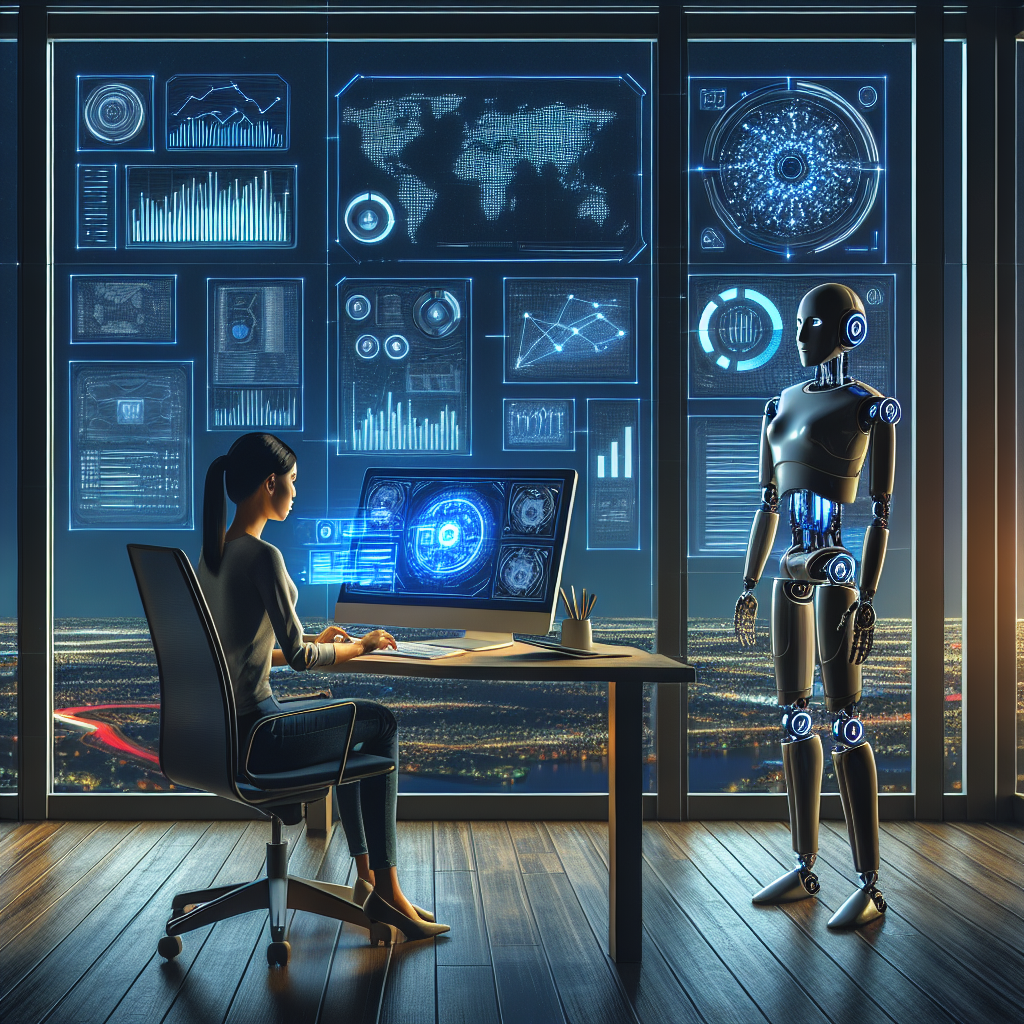
The rise of remote work has been a major trend in recent years, with more and more companies allowing their employees to work from home or other locations outside of the office. This shift has been accelerated by the COVID-19 pandemic, which forced many businesses to quickly adapt to remote work to ensure the safety of their employees.
While remote work offers many benefits, such as increased flexibility and reduced commuting time, it also presents challenges in terms of communication, collaboration, and productivity. Fortunately, advancements in artificial intelligence (AI) technology are providing solutions to help optimize remote work and improve the overall efficiency of remote teams.
AI-driven solutions for remote work optimization can help companies overcome the challenges of remote work by automating repetitive tasks, improving communication and collaboration, and providing insights into employee productivity and well-being. In this article, we will explore some of the key AI-driven solutions for remote work optimization and how they can benefit companies and their employees.
Automating Repetitive Tasks
One of the biggest challenges of remote work is the lack of face-to-face interaction, which can make it difficult to coordinate tasks and projects efficiently. AI-driven solutions can help automate repetitive tasks and streamline workflows, allowing remote teams to focus on more strategic and creative work.
For example, AI-powered project management tools can automatically assign tasks, set deadlines, and track progress, reducing the need for manual oversight and coordination. These tools can also analyze data to identify bottlenecks and inefficiencies in workflows, allowing teams to make data-driven decisions to improve productivity.
Improving Communication and Collaboration
Effective communication and collaboration are essential for remote teams to work together efficiently and achieve their goals. AI-driven solutions can help bridge the communication gap by providing real-time messaging, video conferencing, and collaboration tools that facilitate seamless communication and collaboration among remote team members.
For example, AI-powered chatbots can provide instant answers to common questions and support requests, reducing the need for human intervention and speeding up response times. AI-driven virtual assistants can also schedule meetings, set reminders, and send notifications to keep remote teams organized and on track.
Providing Insights into Employee Productivity and Well-being
Monitoring employee productivity and well-being is crucial for remote work optimization, as it can help identify areas for improvement and prevent burnout. AI-driven solutions can provide insights into employee performance, engagement, and well-being by analyzing data from various sources, such as email communications, project management tools, and time tracking software.
For example, AI-powered analytics platforms can track key performance indicators (KPIs), such as task completion rates, meeting attendance, and response times, to identify patterns and trends that may indicate areas of concern. These platforms can also generate personalized recommendations to help employees improve their productivity and well-being, such as taking breaks, setting boundaries, and prioritizing tasks.
FAQs
Q: How can AI-driven solutions help remote teams collaborate more effectively?
A: AI-driven solutions can help remote teams collaborate more effectively by providing real-time messaging, video conferencing, and collaboration tools that facilitate seamless communication and collaboration among team members. These tools can automate repetitive tasks, streamline workflows, and provide insights into employee productivity and well-being, allowing teams to work together more efficiently and achieve their goals.
Q: Are AI-driven solutions secure for remote work?
A: Yes, AI-driven solutions are secure for remote work, as they use encryption and other security measures to protect sensitive data and information. Companies can also implement additional security measures, such as multi-factor authentication and data encryption, to ensure the confidentiality and integrity of their remote work operations.
Q: How can companies implement AI-driven solutions for remote work optimization?
A: Companies can implement AI-driven solutions for remote work optimization by partnering with technology providers that offer AI-powered tools and platforms specifically designed for remote teams. These solutions can be integrated with existing systems and workflows to automate tasks, improve communication and collaboration, and provide insights into employee productivity and well-being.
In conclusion, AI-driven solutions are transforming the way remote teams work by automating repetitive tasks, improving communication and collaboration, and providing insights into employee productivity and well-being. By leveraging AI technology, companies can optimize their remote work operations and empower their employees to work more efficiently and effectively from anywhere.