
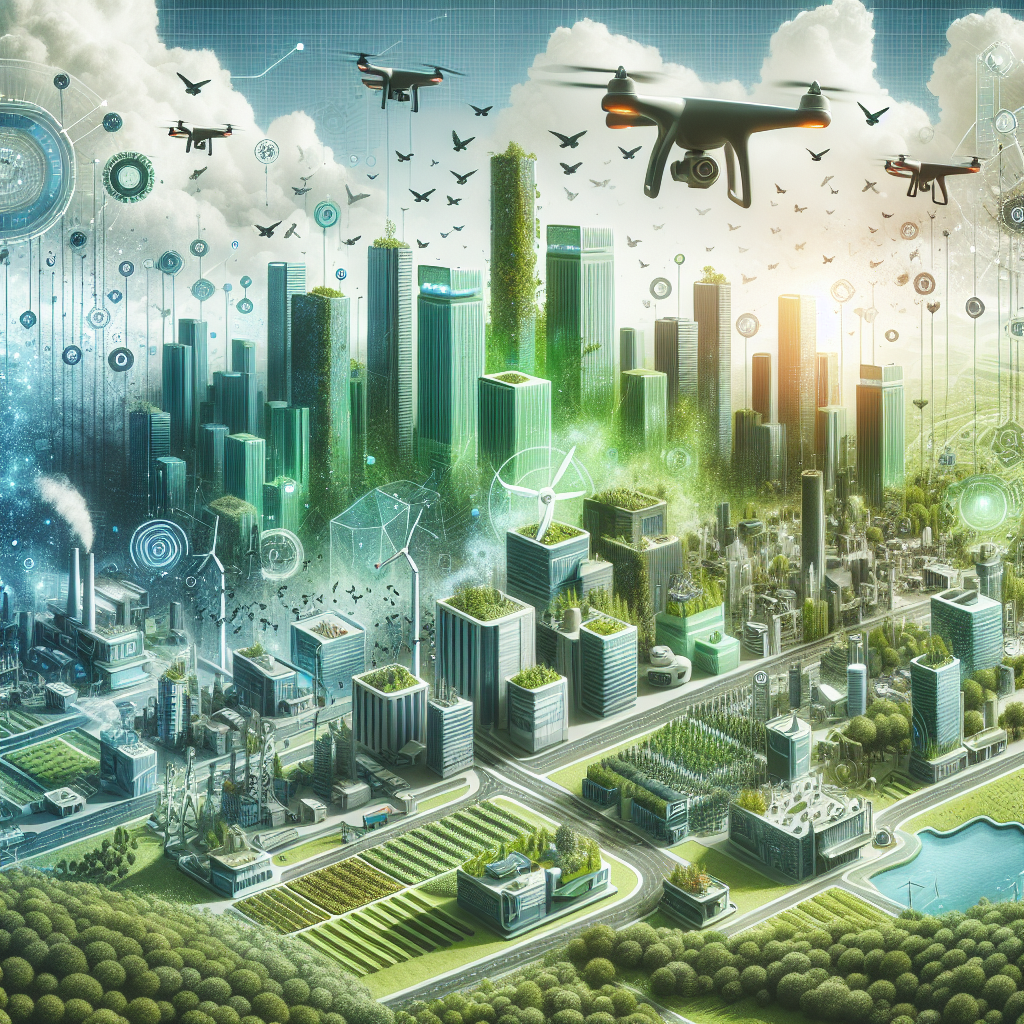
In recent years, artificial intelligence (AI) has emerged as a powerful tool for driving sustainable livelihoods and economic development. AI-driven solutions have the potential to revolutionize industries, create new opportunities for growth and innovation, and improve the quality of life for people around the world. In this article, we will explore the ways in which AI can be used to support sustainable livelihoods and economic development, as well as some of the challenges and opportunities that come with implementing AI-driven solutions.
AI-driven Solutions for Sustainable Livelihoods
One of the key ways in which AI can support sustainable livelihoods is by helping to create new job opportunities and improve the quality of existing jobs. AI technologies have the potential to automate repetitive tasks, freeing up workers to focus on more strategic and creative work. This can lead to increased productivity and efficiency, as well as higher job satisfaction and improved work-life balance.
AI can also be used to enhance education and training programs, providing workers with the skills they need to succeed in a rapidly changing labor market. AI-powered learning platforms can personalize learning experiences, making education more accessible and effective for learners of all ages and backgrounds. This can help to bridge the skills gap and ensure that workers are equipped to thrive in the digital economy.
AI-driven Solutions for Economic Development
AI-driven solutions can also play a key role in driving economic development. By analyzing large amounts of data, AI algorithms can help businesses and governments make better decisions, optimize processes, and identify new opportunities for growth. This can lead to increased productivity, innovation, and competitiveness, driving economic growth and creating new jobs and industries.
AI can also be used to improve access to financial services for underserved populations, such as small businesses and individuals in rural areas. AI-powered fintech solutions can provide personalized financial advice, streamline loan approval processes, and reduce the cost of financial services, making it easier for people to access the capital they need to start or grow their businesses.
Challenges and Opportunities
While AI-driven solutions hold great promise for sustainable livelihoods and economic development, there are also challenges that must be addressed in order to realize their full potential. One of the key challenges is ensuring that AI technologies are developed and deployed in an ethical and responsible manner. This includes addressing issues such as bias in AI algorithms, data privacy, and the impact of AI on jobs and inequality.
Another challenge is ensuring that AI technologies are accessible and affordable for all, particularly in developing countries. In order to bridge the digital divide and ensure that everyone can benefit from AI-driven solutions, governments, businesses, and civil society organizations must work together to expand access to technology and build the digital skills of their populations.
Despite these challenges, there are also numerous opportunities for leveraging AI to drive sustainable livelihoods and economic development. By collaborating with stakeholders from across sectors and leveraging the power of AI to address pressing social and environmental challenges, we can create a more inclusive and sustainable future for all.
FAQs
Q: How can AI be used to support sustainable livelihoods in rural areas?
A: AI can be used to improve access to healthcare, education, and financial services in rural areas, as well as to create new job opportunities and support agriculture and other key industries.
Q: What are some examples of AI-driven solutions for economic development?
A: Examples include AI-powered fintech solutions, predictive analytics for business decision-making, and personalized learning platforms for education and training.
Q: What are some of the ethical considerations when deploying AI-driven solutions?
A: Ethical considerations include ensuring that AI algorithms are unbiased, protecting data privacy, and considering the social and economic impacts of AI on jobs and inequality.
Q: How can governments and businesses work together to expand access to AI technologies?
A: Governments can provide funding and support for AI research and development, while businesses can collaborate with policymakers to ensure that AI technologies are accessible and affordable for all.
In conclusion, AI-driven solutions have the potential to transform industries, create new opportunities for growth and innovation, and improve the quality of life for people around the world. By leveraging the power of AI to support sustainable livelihoods and economic development, we can build a more inclusive and sustainable future for all.