
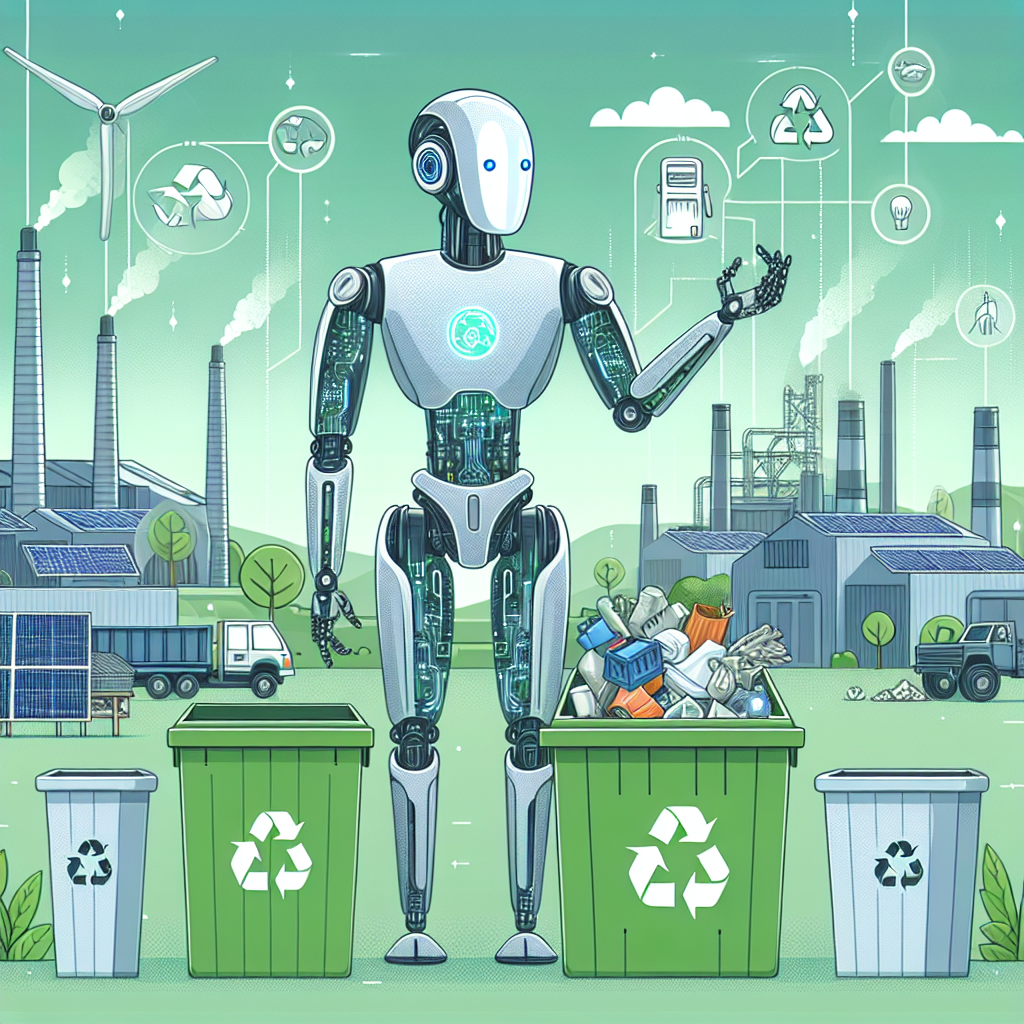
In recent years, the growing concern over environmental sustainability has led to an increased focus on waste recycling and management. As the world grapples with the ever-increasing amount of waste being generated, there is a pressing need for innovative solutions to effectively address this issue. Artificial intelligence (AI) has emerged as a powerful tool in this regard, offering new ways to optimize waste recycling and management processes.
AI-driven solutions for sustainable waste recycling and management leverage the power of machine learning algorithms to analyze and optimize various aspects of waste collection, sorting, recycling, and disposal. By using AI technology, waste management companies can improve efficiency, reduce costs, and minimize environmental impact. In this article, we will explore the different ways in which AI is being used to revolutionize waste recycling and management practices.
One of the key areas where AI is making a significant impact is in waste sorting. Traditional waste sorting processes rely on manual labor, which can be time-consuming, inefficient, and error-prone. AI-powered robotic systems are being developed to automate the sorting process, using computer vision and machine learning algorithms to identify and sort different types of waste materials. These robotic systems can accurately identify and separate recyclable materials from non-recyclable ones, increasing the efficiency of the waste sorting process.
Another area where AI is being applied is in waste collection. AI algorithms can analyze data from sensors placed in waste bins to optimize collection routes, reduce fuel consumption, and minimize carbon emissions. By using real-time data and predictive analytics, waste management companies can improve the efficiency of their collection operations and reduce their environmental impact.
AI technology is also being used to optimize recycling processes. By analyzing data on the composition of waste materials, AI algorithms can recommend the most effective recycling methods for different types of materials. This can help waste management companies maximize the amount of waste that is recycled and minimize the amount that ends up in landfills.
In addition to waste sorting, collection, and recycling, AI is also being used to improve waste disposal practices. By analyzing data on landfill capacity, waste management companies can better plan and manage the disposal of waste materials. AI algorithms can help optimize the placement of waste disposal sites, reduce transportation costs, and minimize the environmental impact of waste disposal.
Overall, AI-driven solutions for sustainable waste recycling and management offer a range of benefits, including increased efficiency, reduced costs, and improved environmental sustainability. By leveraging the power of AI technology, waste management companies can transform their operations and make a positive impact on the environment.
FAQs:
Q: How does AI technology improve waste recycling and management processes?
A: AI technology can improve waste recycling and management processes in a variety of ways. For example, AI-powered robotic systems can automate the waste sorting process, reducing the need for manual labor and increasing efficiency. AI algorithms can also optimize waste collection routes, minimize fuel consumption, and reduce carbon emissions. Additionally, AI technology can analyze data on waste composition to recommend the most effective recycling methods for different types of materials.
Q: What are the benefits of using AI-driven solutions for waste recycling and management?
A: AI-driven solutions offer a range of benefits for waste recycling and management, including increased efficiency, reduced costs, and improved environmental sustainability. By using AI technology, waste management companies can optimize their operations, minimize waste, and maximize recycling rates. AI algorithms can help companies make informed decisions about waste disposal, reduce environmental impact, and improve overall sustainability.
Q: Are there any challenges associated with implementing AI-driven solutions for waste recycling and management?
A: While AI technology offers many benefits for waste recycling and management, there are also challenges associated with its implementation. For example, the initial cost of implementing AI systems can be high, and companies may need to invest in new infrastructure and training for employees. Additionally, there may be concerns about data privacy and security when using AI technology to analyze sensitive waste data. Despite these challenges, the benefits of using AI-driven solutions for waste recycling and management outweigh the potential drawbacks.