
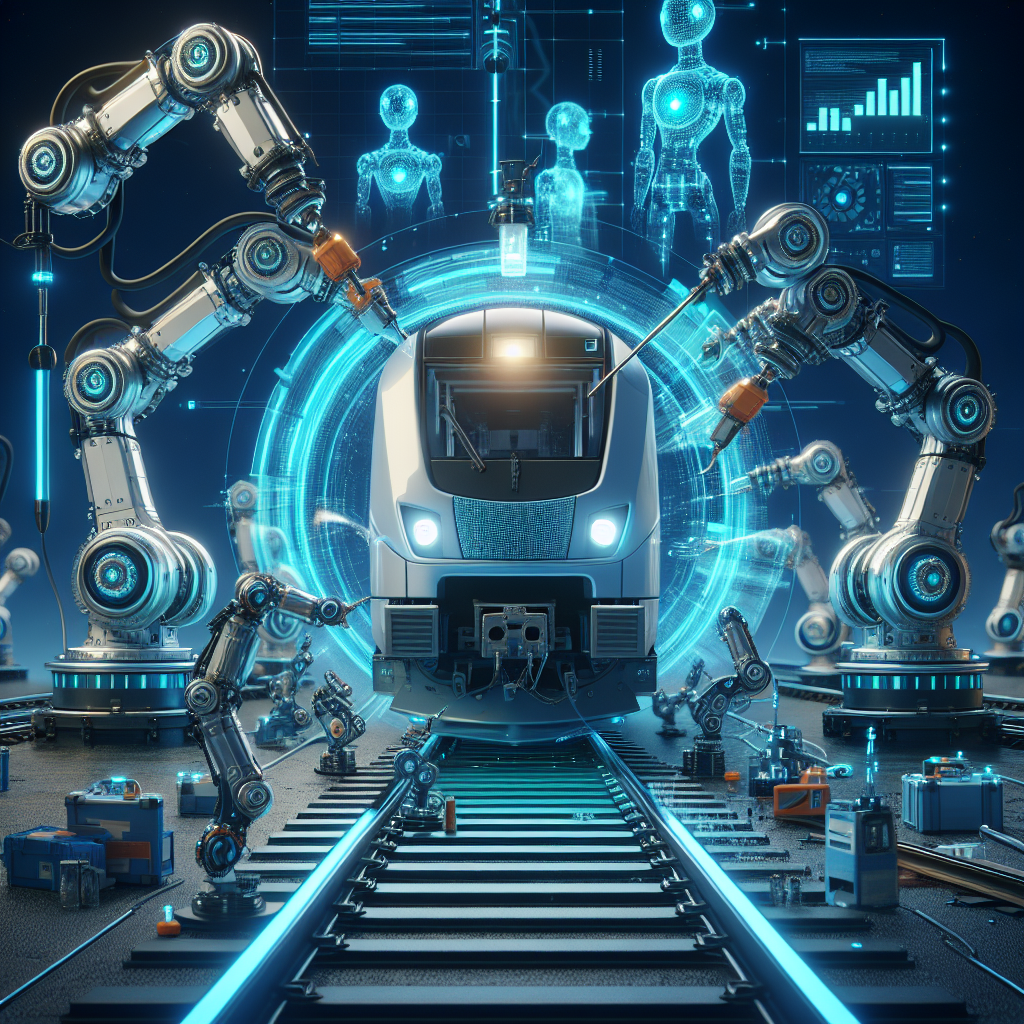
AI-Enabled Predictive Maintenance in the Rail Industry
The rail industry plays a critical role in transportation, moving goods and people efficiently across vast distances. With the increasing demands on rail networks, ensuring the reliability and safety of rail infrastructure is paramount. One way to achieve this is through the implementation of predictive maintenance techniques, which can help identify potential issues before they escalate into costly and disruptive failures. Artificial Intelligence (AI) has emerged as a powerful tool in predictive maintenance, offering the ability to analyze vast amounts of data to predict when maintenance is required. In this article, we will explore the benefits of AI-enabled predictive maintenance in the rail industry and how it is transforming maintenance practices.
Benefits of AI-Enabled Predictive Maintenance
Predictive maintenance involves using data and analytics to predict when maintenance is needed on equipment or infrastructure. By analyzing historical data, AI algorithms can identify patterns and trends that indicate when a component is likely to fail. This allows maintenance teams to proactively address issues before they cause disruptions to rail operations. Some of the key benefits of AI-enabled predictive maintenance in the rail industry include:
1. Improved Reliability: By predicting when maintenance is required, rail operators can reduce the risk of unexpected failures and downtime. This can help improve the reliability of rail services and minimize disruptions to passengers and freight.
2. Cost Savings: Predictive maintenance can help reduce maintenance costs by identifying issues early and allowing maintenance teams to plan and schedule repairs more efficiently. This can help minimize the need for unscheduled maintenance and reduce overall maintenance expenses.
3. Enhanced Safety: By identifying potential issues before they escalate, predictive maintenance can help improve safety on rail networks. This can help prevent accidents and injuries, ensuring the well-being of passengers and rail staff.
4. Increased Efficiency: AI-enabled predictive maintenance can help optimize maintenance schedules and resources, ensuring that maintenance is performed when needed and minimizing downtime. This can help improve the overall efficiency of rail operations and increase productivity.
5. Data-Driven Decision Making: By analyzing data from sensors and other sources, AI algorithms can provide valuable insights into the health of rail infrastructure. This can help maintenance teams make informed decisions and prioritize maintenance tasks based on the criticality of the assets.
AI Technologies in Predictive Maintenance
AI technologies such as machine learning, deep learning, and natural language processing are being increasingly used in predictive maintenance applications in the rail industry. These technologies can analyze vast amounts of data to identify patterns and anomalies that indicate when maintenance is required. Some of the key AI technologies used in predictive maintenance include:
1. Machine Learning: Machine learning algorithms can analyze historical data to identify patterns and trends that indicate when maintenance is needed. These algorithms can be trained on large datasets to predict when a component is likely to fail, allowing maintenance teams to take proactive action.
2. Deep Learning: Deep learning algorithms, a subset of machine learning, can analyze complex data such as images and videos to detect anomalies and defects in rail infrastructure. This can help maintenance teams identify potential issues that may not be visible to the naked eye.
3. Natural Language Processing: Natural language processing algorithms can analyze text data from maintenance reports, service manuals, and other sources to extract valuable insights. This can help maintenance teams identify trends and patterns in maintenance data and make informed decisions.
4. Internet of Things (IoT): IoT sensors can collect real-time data on the health of rail infrastructure, such as temperature, vibration, and pressure. AI algorithms can analyze this data to predict when maintenance is required and optimize maintenance schedules.
Case Studies
Several rail operators have already adopted AI-enabled predictive maintenance techniques to improve the reliability and efficiency of their rail networks. For example, Deutsche Bahn, the largest railway operator in Germany, has implemented a predictive maintenance system that uses AI algorithms to analyze data from sensors on its trains and tracks. This system can predict when maintenance is required and help prioritize maintenance tasks based on the criticality of the assets.
In the United States, Union Pacific Railroad has also implemented AI-enabled predictive maintenance techniques to improve the reliability of its rail infrastructure. By analyzing data from sensors and other sources, Union Pacific can predict when components are likely to fail and take proactive action to prevent failures.
FAQs
1. How does AI-enabled predictive maintenance work in the rail industry?
AI-enabled predictive maintenance involves using AI algorithms to analyze data from sensors and other sources to predict when maintenance is required on rail infrastructure. By analyzing historical data, these algorithms can identify patterns and trends that indicate when a component is likely to fail, allowing maintenance teams to take proactive action.
2. What are the benefits of AI-enabled predictive maintenance in the rail industry?
Some of the key benefits of AI-enabled predictive maintenance in the rail industry include improved reliability, cost savings, enhanced safety, increased efficiency, and data-driven decision making. By predicting when maintenance is required, rail operators can reduce the risk of unexpected failures, minimize disruptions, and optimize maintenance schedules and resources.
3. What AI technologies are used in predictive maintenance in the rail industry?
AI technologies such as machine learning, deep learning, natural language processing, and IoT are used in predictive maintenance applications in the rail industry. These technologies can analyze data from sensors and other sources to predict when maintenance is required and optimize maintenance schedules.
4. Are there any case studies of AI-enabled predictive maintenance in the rail industry?
Several rail operators, including Deutsche Bahn and Union Pacific Railroad, have implemented AI-enabled predictive maintenance systems to improve the reliability and efficiency of their rail networks. These systems use AI algorithms to analyze data from sensors and other sources to predict when maintenance is required and take proactive action to prevent failures.
In conclusion, AI-enabled predictive maintenance is transforming maintenance practices in the rail industry, offering the ability to predict when maintenance is needed and optimize maintenance schedules and resources. By leveraging AI technologies such as machine learning, deep learning, and natural language processing, rail operators can improve the reliability, safety, and efficiency of their rail networks. As the rail industry continues to evolve, AI-enabled predictive maintenance will play an increasingly important role in ensuring the reliability and performance of rail infrastructure.