
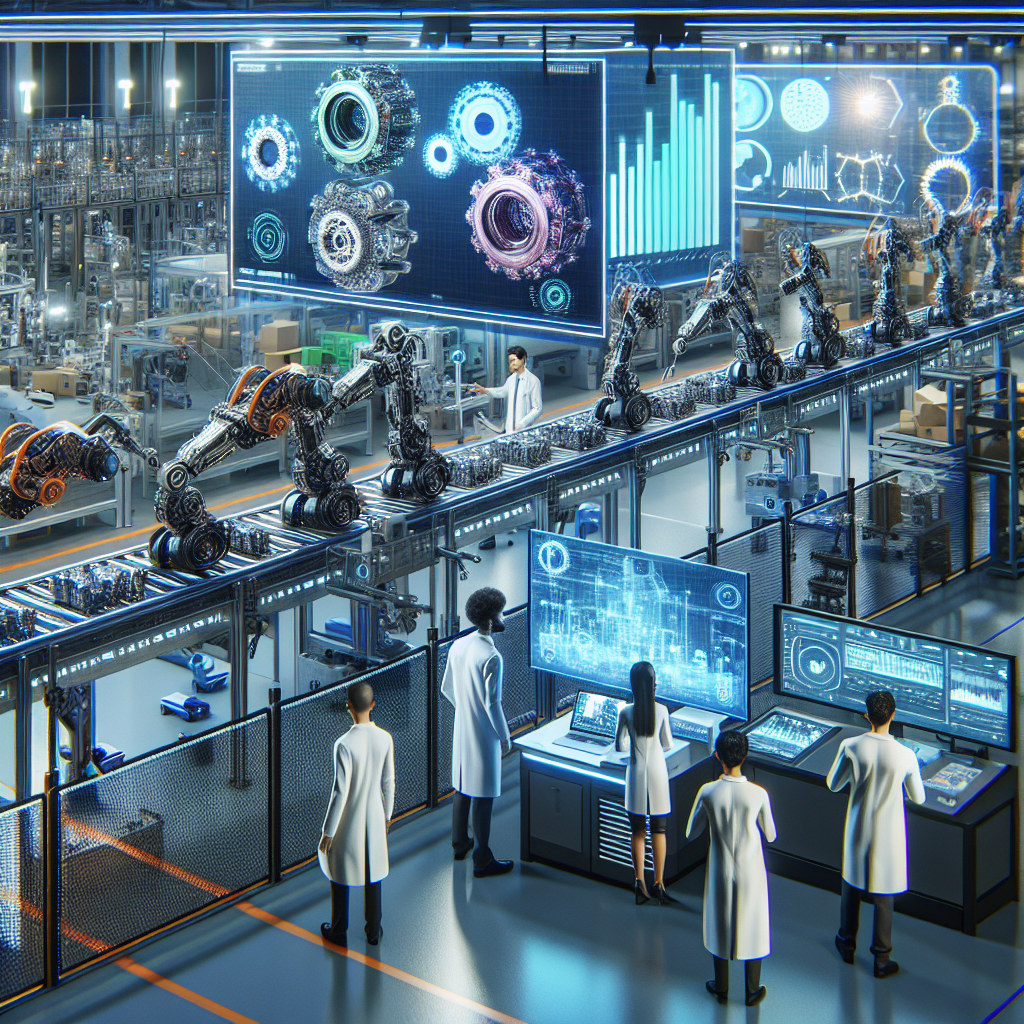
In the fast-paced world of manufacturing, quality assurance is a critical aspect of ensuring that products meet the highest standards of quality and safety. Traditionally, quality assurance has been a manual process, with inspectors visually inspecting products on the assembly line to identify any defects or issues. However, with advancements in technology, artificial intelligence (AI) is now being used to enhance and streamline the quality assurance process in manufacturing.
AI-enhanced quality assurance involves the use of AI and machine learning algorithms to analyze data and identify patterns that can help predict and prevent defects in products. By leveraging AI technology, manufacturers can improve the accuracy and efficiency of their quality assurance processes, leading to higher quality products and reduced costs.
One of the key benefits of AI-enhanced quality assurance is its ability to analyze vast amounts of data quickly and accurately. AI algorithms can process large volumes of data from various sources, such as sensors, cameras, and production records, to identify trends and patterns that human inspectors may not be able to detect. This allows manufacturers to identify potential defects early in the production process and take corrective action before they become larger issues.
In addition, AI-enhanced quality assurance can help manufacturers improve their overall production processes. By analyzing data from different stages of the manufacturing process, AI algorithms can identify areas for improvement and optimization. For example, AI can identify bottlenecks in the production process, recommend changes to workflow or equipment settings, and even predict when machines may need maintenance or replacement.
Furthermore, AI-enhanced quality assurance can also help manufacturers reduce the risk of recalls and warranty claims. By identifying and addressing defects early in the production process, manufacturers can prevent faulty products from reaching consumers, reducing the likelihood of costly recalls and warranty claims.
Overall, AI-enhanced quality assurance offers manufacturers a powerful tool for improving the quality and efficiency of their production processes. By leveraging AI technology, manufacturers can detect defects early, optimize their production processes, and reduce the risk of recalls and warranty claims.
FAQs:
Q: What are some of the key technologies used in AI-enhanced quality assurance?
A: Some of the key technologies used in AI-enhanced quality assurance include machine learning algorithms, computer vision, natural language processing, and predictive analytics. These technologies help analyze data, identify patterns, and make predictions to improve the quality assurance process.
Q: How can AI-enhanced quality assurance benefit manufacturers?
A: AI-enhanced quality assurance can benefit manufacturers by improving the accuracy and efficiency of their quality assurance processes, reducing the risk of defects in products, optimizing production processes, and reducing the risk of recalls and warranty claims.
Q: How can manufacturers implement AI-enhanced quality assurance in their production processes?
A: Manufacturers can implement AI-enhanced quality assurance by integrating AI technology into their existing production systems. This may involve installing sensors, cameras, and other data collection devices on the production line, as well as developing and implementing AI algorithms to analyze the data collected.
Q: What are some of the challenges of implementing AI-enhanced quality assurance in manufacturing?
A: Some of the challenges of implementing AI-enhanced quality assurance in manufacturing include the initial cost of implementing AI technology, the need for specialized expertise to develop and implement AI algorithms, and the potential resistance from employees who may be concerned about job displacement.
Q: What are some examples of companies that have successfully implemented AI-enhanced quality assurance in manufacturing?
A: Several companies have successfully implemented AI-enhanced quality assurance in manufacturing, including Siemens, Bosch, and General Electric. These companies have reported improved product quality, reduced production costs, and increased efficiency as a result of implementing AI technology in their quality assurance processes.