
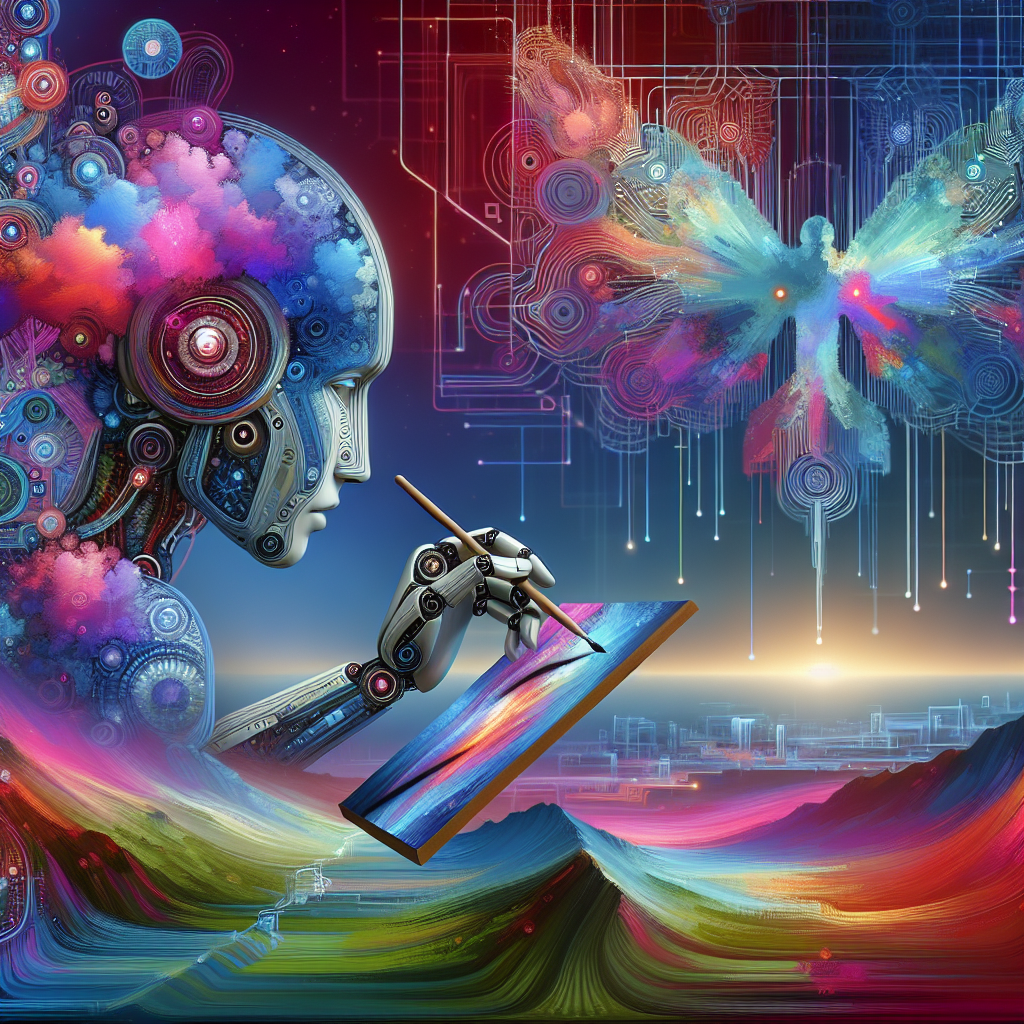
Artificial intelligence (AI) has been making waves in the world of art and design, creating innovative and unique creations that were once thought to be exclusively human endeavors. From generating mesmerizing visual art to designing cutting-edge products, AI is revolutionizing the way we think about creativity and pushing the boundaries of what is possible in the art and design world.
One of the most exciting developments in AI art is the use of generative adversarial networks (GANs) to create stunning visual art. GANs are a type of machine learning algorithm that consists of two neural networks: a generator and a discriminator. The generator creates new images based on a set of input data, while the discriminator evaluates these images and provides feedback to the generator. Through this iterative process, GANs can generate highly realistic and unique images that are often indistinguishable from those created by human artists.
One of the most famous examples of AI art created using GANs is the Portrait of Edmond de Belamy, which was sold at auction for $432,500 in 2018. The portrait was created by the Paris-based art collective Obvious using a GAN trained on a dataset of portraits from the 14th to the 20th centuries. The result was a haunting and enigmatic portrait that captured the attention of art collectors and critics alike.
In addition to creating visual art, AI is also being used to design innovative products and objects. Companies like Autodesk and IBM are using AI algorithms to generate new designs for everything from furniture to buildings. These designs are often based on a set of parameters provided by the user, such as material constraints or aesthetic preferences, and can be customized to meet specific needs.
For example, the design firm AI SpaceFactory used AI algorithms to generate the winning design for NASA’s 3D-printed Mars habitat competition. The design, called MARSHA, was inspired by the shape of a mushroom and was optimized for efficiency and sustainability in the harsh environment of Mars. By using AI to generate the design, AI SpaceFactory was able to create a unique and innovative habitat that would have been difficult, if not impossible, to design using traditional methods.
AI is also being used to enhance the creative process for human artists and designers. Tools like Adobe’s Sensei use AI algorithms to analyze images and provide suggestions for improving composition, color palettes, and other aspects of the design process. These tools can help artists and designers overcome creative blocks and generate new ideas that they may not have thought of on their own.
Another exciting application of AI in art and design is the use of neural style transfer algorithms to create unique and visually striking images. Neural style transfer algorithms work by combining the content of one image with the style of another, creating a hybrid image that is both familiar and new. Artists and designers can use these algorithms to experiment with different visual styles and create new and innovative artworks that push the boundaries of traditional art forms.
Despite the exciting possibilities that AI offers in the world of art and design, there are also concerns about the impact of AI on creativity and the role of human artists and designers. Some critics argue that AI art lacks the emotional depth and personal expression that is inherent in human-created art, and that the proliferation of AI-generated art could devalue the work of human artists. Others worry about the ethical implications of AI art, such as issues of copyright and ownership.
However, proponents of AI art argue that AI can enhance, rather than replace, human creativity. By providing new tools and techniques for artists and designers to explore, AI can inspire new forms of expression and push the boundaries of what is possible in art and design. AI can also democratize the creative process, making art more accessible to a wider audience and allowing for new voices and perspectives to be heard.
In conclusion, AI is revolutionizing the world of art and design, creating innovative and unique creations that challenge our notions of creativity and push the boundaries of what is possible. From generating mesmerizing visual art to designing cutting-edge products, AI is changing the way we think about art and design and opening up new possibilities for creative expression. By embracing AI as a tool for creativity, artists and designers can unlock new forms of expression and create groundbreaking work that was once thought to be impossible.
FAQs:
1. Can AI truly be creative?
While AI algorithms can generate innovative and unique creations, some argue that true creativity requires human emotion and intentionality. However, AI can enhance human creativity by providing new tools and techniques for artists and designers to explore.
2. What are the ethical implications of AI in art and design?
There are concerns about issues such as copyright and ownership in AI-generated art, as well as questions about the role of human artists and designers in a world increasingly dominated by AI. These ethical implications will need to be addressed as AI continues to play a larger role in the art and design world.
3. How can AI be used to enhance the creative process for human artists and designers?
AI tools like Adobe’s Sensei can analyze images and provide suggestions for improving composition, color palettes, and other aspects of the design process. By using AI to augment their creative process, artists and designers can overcome creative blocks and generate new ideas.
4. What are some examples of AI-generated art and design?
Some famous examples of AI-generated art include the Portrait of Edmond de Belamy by Obvious, the winning design for NASA’s 3D-printed Mars habitat competition by AI SpaceFactory, and neural style transfer algorithms that create visually striking images by combining different visual styles.
5. How can AI democratize the creative process in art and design?
AI can make art more accessible to a wider audience by providing new tools and techniques for artists and designers to experiment with. By democratizing the creative process, AI can allow for new voices and perspectives to be heard in the art and design world.