
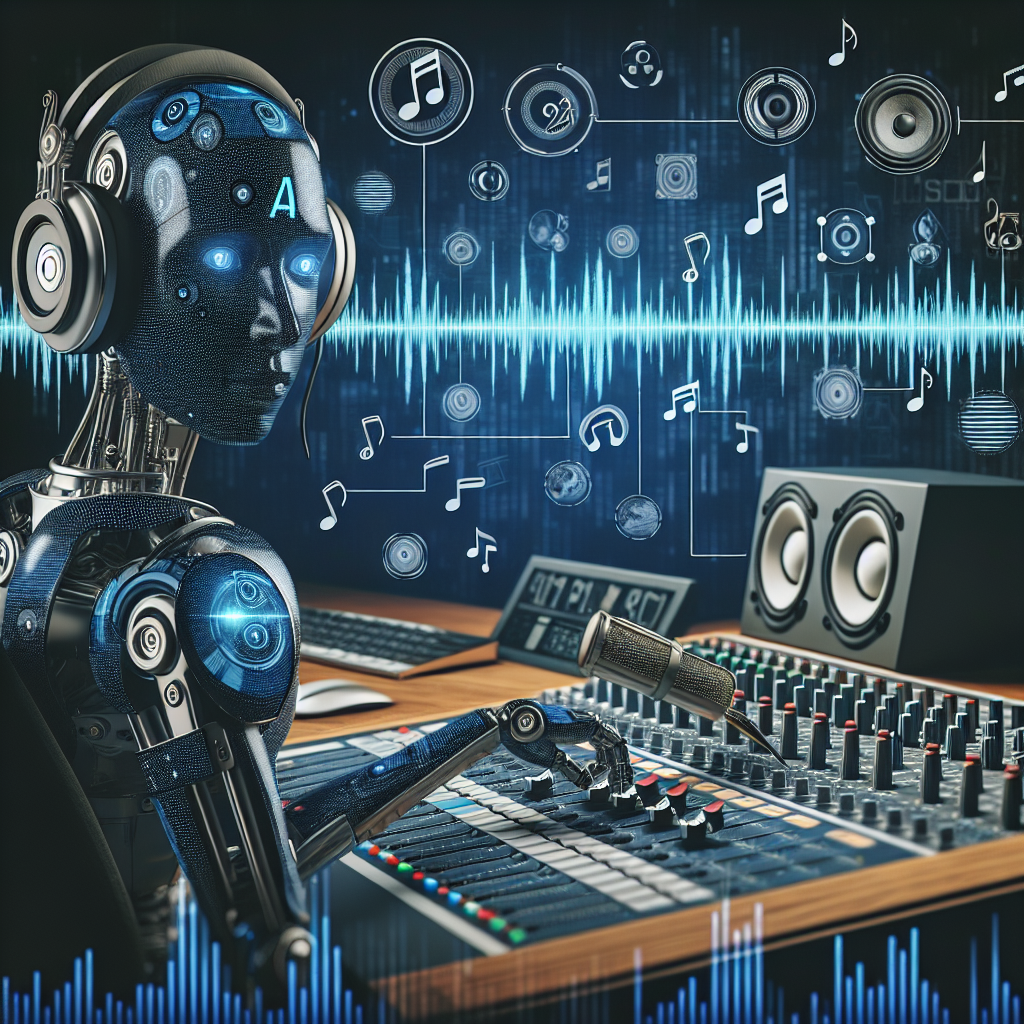
AI in Audio Production: Enhancing Sound Quality and Mixing
In recent years, artificial intelligence (AI) has made significant advancements in various industries, and the field of audio production is no exception. AI technology has revolutionized the way sound quality is enhanced and mixing is done in the production of music, podcasts, films, and other audio content. This article will explore the role of AI in audio production, how it is used to improve sound quality and mixing, and its impact on the industry.
AI in Sound Quality Enhancement
Sound quality is a critical aspect of audio production, as it directly affects the overall listening experience of the audience. AI technology has been instrumental in improving sound quality by analyzing and enhancing audio signals in real-time. One of the key applications of AI in sound quality enhancement is noise reduction.
AI algorithms can effectively distinguish between unwanted noise and the desired audio signal, allowing for the removal of background noise, hums, clicks, and other distractions. This results in cleaner and clearer audio recordings, making the final product more professional and enjoyable to listen to.
Another area where AI is used to enhance sound quality is in audio restoration. AI-powered tools can repair damaged audio files by restoring missing or distorted audio information, such as lost frequencies or clipped audio. This is particularly useful for restoring old or poorly recorded audio tracks, preserving their original quality and improving overall sound fidelity.
AI can also be used to enhance the spatial and dynamic aspects of audio recordings. By analyzing the acoustics of a recording environment and the characteristics of the audio signal, AI algorithms can simulate realistic reverberation and spatial effects to create a more immersive listening experience. This can be especially beneficial in virtual reality (VR) and augmented reality (AR) applications, where spatial audio plays a crucial role in creating a sense of presence and immersion.
AI in Mixing
Mixing is the process of combining and balancing multiple audio tracks to create a cohesive and harmonious sound. It is a complex and time-consuming task that requires a high level of skill and experience. AI technology has been increasingly used in mixing to automate repetitive tasks, streamline workflow, and improve the quality of the final mix.
One of the main applications of AI in mixing is in automatic level balancing and equalization. AI algorithms can analyze the frequency content and dynamic range of individual audio tracks and make real-time adjustments to ensure that each track is properly balanced and sits well in the mix. This helps to prevent clipping, masking, and other common mixing issues, resulting in a more polished and professional sound.
AI-powered mixing tools can also assist in the creation of dynamic mixes by automatically adjusting the volume, panning, and effects parameters of each track based on predefined rules or machine learning algorithms. This can save time and effort for audio engineers and producers, allowing them to focus on creative aspects of the mix rather than tedious technical tasks.
Another area where AI is making a significant impact in mixing is in intelligent audio processing. AI algorithms can analyze the characteristics of audio signals and apply appropriate processing techniques, such as compression, reverb, and delay, to enhance the overall sound quality and create a more cohesive mix. This can help to achieve a consistent and professional sound across different audio tracks and genres.
FAQs
Q: How does AI technology improve sound quality in audio production?
A: AI technology improves sound quality in audio production by analyzing and enhancing audio signals in real-time, removing background noise, restoring damaged audio files, and enhancing spatial and dynamic aspects of audio recordings.
Q: How is AI used in mixing audio tracks?
A: AI is used in mixing audio tracks to automate level balancing and equalization, create dynamic mixes, and apply intelligent audio processing techniques to enhance the overall sound quality and create a cohesive mix.
Q: What are the benefits of using AI in audio production?
A: The benefits of using AI in audio production include improved sound quality, streamlined workflow, time savings, and enhanced creativity in mixing and sound design.
Q: Are there any limitations to using AI in audio production?
A: While AI technology has made significant advancements in audio production, there are still limitations in terms of processing power, algorithm accuracy, and human-machine interaction. However, ongoing research and development in the field of AI are likely to address these limitations in the future.
In conclusion, AI technology is transforming the field of audio production by enhancing sound quality and mixing, streamlining workflow, and improving the overall listening experience for audiences. With the continued development of AI-powered tools and algorithms, the future of audio production looks promising, with new possibilities for creativity and innovation in sound design and production.