
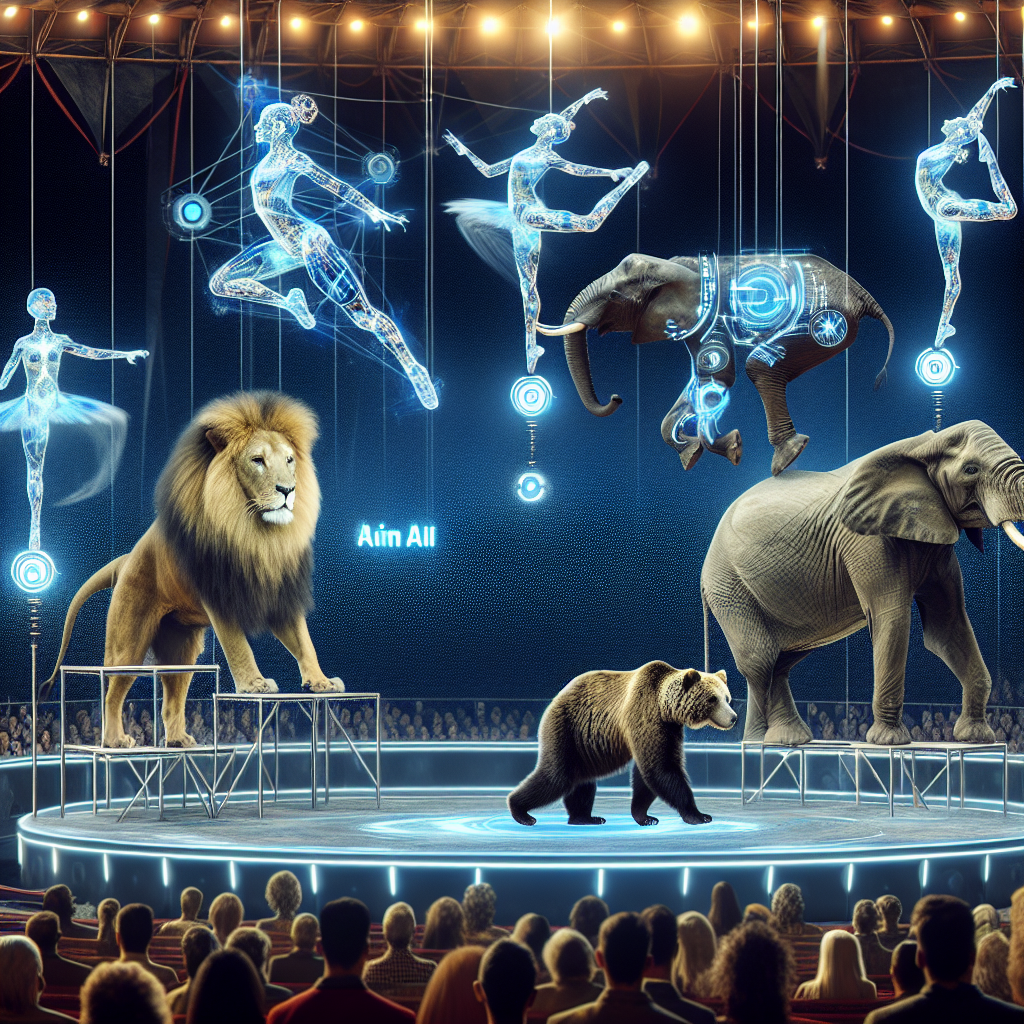
Circus animal training has been a longstanding tradition in entertainment, with acts featuring animals such as elephants, lions, and tigers captivating audiences around the world. However, in recent years, concerns about animal welfare and ethical treatment have led to a shift in how circuses approach animal performances.
Artificial intelligence (AI) has emerged as a game-changing technology in the circus industry, offering a way to create lifelike and impressive performances without the need for live animals. With AI, circus performers can create realistic and interactive animal characters that can perform tricks and stunts with precision and accuracy.
The use of AI in circus animal training has opened up a world of possibilities for circus acts, allowing performers to push the boundaries of what is possible in terms of creativity and innovation. By using AI, circus acts can create lifelike and realistic animal characters that can interact with audiences in new and exciting ways.
One of the key advantages of using AI in circus animal training is the ability to create performances that are both visually stunning and highly customizable. With AI, circus performers can program animal characters to perform a wide range of tricks and stunts, allowing them to create unique and engaging performances that are sure to captivate audiences.
In addition to creating lifelike performances, AI can also be used to enhance the safety and well-being of circus performers. By using AI to control and coordinate the movements of animal characters, circus performers can reduce the risk of accidents and injuries, ensuring that both performers and audiences can enjoy the show without worry.
Furthermore, AI can also be used to create more dynamic and interactive performances that can adapt to the needs and preferences of audiences. By using AI to analyze audience reactions and feedback, circus performers can adjust their performances in real-time, creating a more engaging and immersive experience for spectators.
FAQs
Q: How does AI work in circus animal training?
A: AI in circus animal training works by using algorithms and machine learning techniques to program animal characters to perform tricks and stunts. By analyzing data and feedback, AI can create realistic and interactive performances that are sure to captivate audiences.
Q: Is using AI in circus animal training ethical?
A: Using AI in circus animal training can be seen as a more ethical alternative to traditional animal performances, as it eliminates the need for live animals to perform tricks and stunts. However, it is important for circus performers to ensure that the use of AI is done in a responsible and ethical manner.
Q: What are the benefits of using AI in circus animal training?
A: Some of the benefits of using AI in circus animal training include the ability to create lifelike and impressive performances, enhance safety and well-being of performers, and create more dynamic and interactive performances that can adapt to audience preferences.
Q: Are there any drawbacks to using AI in circus animal training?
A: While there are many benefits to using AI in circus animal training, there are also some drawbacks to consider. These may include the potential for technical glitches or malfunctions, as well as concerns about the impact of AI on traditional circus acts and performers.
In conclusion, AI has the potential to revolutionize the circus industry by creating lifelike and impressive performances that are sure to captivate audiences. By using AI in circus animal training, performers can push the boundaries of creativity and innovation, creating performances that are both visually stunning and highly customizable. With the use of AI, circus acts can create dynamic and interactive performances that adapt to audience preferences, ensuring that spectators have a truly immersive and engaging experience.