
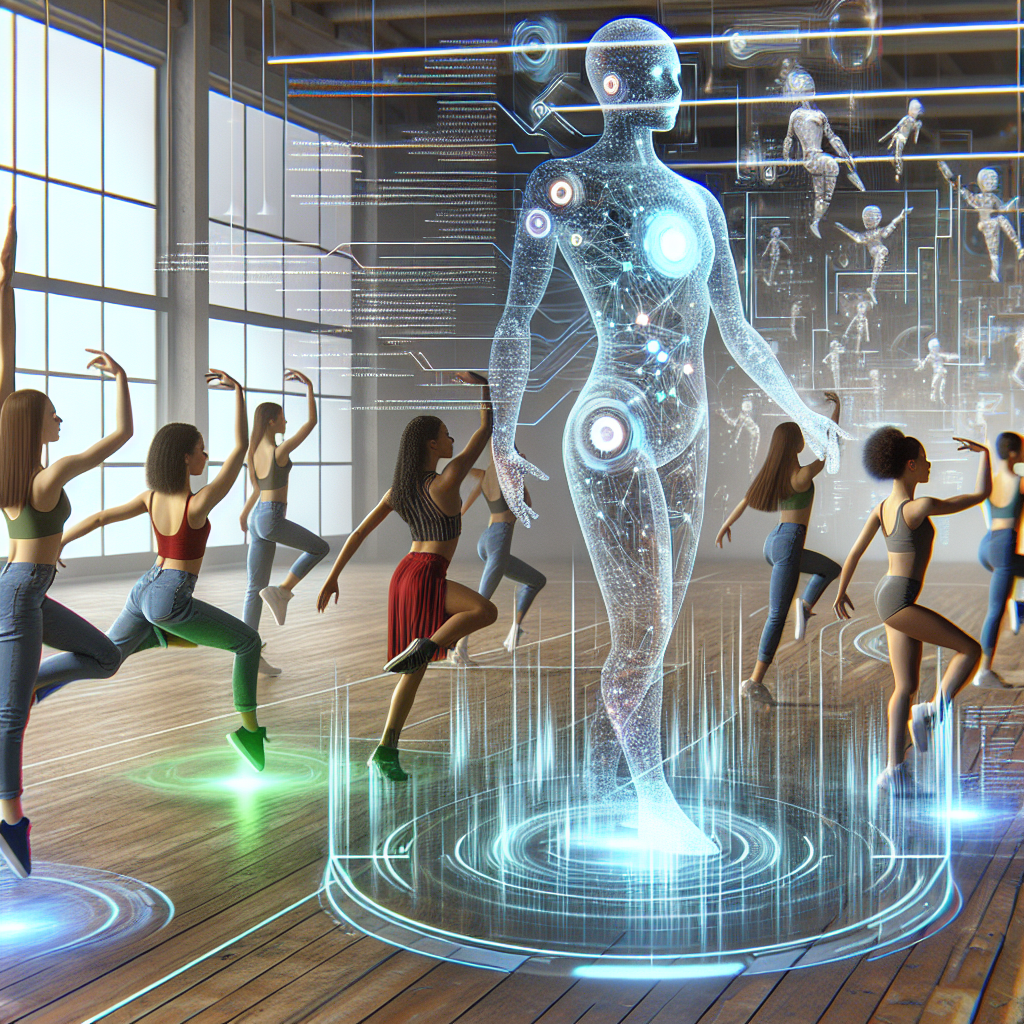
Artificial Intelligence (AI) has been making waves across various industries, from healthcare to agriculture, and now it is also transforming the world of dance and choreography. With its ability to analyze data, identify patterns, and make predictions, AI is pushing the boundaries of creativity in dance, inspiring choreographers to explore new possibilities and create innovative performances.
AI in dance and choreography is not about replacing human dancers or choreographers, but rather enhancing their creative process and opening up new avenues for expression. By using AI algorithms and machine learning techniques, choreographers can generate new movements, explore different styles, and experiment with unconventional ideas that may not have been possible before.
One of the key ways in which AI is revolutionizing dance and choreography is through motion capture technology. This technology allows dancers to wear sensors that track their movements in real-time, which can then be translated into digital data that can be analyzed and manipulated by AI algorithms. This enables choreographers to create intricate choreographies, experiment with different movement patterns, and explore new ways of expressing emotions and ideas through dance.
Another area where AI is making a significant impact in dance is in the creation of music. By analyzing the rhythm, tempo, and mood of a piece of music, AI algorithms can generate choreographies that are perfectly synchronized with the music, creating a seamless and harmonious relationship between movement and sound. This opens up new possibilities for choreographers to create dynamic and engaging performances that captivate audiences and push the boundaries of traditional dance forms.
AI is also being used to enhance the training and performance of dancers. By analyzing video footage of dancers performing, AI algorithms can provide feedback on their technique, posture, and movements, helping them to improve their skills and refine their performances. This personalized feedback can help dancers to reach their full potential and push the boundaries of their creativity.
Despite the many benefits that AI brings to the world of dance and choreography, there are also concerns about its impact on the creative process. Some critics argue that AI may limit the creativity of choreographers by imposing constraints and limitations on their artistic vision. However, proponents of AI in dance argue that it can actually enhance creativity by providing new tools and techniques for choreographers to experiment with and explore new ideas.
Ultimately, the integration of AI in dance and choreography is still in its early stages, and there is much more to be explored and discovered. As AI technology continues to evolve and improve, we can expect to see even more groundbreaking innovations in the world of dance, pushing the boundaries of creativity and inspiring choreographers to create performances that are truly extraordinary.
FAQs:
Q: Can AI replace human dancers and choreographers?
A: No, AI is not meant to replace human dancers or choreographers, but rather to enhance their creative process and provide new tools and techniques for them to explore and experiment with.
Q: How does motion capture technology work in dance?
A: Motion capture technology involves dancers wearing sensors that track their movements in real-time, which can then be translated into digital data that can be analyzed and manipulated by AI algorithms.
Q: What are some of the benefits of using AI in dance and choreography?
A: Some benefits of using AI in dance and choreography include the ability to generate new movements, explore different styles, synchronize choreographies with music, and provide personalized feedback to dancers to help them improve their skills.
Q: Are there any concerns about the use of AI in dance?
A: Some concerns about the use of AI in dance include the potential for AI to limit the creativity of choreographers by imposing constraints on their artistic vision. However, proponents of AI in dance argue that it can actually enhance creativity by providing new tools and techniques for choreographers to explore and experiment with.