
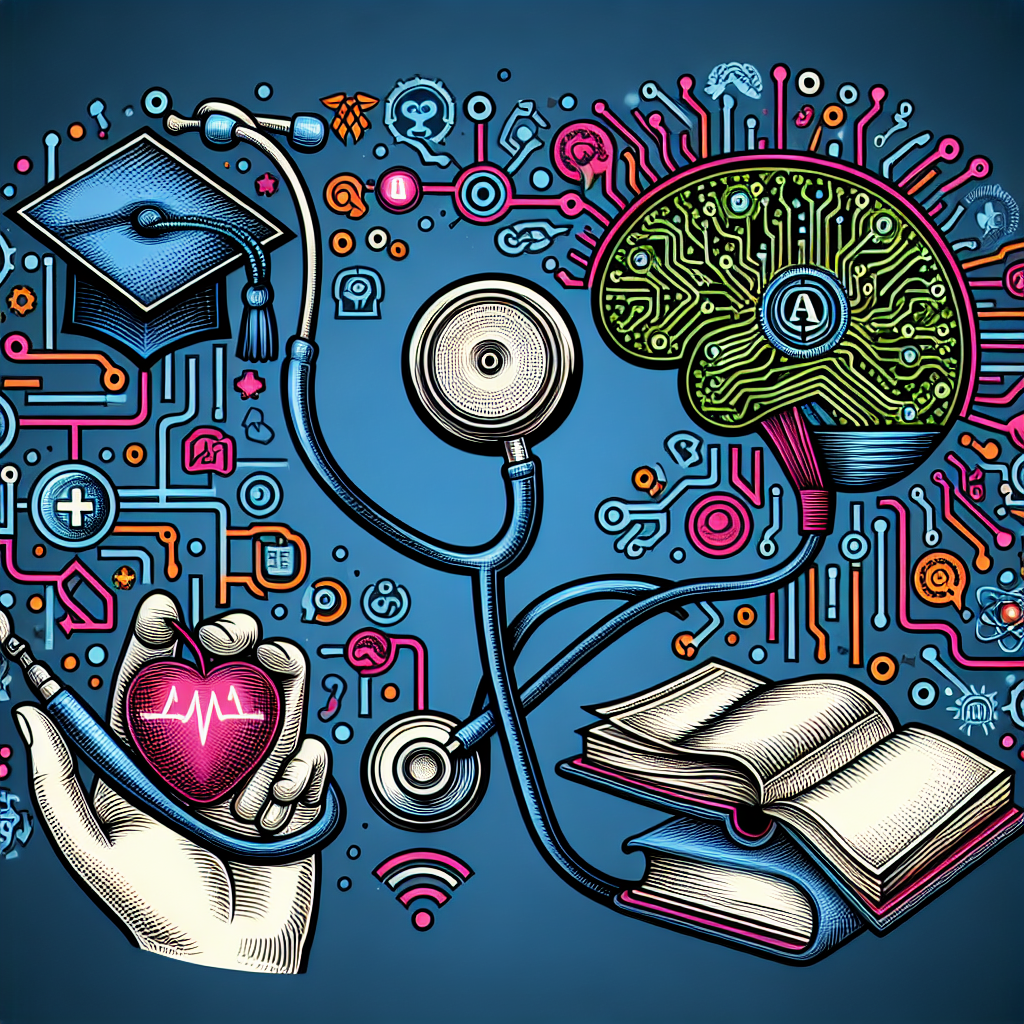
Artificial Intelligence (AI) has revolutionized many industries, and one area where it is making a significant impact is in healthcare education and training. AI is being used to improve medical education, streamline training processes, and enhance clinical decision-making. In this article, we will explore the various ways in which AI is being integrated into healthcare education and training, as well as the benefits and challenges associated with its implementation.
One of the key benefits of using AI in healthcare education and training is its ability to personalize learning experiences for students and healthcare professionals. AI-powered systems can analyze individual learning styles and preferences, as well as track progress and performance, to provide tailored feedback and recommendations. This personalized approach can help to improve learning outcomes and retention rates, as well as reduce the time and resources required for training.
AI is also being used to develop advanced simulations and virtual reality environments for medical training. These simulations can replicate real-life scenarios and allow students to practice procedures and techniques in a safe and controlled environment. This hands-on experience can help to build confidence and skills, as well as improve decision-making and critical thinking abilities. Additionally, AI-powered simulations can provide instant feedback and guidance, helping students to learn from their mistakes and improve their performance.
Another way in which AI is enhancing healthcare education and training is through the use of predictive analytics. By analyzing large amounts of data, AI algorithms can identify patterns and trends that can help to predict outcomes and inform decision-making. For example, AI can be used to predict patient outcomes, assess the risk of complications, and optimize treatment plans. This predictive capability can help healthcare professionals to make more informed decisions and improve patient care.
AI is also being used to develop intelligent tutoring systems that can provide on-demand support and guidance to students and healthcare professionals. These systems can answer questions, provide explanations, and offer personalized learning resources, helping to supplement traditional teaching methods and enhance the learning experience. Intelligent tutoring systems can also track progress and performance, identify areas for improvement, and provide targeted feedback and recommendations.
While the benefits of using AI in healthcare education and training are clear, there are also challenges and limitations that need to be considered. One of the main challenges is the need for high-quality data to train AI algorithms. Healthcare data is often complex, heterogeneous, and unstructured, making it difficult to process and analyze. In addition, there are concerns about data privacy and security, as well as the potential for bias and discrimination in AI algorithms.
Another challenge is the need for healthcare professionals to adapt to new technologies and ways of working. AI-powered systems can change the roles and responsibilities of healthcare professionals, requiring them to develop new skills and competencies. Training and support are essential to help healthcare professionals understand and use AI effectively, as well as to address any concerns or resistance to change.
Despite these challenges, the potential of AI in healthcare education and training is vast. By harnessing the power of AI, we can improve the quality and efficiency of medical education, enhance clinical skills and decision-making, and ultimately improve patient outcomes. As AI continues to evolve and advance, it will play an increasingly important role in shaping the future of healthcare education and training.
FAQs:
1. How is AI being used in medical education?
AI is being used in medical education to personalize learning experiences, develop advanced simulations and virtual reality environments, provide predictive analytics, and create intelligent tutoring systems.
2. What are the benefits of using AI in healthcare education and training?
The benefits of using AI in healthcare education and training include personalized learning experiences, advanced simulations for hands-on practice, predictive analytics for informed decision-making, and intelligent tutoring systems for on-demand support.
3. What are the challenges of using AI in healthcare education and training?
The challenges of using AI in healthcare education and training include the need for high-quality data, concerns about data privacy and security, potential bias and discrimination in AI algorithms, and the need for healthcare professionals to adapt to new technologies and ways of working.
4. How can healthcare professionals benefit from AI in education and training?
Healthcare professionals can benefit from AI in education and training by improving their clinical skills and decision-making, enhancing their learning experience, and ultimately improving patient outcomes.
5. What is the future of AI in healthcare education and training?
As AI continues to evolve and advance, it will play an increasingly important role in shaping the future of healthcare education and training, offering new opportunities for personalized learning, advanced simulations, predictive analytics, and intelligent tutoring systems.