
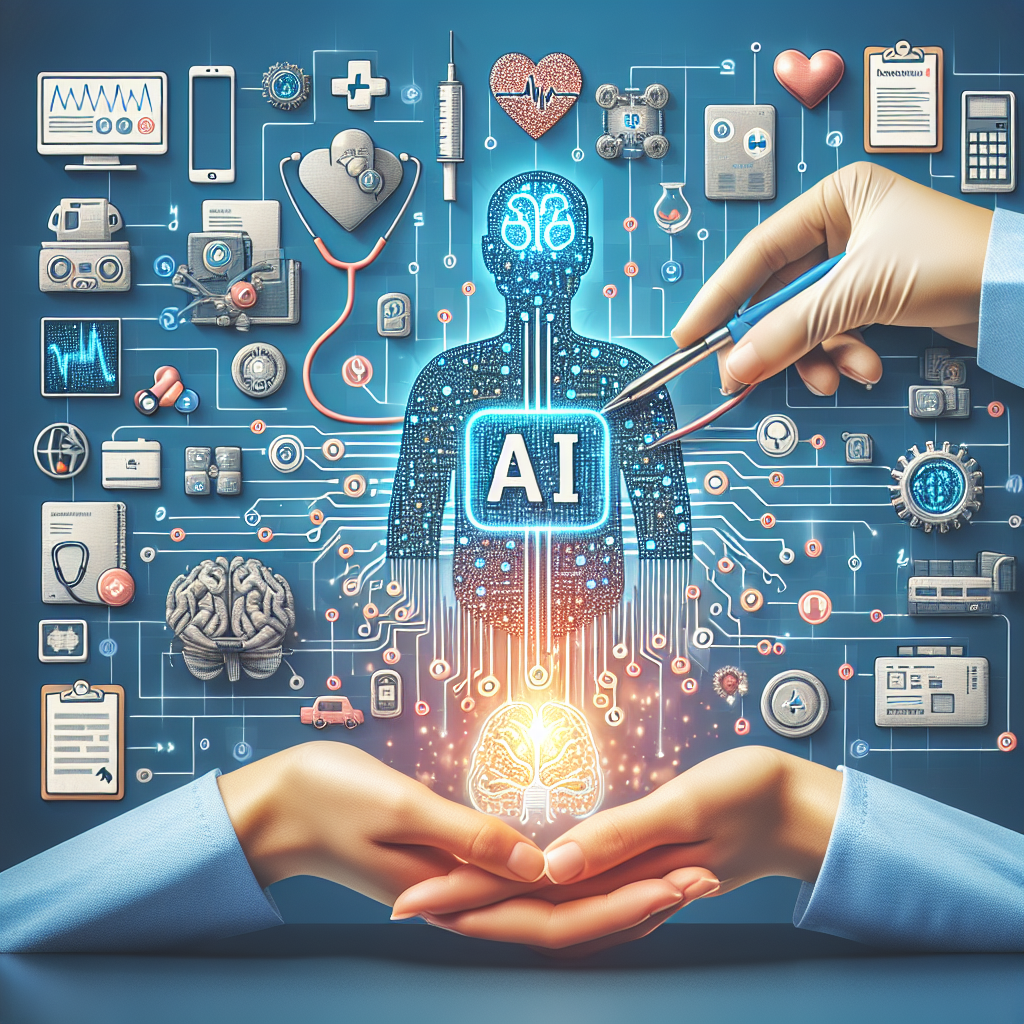
Artificial Intelligence (AI) is revolutionizing the healthcare industry by enhancing care coordination and improving patient outcomes. From streamlining administrative tasks to predicting disease progression, AI is helping healthcare providers deliver more personalized and efficient care. In this article, we will explore the various ways in which AI is transforming care coordination in healthcare, as well as some frequently asked questions about AI in healthcare.
1. Streamlining Administrative Tasks
One of the key challenges in healthcare is the amount of time and resources spent on administrative tasks. AI technologies such as natural language processing (NLP) and machine learning algorithms can automate these tasks, allowing healthcare providers to focus more on patient care. For example, AI-powered chatbots can handle patient inquiries, schedule appointments, and assist with billing and insurance claims. This not only improves efficiency and reduces costs but also enhances the overall patient experience.
2. Predictive Analytics
AI can analyze large amounts of data to predict disease progression and identify at-risk patients. By leveraging machine learning algorithms, healthcare providers can proactively intervene and provide personalized care to those who need it most. For example, AI can analyze a patient’s medical history, lifestyle factors, and genetic predisposition to predict the likelihood of developing a particular disease. This enables healthcare providers to tailor treatment plans and interventions to each individual, leading to better outcomes and reduced healthcare costs.
3. Remote Monitoring
AI-powered devices and sensors can monitor patients remotely, allowing healthcare providers to track vital signs, medication adherence, and other health metrics in real-time. This enables early intervention and timely adjustments to treatment plans, reducing hospital readmissions and improving patient outcomes. For example, wearable devices can alert healthcare providers to changes in a patient’s condition, such as a sudden increase in blood pressure or glucose levels, allowing for immediate intervention.
4. Medical Imaging
AI is revolutionizing medical imaging by improving the accuracy and efficiency of diagnostic procedures. Machine learning algorithms can analyze medical images such as X-rays, MRIs, and CT scans to detect abnormalities and assist radiologists in making more accurate diagnoses. This not only reduces the risk of human error but also speeds up the diagnostic process, enabling faster treatment and better patient outcomes.
5. Personalized Medicine
AI is enabling personalized medicine by analyzing vast amounts of patient data to tailor treatment plans to individual needs. By considering factors such as genetic predisposition, lifestyle choices, and environmental factors, AI can help healthcare providers deliver more effective and targeted treatments. This approach not only improves patient outcomes but also reduces the risk of adverse reactions to medications and treatments.
FAQs about AI in Healthcare:
Q: How is AI being used in healthcare?
A: AI is being used in healthcare to improve care coordination, streamline administrative tasks, predict disease progression, monitor patients remotely, enhance medical imaging, and enable personalized medicine.
Q: Is AI replacing healthcare providers?
A: No, AI is not replacing healthcare providers but rather enhancing their capabilities and improving patient care. Healthcare providers will continue to play a critical role in delivering care, while AI will support them in making more informed decisions and improving patient outcomes.
Q: Is AI in healthcare secure and compliant with privacy regulations?
A: Yes, AI in healthcare is subject to strict security and privacy regulations to ensure the protection of patient data. Healthcare organizations must adhere to regulations such as HIPAA to safeguard patient information and maintain confidentiality.
Q: How can healthcare providers implement AI in their practice?
A: Healthcare providers can implement AI in their practice by partnering with AI vendors, investing in AI technologies, and training staff to use AI tools effectively. It is important to consider the specific needs of the practice and the potential benefits of AI in improving patient care.
Q: What are some challenges of implementing AI in healthcare?
A: Some challenges of implementing AI in healthcare include data privacy concerns, interoperability issues, regulatory compliance, and resistance to change. Healthcare organizations must address these challenges to successfully integrate AI into their practice and realize its full potential in improving care coordination.
In conclusion, AI is transforming care coordination in healthcare by streamlining administrative tasks, predicting disease progression, enabling remote monitoring, improving medical imaging, and facilitating personalized medicine. By leveraging AI technologies, healthcare providers can deliver more personalized and efficient care, leading to better patient outcomes and reduced healthcare costs. As AI continues to evolve, it is important for healthcare organizations to embrace these technologies and harness their potential to improve patient care and enhance care coordination.