
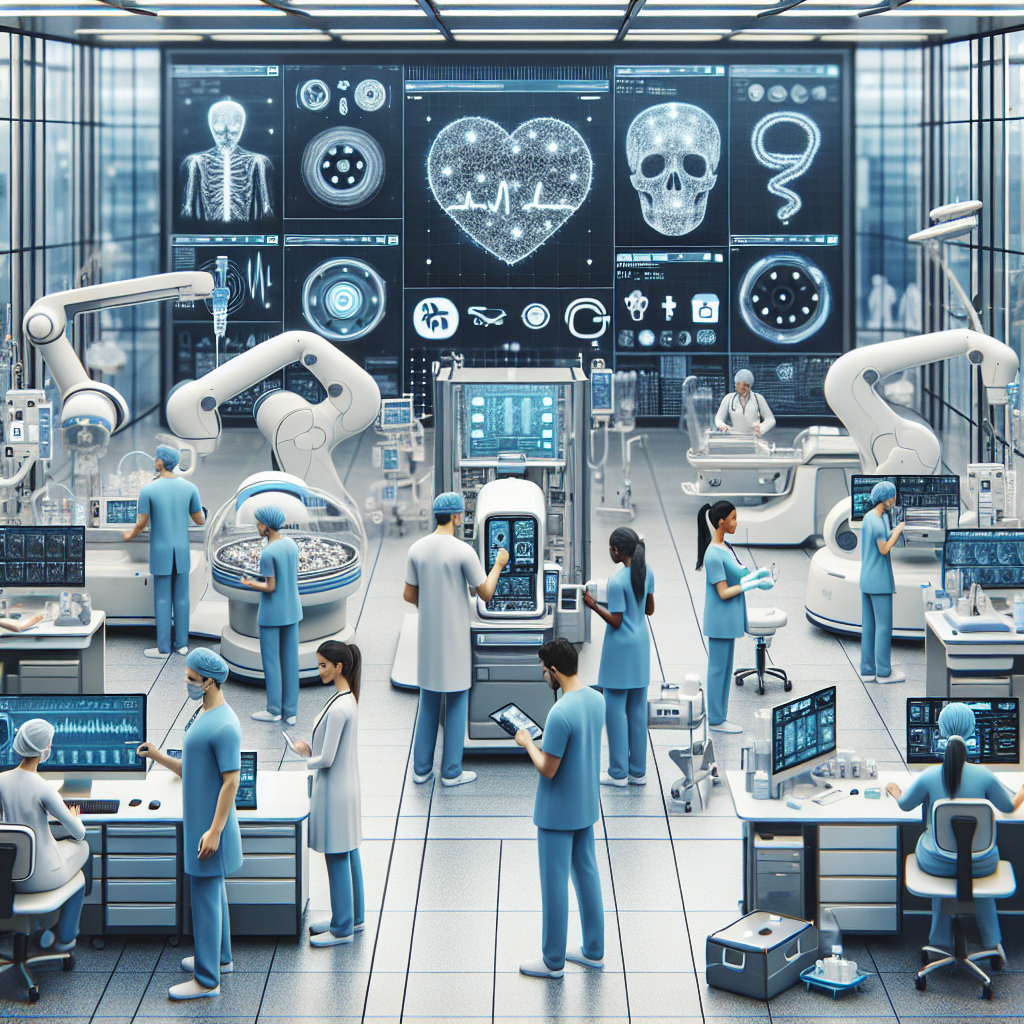
AI in Healthcare: Enhancing Medical Research
Artificial Intelligence (AI) has been making significant strides in various industries, including healthcare. AI has the potential to revolutionize the way medical research is conducted, leading to faster and more accurate diagnoses, personalized treatment plans, and improved patient outcomes. In this article, we will explore how AI is enhancing medical research and its impact on the healthcare industry.
AI in Medical Research
AI has the ability to process and analyze large amounts of data at a speed and accuracy that surpasses human capabilities. In the field of medical research, AI can analyze vast amounts of patient data, medical records, clinical trials, and scientific literature to identify patterns, trends, and insights that may not be apparent to human researchers. This can lead to the discovery of new treatments, the development of personalized medicine, and the optimization of healthcare delivery.
One of the key areas where AI is making a significant impact in medical research is in the field of genomics. AI algorithms can analyze genetic data to identify patterns and correlations between genes and diseases, enabling researchers to develop targeted therapies for patients with specific genetic mutations. This has the potential to revolutionize the treatment of diseases such as cancer, where personalized medicine based on a patient’s genetic profile can lead to more effective and less toxic treatments.
AI is also being used to analyze medical images such as X-rays, MRIs, and CT scans. AI algorithms can detect abnormalities in medical images with a level of accuracy that rivals or surpasses that of human radiologists. This can lead to faster and more accurate diagnoses, reducing the time it takes to identify and treat diseases such as cancer and heart disease. AI-powered image analysis can also help radiologists prioritize cases based on the severity of the condition, ensuring that patients with urgent medical needs receive timely care.
In addition to diagnosing diseases, AI is also being used to predict and prevent them. AI algorithms can analyze patient data to identify individuals at high risk of developing certain diseases, enabling healthcare providers to intervene early and prevent the progression of the disease. For example, AI can analyze a patient’s medical history, lifestyle factors, and genetic profile to predict their likelihood of developing diabetes or heart disease, allowing healthcare providers to develop personalized prevention plans for at-risk patients.
AI is also being used to streamline clinical trials and drug development. AI algorithms can analyze data from previous clinical trials to identify potential drug candidates, predict the efficacy and safety of new drugs, and optimize the design of future trials. This can lead to faster and more cost-effective drug development, bringing new treatments to market more quickly and efficiently.
Challenges and Opportunities
While the potential benefits of AI in healthcare are vast, there are also challenges that need to be addressed. One of the key challenges is the need for robust data privacy and security measures to protect patient information. As AI algorithms rely on large amounts of data to train and operate, it is essential to ensure that patient data is handled securely and in compliance with privacy regulations such as HIPAA.
Another challenge is the need for transparency and interpretability in AI algorithms. As AI systems become more complex and sophisticated, it is important for researchers and healthcare providers to understand how these algorithms make decisions and provide explanations for their recommendations. This is particularly important in healthcare, where the stakes are high and decisions can have life-or-death consequences.
Despite these challenges, the opportunities for AI in healthcare are immense. AI has the potential to transform the way medical research is conducted, leading to faster and more accurate diagnoses, personalized treatment plans, and improved patient outcomes. By harnessing the power of AI, researchers and healthcare providers can unlock new insights and discoveries that have the potential to revolutionize the healthcare industry.
FAQs
Q: How is AI being used in medical research?
A: AI is being used in medical research to analyze large amounts of data, such as patient records, clinical trials, and genetic data, to identify patterns and insights that may not be apparent to human researchers. AI is also being used to analyze medical images, predict and prevent diseases, and streamline clinical trials and drug development.
Q: What are the benefits of AI in healthcare?
A: The benefits of AI in healthcare include faster and more accurate diagnoses, personalized treatment plans, improved patient outcomes, and more cost-effective drug development. AI has the potential to revolutionize the healthcare industry by unlocking new insights and discoveries that can lead to better patient care.
Q: What are the challenges of AI in healthcare?
A: Some of the key challenges of AI in healthcare include data privacy and security concerns, the need for transparency and interpretability in AI algorithms, and the potential for bias in AI decision-making. Addressing these challenges is essential to ensure that AI is used responsibly and ethically in healthcare.
Q: How can healthcare providers harness the power of AI?
A: Healthcare providers can harness the power of AI by investing in AI technology, training their staff on how to use AI tools effectively, and collaborating with AI researchers and developers to implement AI solutions in their practice. By embracing AI, healthcare providers can improve patient care, streamline operations, and drive innovation in the healthcare industry.
In conclusion, AI is enhancing medical research by providing researchers and healthcare providers with new tools and insights that have the potential to revolutionize the healthcare industry. By harnessing the power of AI, researchers can analyze large amounts of data, develop personalized treatment plans, and optimize healthcare delivery, leading to better patient outcomes and more efficient healthcare systems. As AI continues to evolve and improve, the possibilities for its application in healthcare are limitless, offering the promise of a brighter and healthier future for patients around the world.