
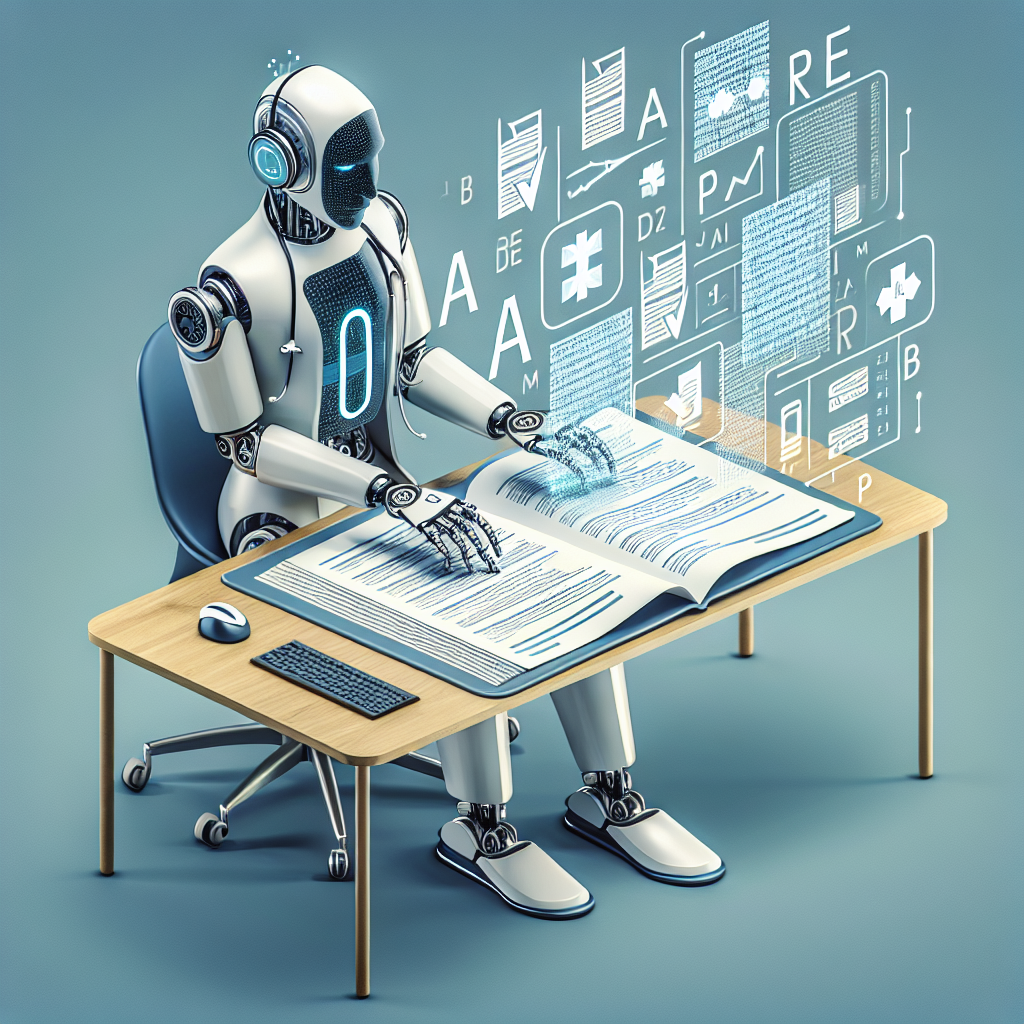
Artificial Intelligence (AI) has made significant advancements in various industries, including healthcare. One area where AI is transforming the healthcare industry is in medical billing and coding. Medical billing and coding are crucial processes in healthcare, as they ensure that healthcare providers are properly reimbursed for the services they provide and that patient records are accurately documented. AI has the potential to streamline and improve these processes, resulting in more accurate billing, faster reimbursements, and improved patient care.
AI in Medical Billing and Coding
AI technologies, such as machine learning and natural language processing, are being used to automate and enhance medical billing and coding processes. These technologies can analyze vast amounts of healthcare data and identify patterns and trends that can help healthcare providers more accurately code and bill for services. AI can also help identify potential errors or discrepancies in medical records, leading to more accurate billing and fewer claim denials.
One way AI is transforming medical billing and coding is through the use of computer-assisted coding (CAC) systems. CAC systems use machine learning algorithms to analyze clinical documentation and suggest appropriate codes for billing. This can help reduce errors and speed up the coding process, leading to faster reimbursements for healthcare providers.
Another way AI is improving medical billing and coding is through the use of natural language processing (NLP) technology. NLP can analyze unstructured data, such as physician notes and patient records, to extract relevant information for coding and billing purposes. This can help healthcare providers more accurately document patient encounters and ensure that they are properly reimbursed for the services they provide.
Benefits of AI in Medical Billing and Coding
There are several benefits to using AI in medical billing and coding. Some of the key benefits include:
1. Increased accuracy: AI technologies can help healthcare providers more accurately code and bill for services, reducing the risk of errors and claim denials.
2. Faster reimbursements: By streamlining the coding and billing process, AI can help healthcare providers receive payments more quickly, improving cash flow and financial stability.
3. Improved compliance: AI can help ensure that healthcare providers are following coding guidelines and regulations, reducing the risk of audits and penalties.
4. Enhanced patient care: By automating and improving the billing and coding process, healthcare providers can spend more time focusing on patient care and less time on administrative tasks.
5. Cost savings: AI can help healthcare providers reduce the costs associated with manual coding and billing processes, leading to increased efficiency and profitability.
Challenges of AI in Medical Billing and Coding
While AI has the potential to revolutionize medical billing and coding, there are also challenges that need to be addressed. Some of the key challenges include:
1. Data quality: AI technologies rely on high-quality data to make accurate predictions and recommendations. Ensuring that the data used for coding and billing is accurate and up-to-date is crucial for the success of AI systems.
2. Integration with existing systems: Integrating AI technologies with existing electronic health record (EHR) systems and billing software can be complex and time-consuming. Healthcare providers need to carefully plan and implement AI solutions to ensure a seamless transition.
3. Regulatory compliance: Healthcare providers must ensure that AI technologies comply with coding guidelines and regulations set forth by organizations such as the Centers for Medicare and Medicaid Services (CMS) and the American Medical Association (AMA).
4. Training and education: Healthcare providers and coding professionals may need to undergo training to effectively use AI technologies for medical billing and coding. Ensuring that staff are properly trained and educated on AI systems is essential for their successful implementation.
FAQs
Q: How can AI improve the accuracy of medical coding?
A: AI technologies, such as machine learning and natural language processing, can analyze vast amounts of healthcare data and identify patterns and trends that can help healthcare providers more accurately code and bill for services. AI can also help identify potential errors or discrepancies in medical records, leading to more accurate billing and fewer claim denials.
Q: What are some of the benefits of using AI in medical billing and coding?
A: Some of the key benefits of using AI in medical billing and coding include increased accuracy, faster reimbursements, improved compliance, enhanced patient care, and cost savings. AI technologies can help healthcare providers streamline the coding and billing process, leading to more efficient and profitable operations.
Q: What are some of the challenges of implementing AI in medical billing and coding?
A: Some of the key challenges of implementing AI in medical billing and coding include data quality, integration with existing systems, regulatory compliance, and training and education. Healthcare providers need to carefully plan and implement AI solutions to ensure a successful transition and maximize the benefits of these technologies.
In conclusion, AI is transforming medical billing and coding in healthcare by automating and enhancing these critical processes. AI technologies can help healthcare providers more accurately code and bill for services, leading to faster reimbursements, improved compliance, enhanced patient care, and cost savings. While there are challenges to implementing AI in medical billing and coding, the benefits of using these technologies far outweigh the risks. Healthcare providers who embrace AI in medical billing and coding stand to gain a competitive advantage in an increasingly complex and demanding healthcare environment.